
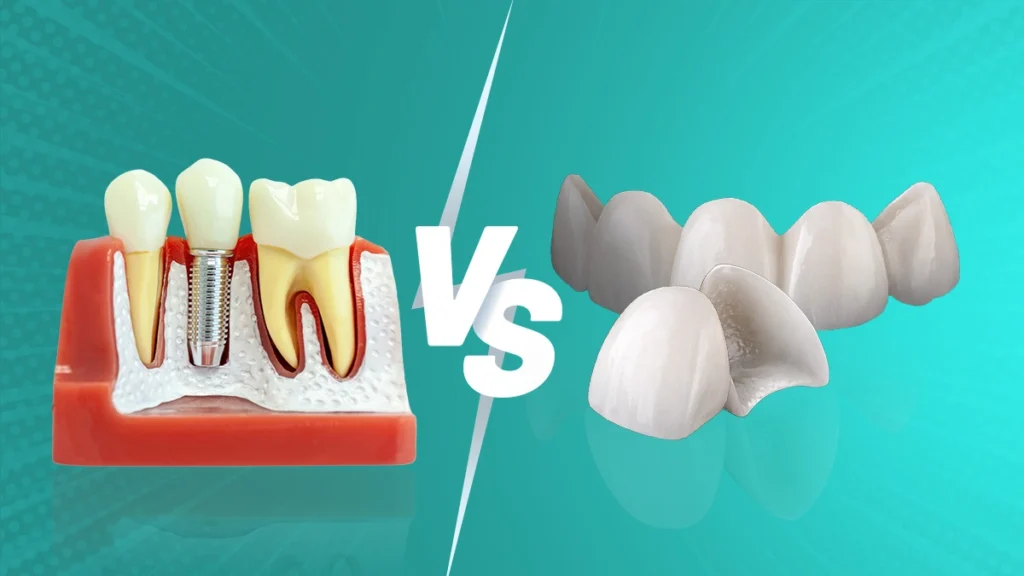
When a tooth is missing, patients are often presented with two main options: dental implants or dental bridges. While both restore appearance and function, they work in fundamentally different ways and deliver very different long-term outcomes.
Understanding the difference between dental implants and bridges is essential, especially for patients planning a Smile Makeover or considering whether missing teeth affect the success of a Hollywood Smile. This article explains both options clearly and helps you understand which solution truly performs better over time.
Understanding Tooth Replacement Options
Tooth Replacement Explained in Simple Words
Tooth replacement refers to dental treatments designed to restore missing teeth, allowing patients to chew properly, speak clearly, and maintain facial balance.
Rather than being a purely cosmetic choice, tooth replacement plays a crucial role in long-term oral health and overall smile stability.
Why Choosing the Right Long-Term Solution Matters
Although both dental implants and bridges replace missing teeth, they interact with the surrounding teeth and jawbone in very different ways.
Choosing the right solution from the beginning can prevent future complications, preserve oral structures, and ensure that any future Smile Makeover remains stable and predictable.
Start a Conversation
Contact us through the communication method that suits you





What Are Dental Implants?
Dental Implants Explained in Simple Words
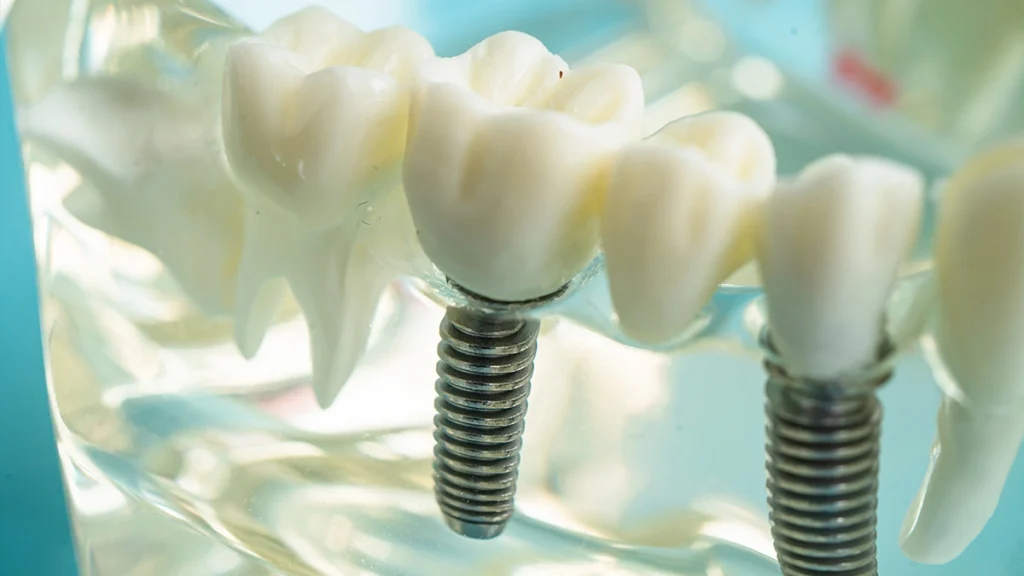
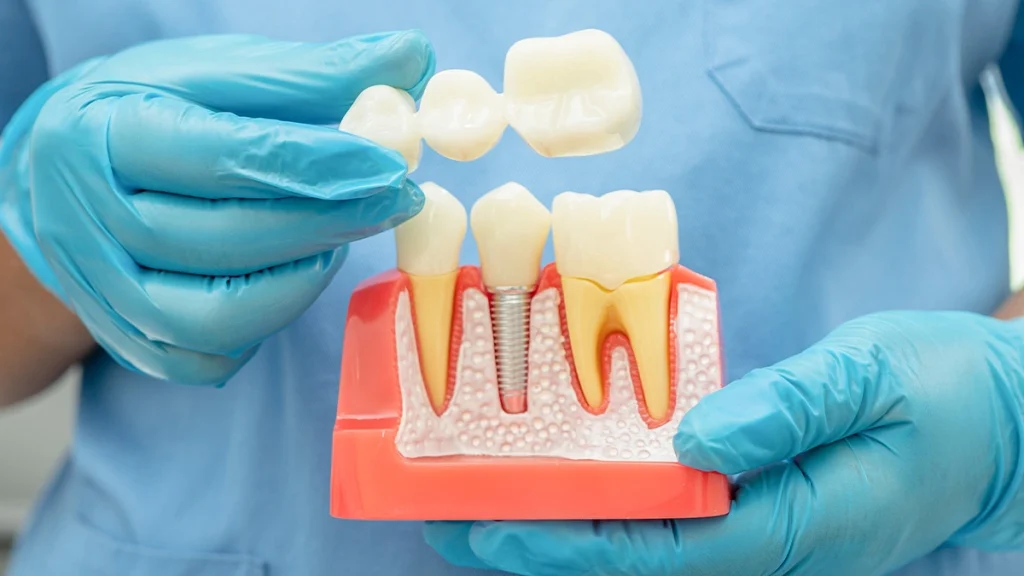
Dental implants are artificial tooth roots placed directly into the jawbone, where they integrate with the bone and support a crown that looks and functions like a natural tooth.
Because implants replace both the root and the visible tooth, they function independently without relying on neighboring teeth.
Materials and Structure of Dental Implants
Dental implants typically consist of:
- A titanium or biocompatible implant placed in the bone
- An abutment connecting the implant to the crown
- A dental crown that restores appearance and function
This structure allows implants to mimic natural teeth more closely than other replacement options, creating a foundation that supports both function and long-term stability.
What Dental Implants Can Restore
Dental implants help restore:
- Chewing efficiency
- Bite balance
- Jawbone stimulation
- Natural tooth appearance
By restoring both function and structure, implants often serve as the most comprehensive solution for missing teeth, which naturally leads to comparisons with dental bridges.
What Are Dental Bridges?
Dental Bridges Explained in Simple Words
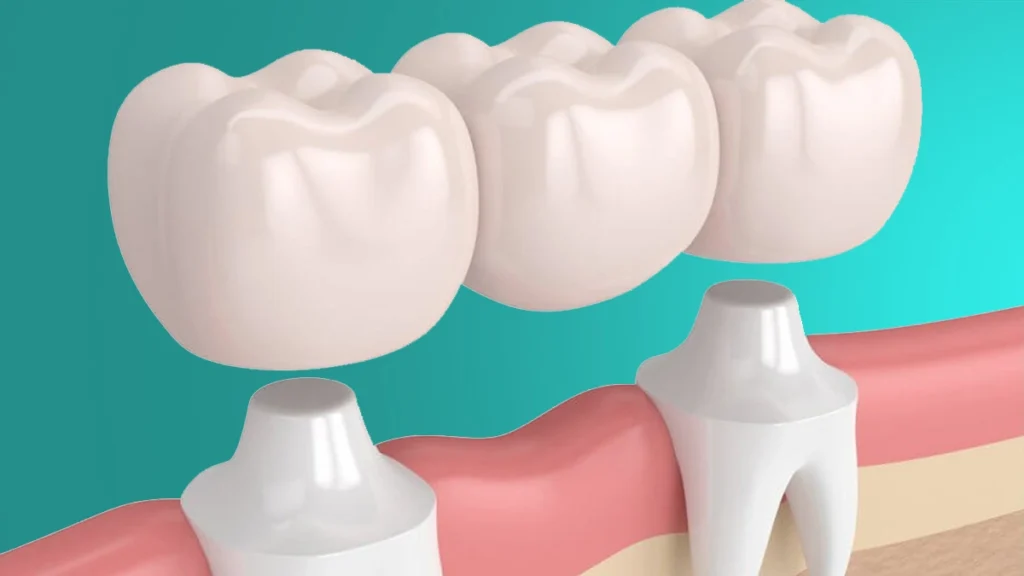
Dental bridges replace missing teeth by anchoring an artificial tooth to adjacent natural teeth, which act as supporting pillars.
Instead of replacing the tooth root, bridges rely entirely on neighboring teeth for support.
Types of Dental Bridges
Common types of dental bridges include:
- Traditional bridges supported by crowns on adjacent teeth
- Cantilever bridges supported on one side
- Maryland bridges bonded to the back of neighboring teeth
Each type serves a specific purpose, but all share the same fundamental principle of tooth-supported replacement rather than bone-supported restoration.
What Dental Bridges Can Restore
Dental bridges can restore:
- Basic chewing ability
- Smile appearance
- Short- to medium-term stability
While bridges effectively fill gaps, they do not address bone loss beneath missing teeth, which becomes a key factor when comparing long-term outcomes.
Request pricing
By sending, you agree we may contact you on WhatsApp with pricing.
Got it! We’ll WhatsApp you the pricing shortly.
Dental Implants vs Bridges: Core Differences
Dental Implants vs Bridges Explained Simply
The primary difference is structural:
- Dental implants stand independently in the jawbone
- Dental bridges depend on adjacent teeth for support
This distinction influences durability, oral health, and long-term success.
Independent Tooth Replacement vs Tooth-Supported Solution
Implants replace missing teeth without altering surrounding teeth, while bridges require reshaping healthy teeth to serve as anchors.
Bone Preservation vs Bone Loss Over Time
Dental implants stimulate the jawbone and help prevent bone loss, whereas bridges leave the underlying bone unsupported.
These structural differences explain why dentists often favor implants when long-term oral health is a priority.
Dental Implants vs Bridges: Long-Term Comparison
| Aspect | Dental Implants | Dental Bridges |
| Support | Jawbone | Adjacent teeth |
| Effect on neighboring teeth | None | Requires tooth preparation |
| Bone preservation | Yes | No |
| Longevity | Long-term | Medium-term |
| Maintenance | Similar to natural teeth | Requires additional care |
This comparison highlights how each option behaves over time, setting the stage for evaluating which solution truly performs better in the long run.
Start a Conversation
Contact us through the communication method that suits you
Which Option Is Better for Long-Term Results?
Long-Term Stability and Durability
Dental implants generally offer superior longevity because they integrate with bone and do not depend on other teeth for support.
Impact on Oral Health Over Time
Bridges may increase stress on neighboring teeth, while implants distribute chewing forces naturally through the jawbone.
For patients thinking beyond immediate replacement, these factors strongly influence long-term satisfaction and oral health preservation.
Dental Implants and Bridges in a Smile Makeover
When Dental Implants Are Preferred in Smile Makeovers
Dental implants are often preferred in Smile Makeovers because they provide a stable foundation for crowns, veneers, and full-mouth rehabilitation.
By restoring missing teeth at the root level, implants allow dentists to design balanced, long-lasting smile transformations.
When Dental Bridges Are Used in Smile Design
Dentists may use bridges in Smile Makeovers when:
- Bone conditions limit implant placement
- Time constraints exist
- Specific clinical factors favor tooth-supported solutions
In such cases, bridges can still support aesthetic goals, although they may not provide the same longevity as implants.
Request pricing
By sending, you agree we may contact you on WhatsApp with pricing.
Got it! We’ll WhatsApp you the pricing shortly.
Are Dental Implants or Bridges Used in a Hollywood Smile?
How Tooth Replacement Fits Into Hollywood Smile Planning
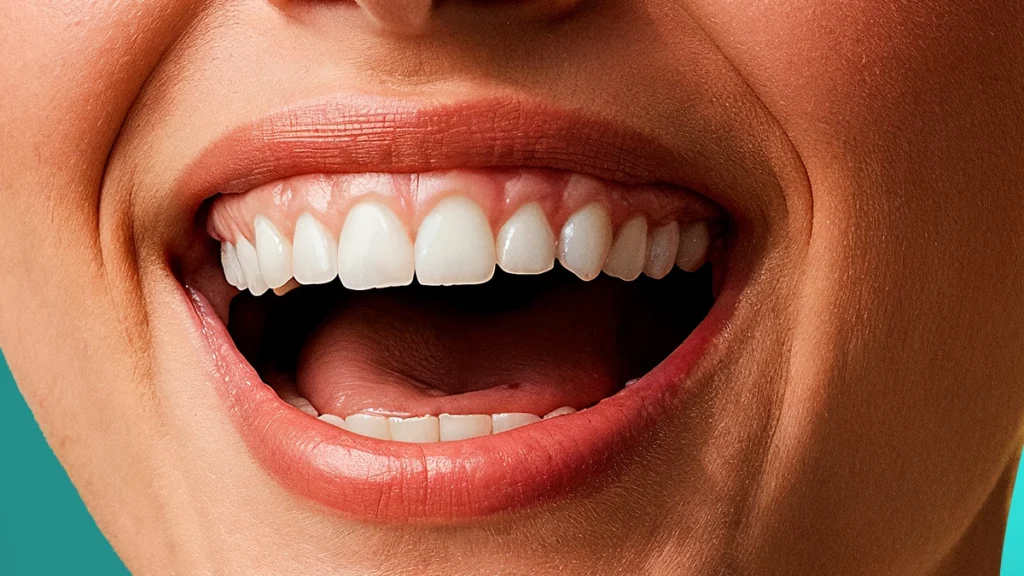
A Hollywood Smile focuses on visible aesthetics, but missing teeth must still be replaced properly to achieve symmetry and balance.
Dental implants often serve as the preferred solution when missing teeth affect the smile zone.
When Bridges May Be Part of a Hollywood Smile Case
In some Hollywood Smile cases, dentists use bridges to complete the aesthetic design when implants are not suitable.
However, implants usually offer greater flexibility and stability for achieving long-lasting cosmetic results.
Who Are the Suitable Candidates?
Who Are Suitable Candidates for Dental Implants?
Dental implants are suitable for patients who:
- Have sufficient jawbone volume
- Seek long-term tooth replacement
- Want minimal impact on neighboring teeth
These patients often prioritize durability and oral health preservation alongside aesthetics.
Who Are Suitable Candidates for Dental Bridges?
Dental bridges may suit patients who:
- Have healthy adjacent teeth
- Prefer non-surgical solutions
- Require faster treatment timelines
In these cases, bridges can provide acceptable results when long-term considerations are clearly understood.
Common Misunderstandings About Implants and Bridges
“Bridges Are Always Faster and Easier” – Clarifying the Reality
While bridges may take less time initially, they can require more maintenance and future replacement over the years.
“Dental Implants Are Only for Young Patients” – Myth Explained
Age alone does not determine implant eligibility; overall health and bone condition matter far more.
Addressing these misconceptions helps patients make informed decisions rather than relying on oversimplified assumptions.
Can Dental Implants and Bridges Be Combined?
When Dentists Combine Implants and Bridges
Dentists sometimes combine implants and bridges in complex cases where missing teeth span multiple areas.
Hybrid Tooth Replacement in Complex Cases
This hybrid approach allows clinicians to balance surgical feasibility, function, and aesthetics within a single comprehensive treatment plan.
Such combinations demonstrate how modern dentistry adapts solutions rather than forcing one method in every situation.
Which treatment are you interested in?
FAQ
Yes, implants function very similarly to natural teeth once fully integrated.
With proper care, bridges may last several years but typically require replacement sooner than implants.
They are designed as long-term solutions, though maintenance remains essential.
Yes, bridges require reshaping neighboring teeth, which may impact them over time.
For most patients, dental implants provide superior long-term stability and oral health benefits
Read More: What Are Dental Implants? How They Work and When They Are Needed