
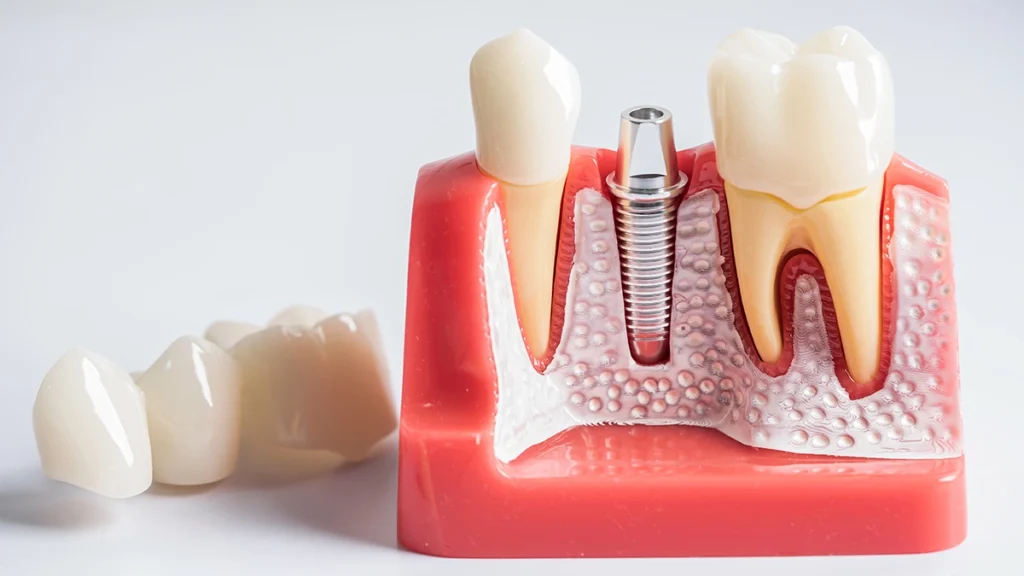
Osteoporosis can make dental implants seem uncertain, but it doesn’t automatically rule you out. What matters most is your jawbone quality, gum health, medical history, and any medications affecting bone healing. With proper evaluation and planning, many patients with osteoporosis can still receive implants safely.
Quick Answer: Can Someone with Osteoporosis Get Dental Implants?
Yes, many patients with osteoporosis can successfully receive dental implants. Dentists evaluate bone quality, overall health, osteoporosis medications, and healing potential before treatment. Having osteoporosis does not automatically prevent implant surgery, but careful planning and, in some cases, medical consultation are important for long-term implant success.
Does Osteoporosis Prevent Dental Implants?
Osteoporosis may affect implant planning, but it does not always prevent treatment. The main question is not only whether you have osteoporosis, but whether your jawbone can support the implant safely.
Understanding Osteoporosis and Bone Health
Osteoporosis is a condition that reduces bone strength and makes bones more fragile. It often affects areas such as the spine, hips, and wrists, but dentists also consider it when planning implant surgery.
How Osteoporosis Affects the Jawbone
The jawbone may lose density or volume in some patients, especially after tooth loss. However, jawbone quality can vary from one patient to another, so imaging is needed before deciding.
Why Many Patients Are Still Good Candidates
Many patients with controlled osteoporosis still have enough jawbone support for implants. If the gums are healthy, bone volume is acceptable, and healing potential is good, implant treatment may still be possible.

Start a Conversation
Contact us through the communication method that suits you





Can Someone with Osteoporosis Have Dental Implants?
Yes, someone with osteoporosis can have dental implants in many cases. The decision depends on a full dental and medical assessment, not on the diagnosis alone.
When Implant Treatment Is Usually Possible
Implant treatment is usually possible when the patient has stable health, healthy gums, and enough bone to hold the implant. In some cases, the dentist may adjust the treatment plan to make healing more predictable.
Factors That Influence Candidacy
Candidacy depends on bone density, bone volume, oral hygiene, gum condition, smoking, medical history, and current medications. These factors help the dentist decide whether implants are safe and suitable.
Why Individual Assessment Is Essential
Two patients with osteoporosis can have very different treatment plans. One may be ready for implants, while another may need gum treatment, bone grafting, or medical clearance first.
What Dentists Evaluate Before Implant Surgery
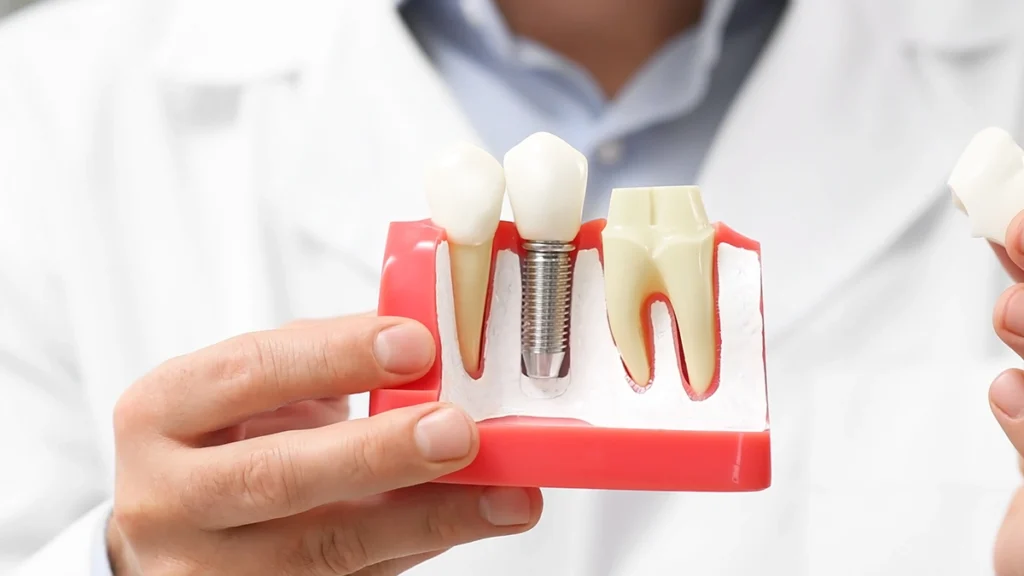
Before dental implant surgery, dentists check the mouth and general health carefully. This helps reduce risk and improves the chance of long-term implant success.
Bone Density and Bone Volume
Bone density refers to how strong the bone is, while bone volume refers to how much bone is available. Both are important for implant stability.
Jawbone Quality
Jawbone quality affects how well the implant can be placed and how well it may heal. A 3D scan can help the dentist assess the implant site more accurately.
Medical History
Your dentist needs to know about osteoporosis, diabetes, immune conditions, previous surgeries, and any healing problems. This information helps guide safe treatment planning.
Oral Health and Gum Condition
Healthy gums are essential before implant surgery. Active gum disease can increase the risk of infection and bone loss around the implant.
Lifestyle Factors That Affect Healing
Smoking, poor oral hygiene, uncontrolled teeth grinding, and poor nutrition can affect healing. Improving these factors before treatment can support better results.

Read more: Can Patients With TMJ or Bruxism Have Veneers? Treatment Guide in Turkey 2026
Osteoporosis Medications and Dental Implants
Taking medication for osteoporosis does not always prevent dental implant treatment. However, you should discuss any osteoporosis drugs with your dentist before surgery, because some medications can affect bone remodeling, healing, and surgical risk.
Bisphosphonates and Implant Planning
Doctors often use bisphosphonates to help slow bone loss. Before dental implant treatment, your dentist needs to know whether you take them orally or by injection, how long you have used them, and why your doctor prescribed them.
Denosumab and Bone Health
Denosumab is another medication used for osteoporosis. It can affect bone turnover, so implant timing and medical coordination may be important for some patients.
Why Medication History Matters
A complete medication history helps the dentist evaluate healing risk and rare jawbone complications. This is especially important for patients using antiresorptive medications for a long time.
Coordinating Care With Your Physician
Your dentist may contact your physician if your medical history is complex or if you use certain osteoporosis medications. This helps create a safer treatment plan.
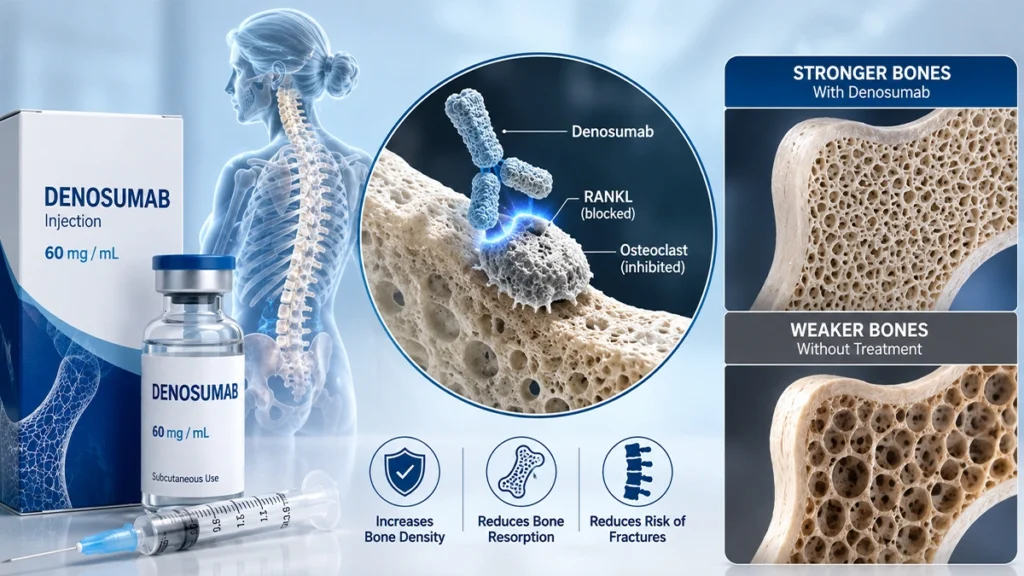
Can You Get Dental Implants While Taking Osteoporosis Medication?
Many patients taking osteoporosis medication can still be evaluated for implants. The type of medication, dose, treatment duration, and overall health all matter.
Oral vs Intravenous Medications
Dentists usually assess oral osteoporosis medications differently from higher-dose intravenous medications that doctors use for cancer-related bone disease. Your dentist will review your exact medication history before deciding.
Potential Risks Dentists Evaluate
Dentists look for delayed healing, infection risk, poor bone support, and rare medication-related jawbone problems. Gum disease and smoking may increase risk further.
Why Medical Clearance May Be Recommended
Medical clearance may be recommended when your dentist needs more information about your bone health or medication plan. It does not always mean implants are unsafe.
Treatment Planning for Medication Users
Treatment may include detailed imaging, careful surgical technique, infection control, and close follow-up. The goal is to make implant treatment as safe and predictable as possible.

Upload your photos and receive a free AI-powered preliminary analysis in minutes. No commitment required.
Bone Density and Implant Success
Implant success depends on more than bone density alone. Dentists also evaluate bone shape, bite forces, gum health, and healing potential before deciding whether the implant site is strong enough.
Why Bone Quality Is More Important Than Diagnosis Alone
Having osteoporosis does not tell the full story. What matters most is the quality of bone in the exact area where the implant will be placed.
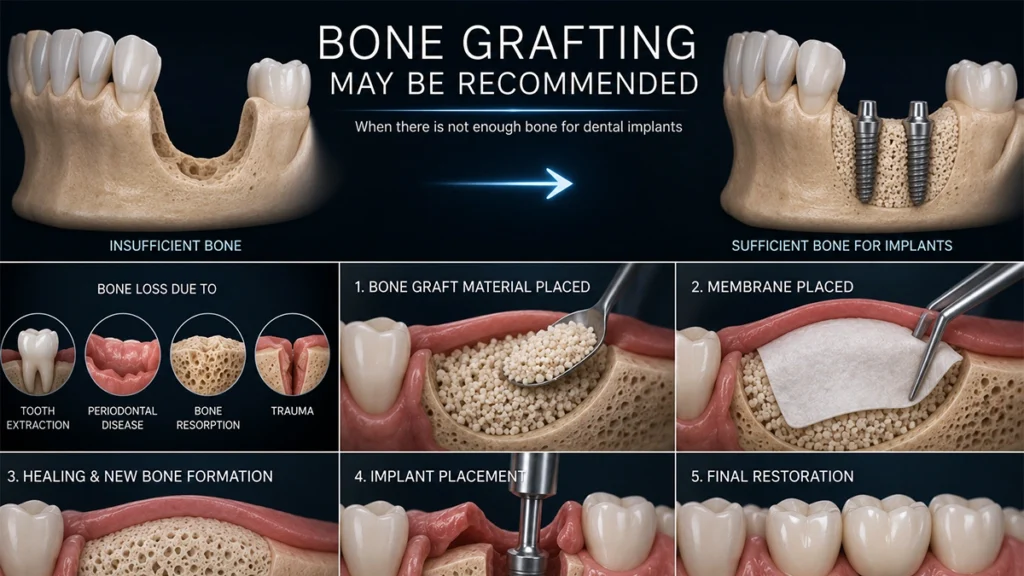
When Bone Grafting May Be Recommended
Bone grafting may be recommended if there is not enough healthy bone to support the implant. This can happen because of tooth loss, gum disease, infection, or natural bone shrinkage.
Osseointegration and Healing
Osseointegration is the process where the implant bonds with the jawbone. If bone quality is reduced, the dentist may allow a longer healing period before placing the final tooth.
Long-Term Implant Stability
Long-term stability depends on healthy bone, clean gums, balanced bite forces, and regular follow-up. Maintenance is especially important for patients with osteoporosis.
Dental Implants and Osteoporosis: Planning by Case
| Situation | Typical Dental Approach |
| Controlled osteoporosis | Implant evaluation may proceed after assessment |
| Reduced bone density | Additional imaging and treatment planning |
| Patients taking osteoporosis medication | Medical history review and physician coordination |
| Significant bone loss | Bone grafting or alternative treatment may be considered |
Your final treatment plan should always be based on your clinical exam and imaging results.
All-on-4 Dental Implants for Patients with Osteoporosis
All-on-4 dental implants may still be possible for some patients with osteoporosis. Because this treatment supports a full arch of teeth, bone assessment is very important.
Can All-on-4 Still Be an Option?
Yes, All-on-4 can still be an option for selected patients. The dentist must confirm that the jawbone can support the implants in the planned positions.
Why Bone Assessment Is Essential
A 3D scan helps check bone volume, bone quality, sinus position, nerve location, and implant angles. This makes the plan safer and more accurate.
When Additional Procedures May Be Needed
Some patients may need extractions, bone grafting, sinus lift, or gum treatment before implant placement. Others may be able to proceed without extra procedures.
Benefits of Individualized Treatment Planning
A personalized plan helps the dentist choose the right implant positions, healing timeline, and restoration design. This is especially important when bone health is a concern.
Read more: Full Mouth Dental Implants in Istanbul: Cost and Treatment Process
Upload your photos and receive a free AI-powered preliminary analysis in minutes. No commitment required.
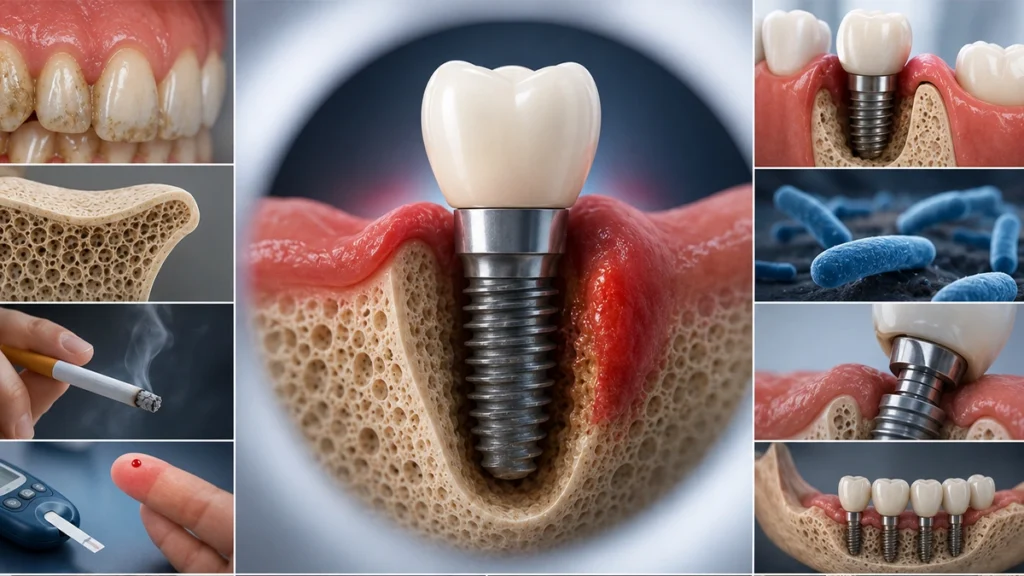
What Can Increase the Risk of Implant Failure?
Implant failure is not caused by osteoporosis alone. Several oral, medical, and lifestyle factors can affect healing and long-term stability.
Important risk factors include:
- Poor bone quality
- Smoking
- Active gum disease
- Poor oral hygiene
- Uncontrolled medical conditions
- Heavy bite pressure or teeth grinding
Poor Bone Quality
Poor bone quality can make it harder for the implant to gain stability. The dentist may recommend grafting, a different implant position, or another treatment option.
Smoking
Smoking can slow healing and increase the risk of implant complications. Patients are often advised to stop before and after surgery.
Active Gum Disease
Active gum disease should usually be treated before implant placement. A healthy mouth gives the implant a better chance to heal and last.
Poor Oral Hygiene
Plaque buildup around implants can lead to inflammation and bone loss. Daily cleaning and regular dental visits are essential.
Uncontrolled Medical Conditions
Conditions such as uncontrolled diabetes or immune problems may affect healing. Your dentist may recommend medical clearance before surgery.
How to Prepare for Dental Implants if You Have Osteoporosis
Good preparation helps your dentist plan treatment safely and avoid unnecessary risk. It also helps you understand what to expect before surgery.
Share Your Complete Medical History
Tell your dentist about your osteoporosis diagnosis, other health conditions, previous surgeries, and any healing problems. Small details can affect planning.
Bring a List of Current Medications
Bring a full list of medications and supplements. Include the name, dose, and how long you have been taking each medication.
Maintain Excellent Oral Hygiene
Healthy gums reduce the risk of infection after implant surgery. If gum disease is present, it may need treatment before implant placement.
Attend Pre-Treatment Imaging and Consultation
A consultation and 3D scan help your dentist check the bone and plan the safest approach. This is one of the most important steps before implant surgery.
Read more: What Are Dental Implants? How They Work and When They Are Needed
Who Is a Good Candidate for Dental Implants with Osteoporosis?
A good candidate is someone whose oral health, bone support, and general health allow safe implant treatment. Osteoporosis alone does not decide the answer.
Stable Bone Health
Patients with stable osteoporosis may be better candidates than those with uncontrolled or rapidly changing bone health. Physician input may help in some cases.
Healthy Gums
Healthy gums support healing and reduce the risk of infection. Gum inflammation should be controlled before implant surgery.
Adequate Bone Support
The implant needs enough bone to stay stable. If support is limited, bone grafting or another implant approach may be considered.
Realistic Expectations and Long-Term Maintenance
Dental implants need daily cleaning and regular checkups. Patients should be ready for long-term care after treatment.
People Also Ask About Dental Implants and Osteoporosis
- Can someone with osteoporosis have dental implants?
- Do osteoporosis medications affect dental implants?
- Can I get dental implants if I have osteoporosis?
- Is bone grafting always necessary?
- Are All-on-4 implants suitable for osteoporosis patients?
Final Insight: Osteoporosis Does Not Automatically Rule Out Dental Implants
Osteoporosis can affect implant planning, but it does not automatically prevent treatment. Many patients can still receive implants after proper evaluation.
Bone Quality Matters More Than the Diagnosis
Dentists focus on the quality and amount of bone in the jaw. A patient may have osteoporosis and still have enough support for implants.
Medication Review Is Part of Safe Treatment Planning
Osteoporosis medications should always be discussed before surgery. This helps the dentist understand possible healing risks and plan treatment safely.
Proper Assessment Improves Implant Success
Dental imaging, gum evaluation, and medical history review all help improve the treatment plan. Careful assessment is especially important for patients with osteoporosis.
Personalized Care Leads to Better Outcomes
The safest approach is the one designed for your case. With the right planning, osteoporosis does not have to stop you from restoring missing teeth with dental implants.
Which treatment are you interested in?
FAQ About Dental Implants and Osteoporosis
Yes. Many people with osteoporosis successfully receive dental implants after a proper bone and medical evaluation.
In many cases, yes. Your dentist will assess bone quality, gum health, and medication history first.
Some medications may affect treatment planning, so your dentist should review your medication history before surgery.
Not necessarily. Osteoporosis alone does not automatically prevent implant treatment.
Some patients may still be candidates if they have enough bone support and careful treatment planning.
Not always. Bone grafting is only recommended when there is not enough healthy bone for implant placement.
Bone quality and general health may affect healing, but careful planning and maintenance can improve long-term success.
Share your medical history, bring your medication list, maintain good oral hygiene, and attend all recommended imaging appointments.