
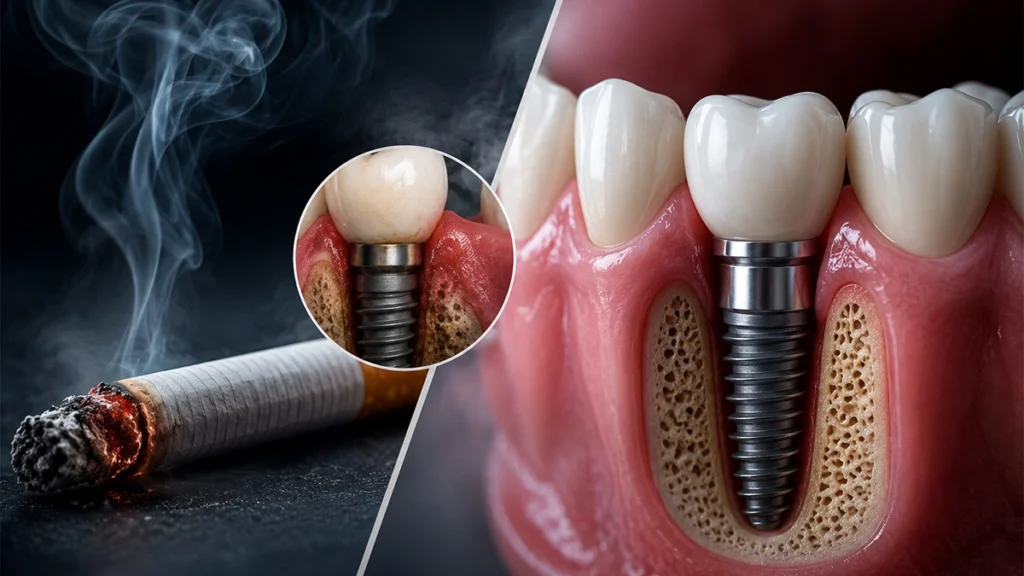
Smoking can affect how the mouth heals after dental implant surgery, but it does not automatically mean implants are impossible. Many smokers can still receive dental implants with proper planning, realistic expectations, and careful aftercare. The main concern is that tobacco can slow healing, increase infection risk, and make it harder for the implant to integrate strongly with the jawbone.
Quick answer: How Does Smoking Affect Dental Implants?
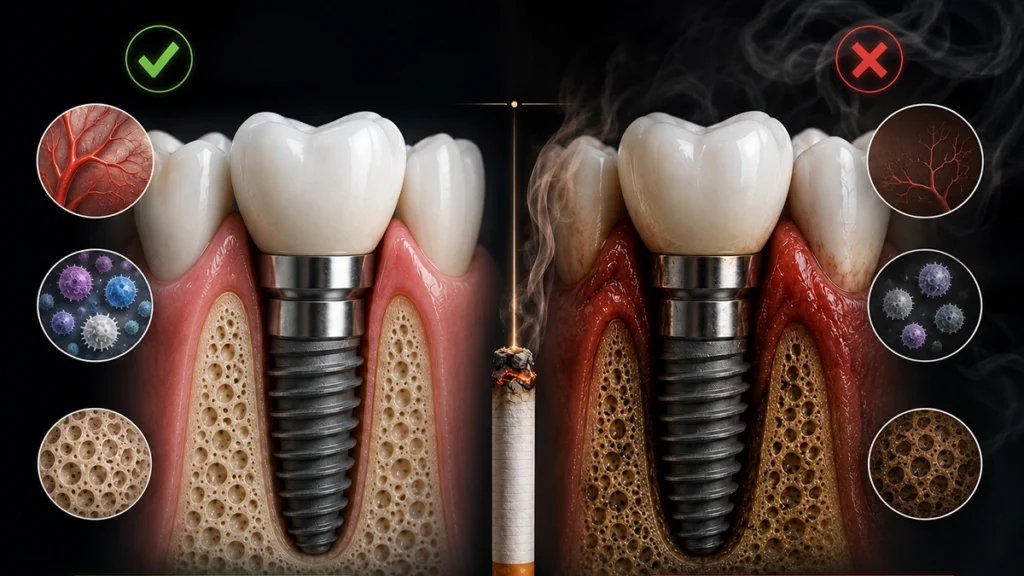
Smoking does not automatically prevent dental implant treatment, but it can increase the risk of delayed healing, infection, and implant failure. Dentists often recommend stopping smoking before and after implant surgery because tobacco can reduce blood flow to the gums and interfere with the bone healing process that helps implants become stable.
How Smoking Affects Dental Implant Healing
Dental implants need healthy gums, stable bone, and good blood supply during the healing process.
Reduced Blood Flow to the Gums
Smoking can narrow blood vessels and reduce oxygen delivery to the gums. As a result, the surgical area may receive less support during the early healing stage.
Slower Bone Healing (Osseointegration)
After implant placement, the jawbone needs to grow around the implant surface. This process is called osseointegration, and smoking may slow or weaken this important step.
Increased Risk of Infection
Smoking can affect the immune response in the mouth. Because of this, the tissues around the implant may become more vulnerable to infection after surgery.
Why Healing Takes Longer in Smokers
Tobacco smoke exposes the mouth to heat, chemicals, and reduced oxygen levels. Together, these effects may delay soft tissue healing and make recovery less predictable.
Start a Conversation
Contact us through the communication method that suits you





Can Smokers Get Dental Implants?
Yes, many smokers can get dental implants. However, the dentist must evaluate the risks carefully before treatment.
When Implant Treatment Is Still Possible
Implant treatment may still be possible when the patient has healthy gums, enough bone support, and a willingness to follow aftercare instructions. In many cases, dentists adjust the plan to improve healing conditions.
Factors Dentists Evaluate Before Surgery
Dentists usually review gum health, bone quality, medical history, oral hygiene, and smoking habits. These factors help determine whether implant surgery is suitable and how much preparation is needed.
Why Smoking Does Not Automatically Rule Out Implants
Smoking is a risk factor, not an automatic rejection. Some smokers heal well, especially when they reduce or stop smoking around the time of surgery and maintain strong oral hygiene.
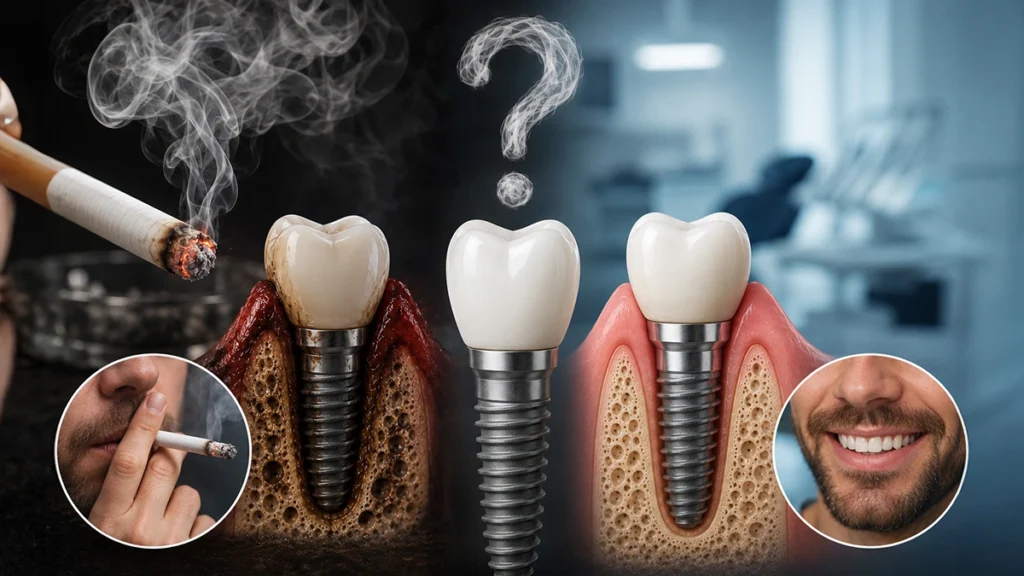
Does Smoking Increase Dental Implant Failure Risk?
Smoking may increase the chance of implant complications, especially when combined with gum disease, poor hygiene, or uncontrolled medical conditions.
Early Implant Failure
Early failure can happen when the implant does not integrate properly with the jawbone. Smoking may increase this risk by affecting blood flow, healing, and infection control.
Long-Term Implant Survival
Even after the implant heals, smoking can still affect the gums and bone around it. Long-term success depends on maintenance, professional cleanings, and controlling risk factors.
Peri-Implantitis and Gum Health
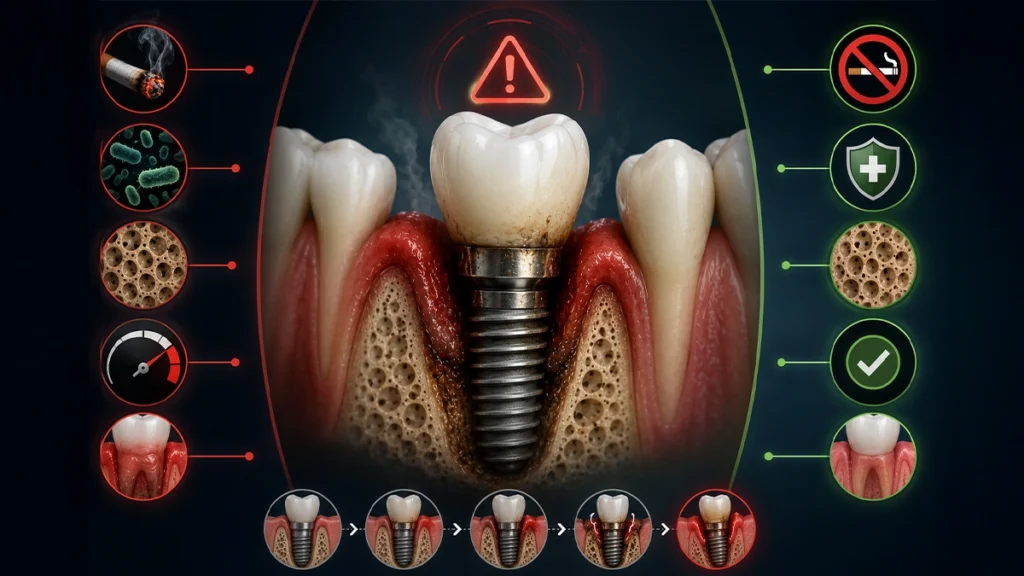
Peri-implantitis is inflammation and bone loss around a dental implant. Smokers may have a higher risk, especially if plaque builds up around the implant.
Other Factors That Influence Success
Implant success also depends on bone volume, bite forces, implant position, oral hygiene, diabetes control, and follow-up care. Smoking is important, but it is only one part of the full picture.
Upload your photos and receive a free AI-powered preliminary analysis in minutes. No commitment required.
How Long Should You Stop Smoking Before Dental Implants?
Many dentists recommend avoiding smoking for at least a short period before implant surgery and during the early healing phase. The exact timing depends on your oral health, the number of implants, whether bone grafting is needed, and how much you smoke.
Why Dentists Recommend Quitting Before Surgery
Quitting before implant surgery can improve blood flow, oxygen delivery, and tissue healing. Even a short break from smoking may help create better conditions for recovery.
The Importance of the Early Healing Phase
The first days and weeks after surgery are especially important because the implant site begins to heal and the bone starts responding to the implant. Avoiding smoking during this stage may reduce irritation and support more predictable healing.
Creating the Best Conditions for Implant Integration
Better healing conditions can support stronger osseointegration. For this reason, reducing or stopping smoking before treatment may help improve implant stability.
Why Individual Advice May Vary
Some patients may only need short-term smoking restrictions, while others may need a longer break, especially if they need bone grafting, have gum disease, or smoke heavily. Your dentist will give instructions based on your case.
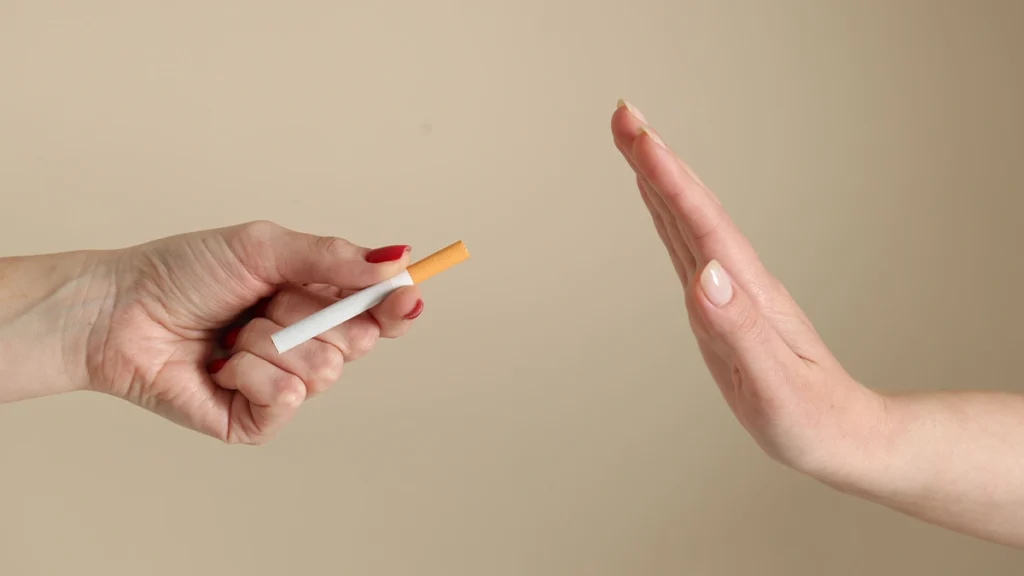
After a Dental Implant, How Long Should You Wait Before Smoking?
Smoking after implant surgery can affect the healing site, especially during the first days and weeks.
The First Days After Surgery
The first days are especially sensitive because the surgical site needs a stable blood clot. Smoking too soon may disturb healing and increase irritation.
The Healing Period and Osseointegration
Osseointegration takes time. Even if the gum looks healed, the bone may still be forming around the implant, so smoking can still affect the deeper healing process.
Why Returning to Smoking Too Soon May Increase Risks
Returning to smoking too early may increase the risk of delayed healing, infection, and implant instability. It can also make swelling and gum irritation more difficult to control.
Following Your Dentist’s Aftercare Instructions
Your dentist may recommend avoiding smoking for a specific period after surgery. Following these instructions closely can help protect the implant during the most important healing stages.
Read more: Can You Get Dental Implants with Gum Disease? What to Know Before Treatment
What Dentists Evaluate in Smokers Before Implant Surgery
When evaluating a smoker for dental implants, dentists take a close look at both oral and overall health.
Gum Health
Healthy gums are essential for implant success. If gum disease is present, the dentist may recommend treating it before implant placement.
Bone Quality
The implant needs enough bone support to become stable. Dentists may use X-rays or 3D imaging to evaluate bone volume and density.
Oral Hygiene
Good daily cleaning reduces plaque and inflammation around implants. Poor oral hygiene can increase the risk of infection and long-term complications.
Overall Medical History
Medical conditions such as diabetes, immune problems, or certain medications may affect healing. The dentist needs a full health history before surgery.
Smoking Habits and Frequency
The number of cigarettes smoked per day and the patient’s ability to reduce or stop smoking can influence the treatment plan. Heavy smoking may require extra caution.
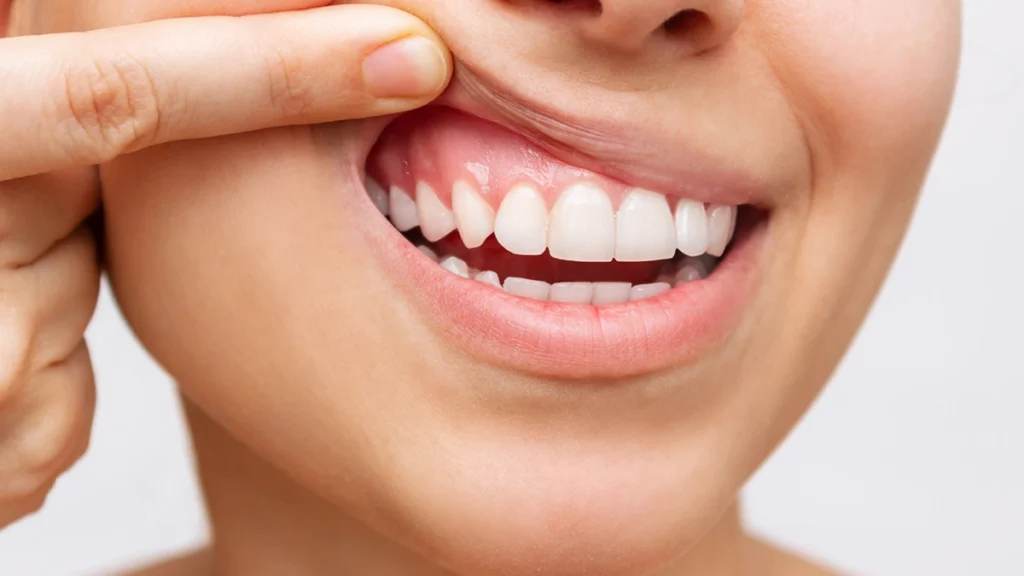
How to Improve Implant Success if You Smoke
Smokers can take several steps to support better healing and long-term implant health.
Reduce or Stop Smoking Before Surgery
Stopping smoking is usually the best option. If quitting completely is difficult, reducing smoking before and after surgery may still help improve healing conditions.
Maintain Excellent Oral Hygiene
Brushing, flossing, and using dentist-recommended cleaning tools can reduce plaque around implants. Clean gums give implants a better chance of long-term stability.
Attend Regular Follow-Up Visits
Follow-up visits allow the dentist to check healing, clean around the implant, and detect early signs of inflammation. This is especially important for smokers.
Follow Postoperative Instructions Carefully
Aftercare instructions may include medication use, mouth rinses, diet changes, and activity limits. Following them carefully can reduce avoidable complications.
Read more: Why Regular Dental Check-Ups Matter for Your Oral Health (2026 Guide)
Upload your photos and receive a free AI-powered preliminary analysis in minutes. No commitment required.
Smoking, Bone Healing, and Osseointegration
Bone healing is one of the most important parts of dental implant success.
Why Bone Healing Is Essential
A dental implant works because the jawbone grows around it and holds it firmly in place. Without strong bone integration, the implant may not remain stable.
How Tobacco Can Affect Implant Stability
Tobacco may reduce oxygen supply and interfere with normal healing. This can make the connection between the implant and bone less predictable.
Long-Term Implant Maintenance
Even after healing, the bone and gums around the implant need protection. Professional cleanings, good home care, and smoking reduction can help maintain long-term results.
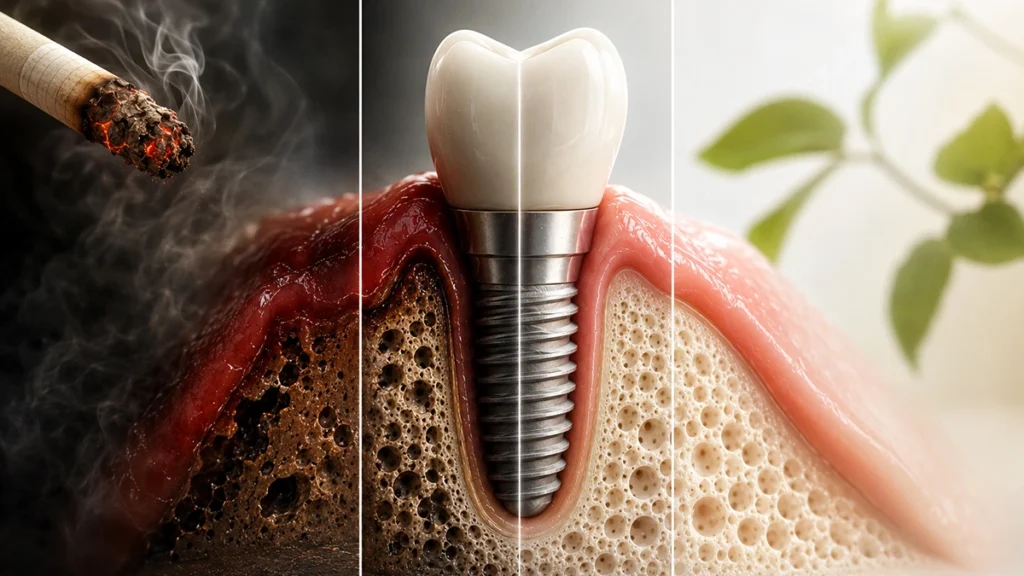
Who Is a Good Candidate for Dental Implants if They Smoke?
A smoker may still be a good candidate when the mouth and overall health are stable enough for surgery.
Patients With Healthy Gums
Healthy gums lower the risk of infection and inflammation around implants. If gum disease exists, treatment usually comes first.
Patients Willing to Reduce Smoking
Patients who can reduce or stop smoking around surgery often create better conditions for healing. This may improve the predictability of the implant process.
Stable Medical Conditions
Controlled medical conditions can support safer treatment planning. If a patient has uncontrolled diabetes or other health concerns, the dentist may request medical coordination.
Commitment to Long-Term Oral Care
Implants require daily care and regular professional maintenance. A smoker who stays consistent with hygiene and checkups may have better long-term outcomes.
Read more: Dental Implants and Medical Conditions in Turkey 2026: Safety, Risks & Treatment Guide
People Also Ask About Smoking and Dental Implants
- Can smokers get dental implants?
- How does smoking affect dental implants?
- How long should I stop smoking before implant surgery?
- When can I smoke after dental implants?
Final Insight: Protecting Your Dental Implant Investment
Dental implants are a long-term treatment, so protecting the healing process matters from the beginning.
Healing Starts With Healthy Habits
Good healing depends on blood flow, clean gums, and reduced irritation. Smoking reduction can support these conditions during recovery.
Smoking Reduction Supports Better Outcomes
Even temporary smoking reduction around surgery may help lower some risks. However, long-term reduction or quitting offers stronger benefits for oral health.
Long-Term Care Improves Implant Longevity
Implants need ongoing maintenance, just like natural teeth. Regular cleanings and checkups help protect the gums and bone around them.
Personalized Treatment Planning Is Essential
Every smoker has a different level of risk. A proper dental evaluation helps determine whether implants are suitable and what steps can make treatment safer.
Which treatment are you interested in?
FAQ
Yes. Many smokers can receive dental implants, but smoking may increase healing complications and affect long-term implant success.
Smoking can reduce blood flow, delay bone healing, increase infection risk, and contribute to implant complications.
The recommended period varies depending on the patient and the procedure. Your dentist will provide personalized instructions to support healing.
Most dentists recommend avoiding smoking during the early healing period because this is when the implant is integrating with the jawbone.
No. Many smokers have successful implant treatment, but smoking is considered a risk factor that may reduce the chances of optimal healing.
Yes. Reducing or stopping smoking before and after implant surgery may improve healing and support long-term implant stability.
Good oral hygiene, regular professional cleanings, follow-up appointments, and following your dentist’s instructions are all important for maintaining implant health.