
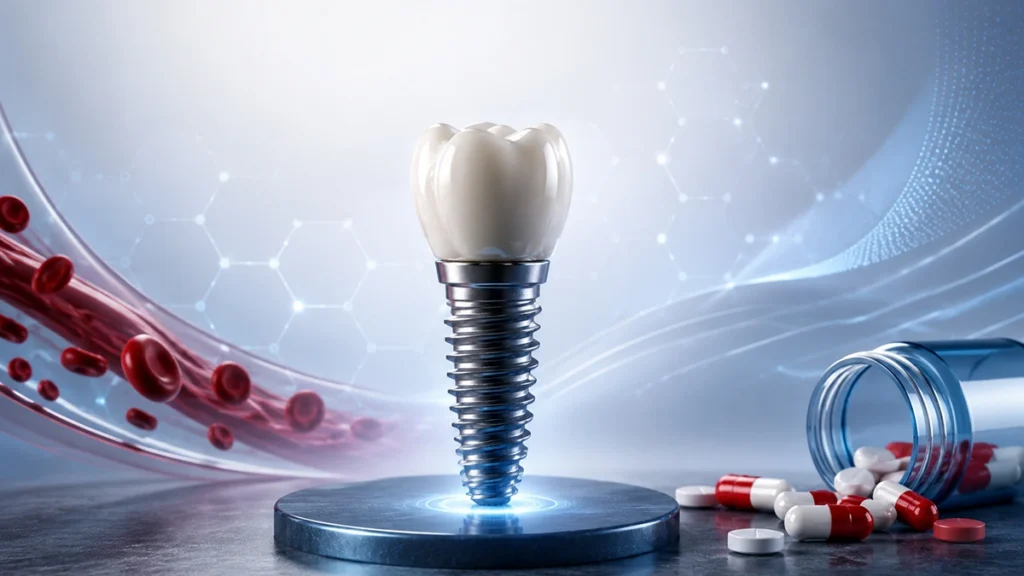
Taking blood thinners does not automatically prevent you from receiving dental implants. Many patients using anticoagulant or antiplatelet medication can undergo implant surgery after careful medical and dental assessment. The main challenge is controlling bleeding without increasing the risk of a blood clot, stroke, or heart-related complication. Your dentist must therefore understand which medication you take, why it was prescribed, and whether other health conditions may affect healing. A personalized plan, sometimes coordinated with your physician, can help make treatment safer and more predictable.
Quick Answer: Can You Get Dental Implants While Taking Blood Thinners?
Yes—many patients taking blood thinners can still receive dental implants. In most cases, dentists work closely with the patient’s physician to evaluate medical history, the reason for anticoagulant therapy, bleeding risk, and overall health before surgery. Patients should never stop blood thinners on their own. A personalized treatment plan helps balance implant success with patient safety.
Can You Get Dental Implants While on Blood Thinners?
Blood thinners may change how implant surgery is planned, but they do not usually make treatment impossible. The decision depends on your medical condition, medication, clotting risk, and the extent of surgery required.
Why Blood Thinners Do Not Automatically Prevent Implant Surgery
Bleeding from many dental procedures can be controlled using local pressure, sutures, absorbable materials, and careful surgical technique. Some patients can continue their medication without interruption, especially when treatment involves a limited number of implants. More extensive procedures, such as multiple implants, bone grafting, or sinus lifting, may require additional medical review.
How Dentists Assess Your Medical History
Your dentist will ask about the medication name, dose, timing, and reason for treatment. The assessment may also cover previous bleeding, blood clots, stroke, atrial fibrillation, heart valves, coronary stents, kidney or liver disease, diabetes, high blood pressure, smoking, and other medications or supplements.
When Dental Implants May Need to Be Delayed
Implant surgery may be postponed if you have unstable heart disease, poorly controlled diabetes or blood pressure, active infection, a recent stroke or blood clot, abnormal anticoagulation results, or insufficient medical information. Treatment may also be delayed when the surgery is complex and a safe medication plan has not yet been established.

Start a Conversation
Contact us through the communication method that suits you





Which Blood Thinners Do Dentists Commonly See?
“Blood thinner” is a broad term that includes anticoagulants and antiplatelet medications. Because these drugs work in different ways, dentists assess each one individually before planning implant surgery.
Warfarin (Coumadin)
Doctors often prescribe warfarin for atrial fibrillation, artificial heart valves, and a history of blood clots. The international normalized ratio, or INR, shows how strongly the medication affects blood clotting. Your dentist may ask for a recent INR result before surgery to confirm that the level falls within an acceptable range.
Apixaban (Eliquis)
Doctors use apixaban to prevent stroke and to treat or prevent blood clots. It does not usually require routine INR monitoring. When planning surgery, the dentist may consider kidney function, dose timing, bleeding history, and the complexity of the procedure.
Rivaroxaban (Xarelto)
Rivaroxaban is another direct oral anticoagulant. Many patients take it once daily, so the timing of the dose may affect when the dentist schedules surgery. For procedures with a higher bleeding risk, the dentist and physician may discuss whether to adjust the timing temporarily.
Dabigatran (Pradaxa)
Dabigatran helps prevent clots by blocking thrombin. The kidneys remove most of the medication from the body, so kidney function plays an important role in treatment planning. Reduced kidney function may prolong the drug’s effect and influence the timing of surgery.
Aspirin and Antiplatelet Therapy
Aspirin, clopidogrel, and similar medications reduce platelet activity. Some patients take one antiplatelet drug, while others use two after a heart attack or coronary stent. Patients should never stop these medications without medical advice because interruption may increase the risk of serious clotting complications.
Why Every Medication Requires Individual Assessment
Two patients taking the same medication may still need different treatment plans. Dentists consider age, kidney and liver function, dose, other medications, reason for treatment, previous bleeding, number of implants, and the need for bone grafting before making a final decision.

Blood Thinners and Dental Implants: What Is the Main Risk?
The main concern is prolonged or difficult-to-control bleeding during or after surgery. The dental team must reduce this risk without removing important protection against blood clots.
Understanding Bleeding Risk
Dental implant surgery involves an incision in the gum and preparation of the jawbone, so some bleeding is expected. Blood thinners may make bleeding last longer, but they do not necessarily cause uncontrolled bleeding. Risk is usually higher with multiple implants, large surgical flaps, bone grafting, sinus lifting, combined blood-thinning medications, or other clotting disorders.
Why Implant Success Is Usually Still Possible
Blood thinners are not generally considered a direct cause of implant failure. Long-term success depends more on bone quality, gum health, infection control, oral hygiene, smoking, implant stability, bite forces, and proper surgical technique.
Balancing Bleeding Risk and Blood Clot Prevention
Stopping medication may reduce bleeding, but it can also increase the risk of stroke, heart attack, pulmonary embolism, or clot formation around a heart valve or stent. For this reason, dentists and physicians compare the manageable risk of local bleeding with the potentially serious consequences of interrupting treatment.

Do You Need to Stop Blood Thinners Before Implant Surgery?
There is no single rule for every patient. Some people continue their medication, while others may need a carefully supervised adjustment.
Never Stop Medication Without Medical Advice
Your physician prescribed the drug for an important reason. Stopping it suddenly can remove protection against serious clotting events. Inform your dentist about every medication you take and wait for a clear plan explaining whether treatment will continue unchanged or require an adjustment.
When Your Physician May Recommend Adjustments
For procedures with a higher bleeding risk, a physician may recommend changing the timing of one dose of a direct oral anticoagulant or checking a recent INR for warfarin. The decision depends on kidney function, medication schedule, number of implants, grafting needs, and the patient’s risk of blood clots.
How Dentists Coordinate With Your Doctor
When medical input is needed, the dentist explains the planned procedure and expected bleeding risk to the prescribing physician. The physician then clarifies whether medication changes are safe. The dentist uses this information to plan the surgery and local bleeding-control measures.

How Dentists Reduce Bleeding During Dental Implant Surgery
Bleeding control starts before the operation. Careful preparation can reduce tissue injury and make surgery easier to manage.
Careful Surgical Planning
Three-dimensional imaging helps the dentist evaluate bone volume, implant position, nearby nerves, sinus anatomy, and the need for grafting. Accurate planning may reduce unnecessary incisions and shorten the procedure.
Local Hemostatic Techniques
Dentists may use direct pressure, sutures, collagen materials, absorbable dressings, or other local hemostatic products. The patient should not leave the clinic until the dentist confirms that the surgical site is stable and bleeding is controlled.
Minimally Traumatic Surgery
A gentle surgical technique helps preserve the gum and surrounding bone. The dentist may use smaller incisions, limit tissue lifting, separate extensive treatment into stages, or use guided implant placement when appropriate.
Monitoring After the Procedure
Before discharge, the dental team checks the wound and provides written instructions. These should explain how to protect the clot, manage discomfort, clean the mouth, eat safely, and respond if bleeding continues.

Upload your photos and receive a free AI-powered preliminary analysis in minutes. No commitment required.
What Happens During Recovery?
Recovery is often similar to that of other implant patients, although mild oozing may last slightly longer. Careful adherence to postoperative instructions is especially important.
Normal Bleeding After Implant Surgery
A small amount of blood mixed with saliva or mild oozing during the first day can be normal. It should gradually decrease. Repeatedly checking the wound, spitting, or rinsing forcefully may disturb the clot and restart bleeding.
Swelling and Healing
Swelling often increases during the first two or three days before improving. Mild bruising may also occur. Contact the clinic if swelling becomes severe, continues to worsen, feels unusually firm, or appears with fever or discharge.
What to Eat
Choose soft, cool, or lukewarm foods during early recovery. Suitable options may include yogurt, eggs, mashed vegetables, soft pasta, fish, and soup that is not hot. Avoid chewing directly over the implant area until your dentist advises otherwise.
Activities to Avoid
Avoid strenuous exercise, heavy lifting, smoking, alcohol, forceful rinsing, straws, hard foods, and touching the wound. These actions may raise blood pressure, disturb the clot, or delay healing.
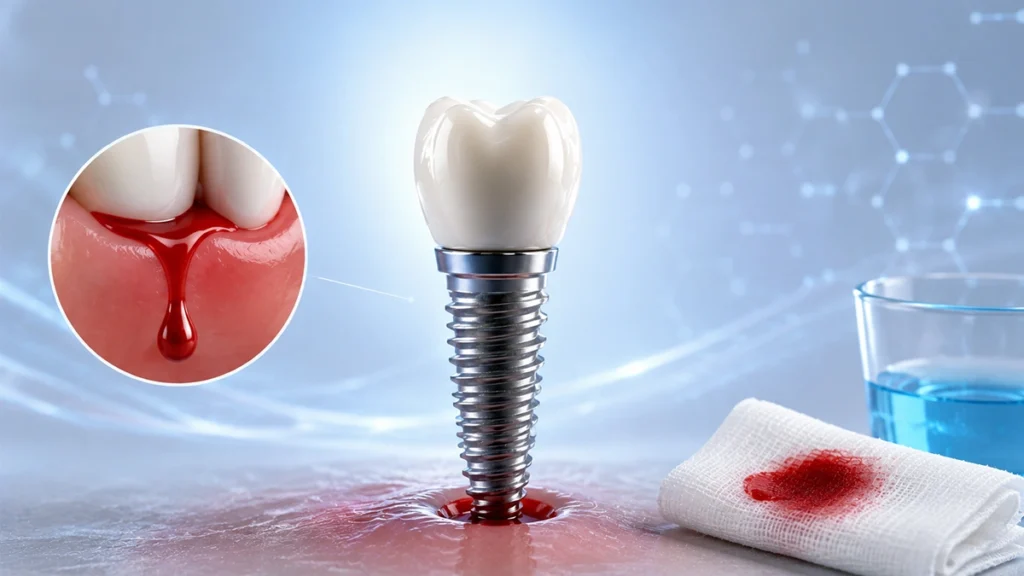
How to Stop Bleeding After Dental Implant Surgery
Most mild bleeding can be managed by protecting the wound and following the clinic’s instructions.
Applying Gentle Pressure
Place clean folded gauze over the surgical area and bite down with steady pressure for the time recommended by your dentist. Avoid removing it repeatedly to check the site because this can prevent a stable clot from forming.
Following Post-Operative Instructions
Take medication exactly as prescribed and follow the instructions for eating, brushing, rinsing, sleeping position, and physical activity. Do not add painkillers, herbal products, or supplements without checking whether they increase bleeding.
When Minor Oozing Is Expected
Slight oozing or pink saliva can be expected during the first 24 hours. It should remain mild and gradually improve. Bleeding that fills the mouth, repeatedly soaks gauze, or continues despite firm pressure requires dental advice.
What Not to Do
Do not spit forcefully, rinse aggressively, smoke, drink alcohol, consume very hot foods, or touch the wound with your tongue or fingers. Never skip, add, or stop a blood-thinner dose because of bleeding unless a qualified professional instructs you to do so.
Read more: Dental Implants Guide 2026: Cost, Types, Procedure & Full Mouth Options
When Should You Contact Your Dentist?
Contacting the dental team early can prevent a small problem from becoming more serious.
Persistent Bleeding
Call your dentist if active bleeding continues after applying pressure, repeatedly restarts, becomes heavier, or fully soaks several pieces of gauze. The dentist may need to examine the wound, add a suture, or apply another hemostatic material.
Severe Pain
Some discomfort is normal, but severe pain that does not improve with prescribed medication or suddenly worsens after initial improvement should be assessed.
Signs of Infection
Possible signs include increasing swelling, fever, pus, unpleasant taste or smell, worsening redness, and pain that becomes stronger several days after surgery.
Medical Emergencies
Seek urgent medical help for difficulty breathing or swallowing, fainting, chest pain, sudden weakness, confusion, uncontrolled bleeding, coughing or vomiting blood, or signs of a serious allergic reaction.

What Dentists Evaluate Before Implant Surgery
Implant planning involves more than checking your blood-thinning medication. The dentist must evaluate your general health, oral condition, and healing capacity.
Overall Medical Health
The review may include cardiovascular disease, previous stroke or blood clots, kidney and liver function, bleeding disorders, allergies, recent hospitalization, and current infections.
Bone Quality
Implants need enough healthy bone for stability. Dental imaging can identify bone loss, thin bone walls, sinus position, and whether grafting is required.
Gum Health
Active gum disease and bacterial inflammation can increase the risk of complications around implants. Gingivitis, periodontitis, and untreated infection should be controlled before elective surgery.
Current Medications
Provide a complete list of prescriptions, over-the-counter products, vitamins, and herbal supplements. Some painkillers and supplements may increase bleeding or interact with anticoagulants.
Smoking Status
Smoking can reduce blood flow, delay healing, increase infection risk, and lower the chances of long-term implant success. Dentists may advise patients to stop or reduce smoking before and after treatment.
Diabetes and Other Medical Conditions
Poorly controlled diabetes can slow healing and increase infection risk. Dentists may also consider hypertension, immune suppression, anemia, osteoporosis treatment, and other conditions that affect surgery.
Read more: Can You Get Dental Implants with Gum Disease? What to Know Before Treatment
Upload your photos and receive a free AI-powered preliminary analysis in minutes. No commitment required.
Questions to Ask Before Your Implant Consultation
Before treatment, consider asking:
- Can I safely receive dental implants while taking my medication?
- Should my physician be involved?
- What bleeding precautions will be used?
- Which implant technique is recommended?
- What should I expect during recovery?
Why Choose an Experienced Implant Team for Patients Taking Blood Thinners?
Patients using anticoagulants often need more preparation than routine implant patients. An experienced team can combine surgical planning with appropriate medical precautions.
Individual Medical Assessment
The dental team should consider why you take the medication, your current health, previous complications, additional prescriptions, and the complexity of the planned procedure.
Modern Implant Planning
Digital imaging, guided planning, and accurate implant positioning may help reduce unnecessary tissue trauma and support a more controlled surgical approach.
Coordinated Care With Physicians
Medical coordination is especially important for patients taking several blood-thinning drugs, those with artificial heart valves or recent coronary stents, and people with kidney disease or recent clotting events.
Personalized Aftercare
Postoperative instructions should account for the patient’s medication, procedure, travel schedule, and access to follow-up care. International patients receiving implants in Istanbul should understand how the dental team will monitor healing and what steps to take if complications arise after they return home.
Which treatment are you interested in?
Frequently Asked Questions
Yes. Many patients taking anticoagulant or antiplatelet medication can receive implants after careful medical assessment and bleeding-control planning.
No. Do not stop your medication unless the prescribing physician specifically instructs you to do so.
Common examples include warfarin, apixaban, rivaroxaban, dabigatran, aspirin, clopidogrel, and other anticoagulant or antiplatelet drugs.
Mild oozing or pink saliva can be normal during the first 24 hours. Heavy or persistent bleeding requires prompt dental advice.
Blood thinners are not usually a direct cause of implant failure. Bone health, gum condition, smoking, hygiene, and treatment planning are more influential.
Dentists use careful surgical techniques, pressure, sutures, local hemostatic materials, staged treatment, and postoperative monitoring.
They can be safe for many patients, depending on the medication, medical condition, bleeding risk, and complexity of surgery.