
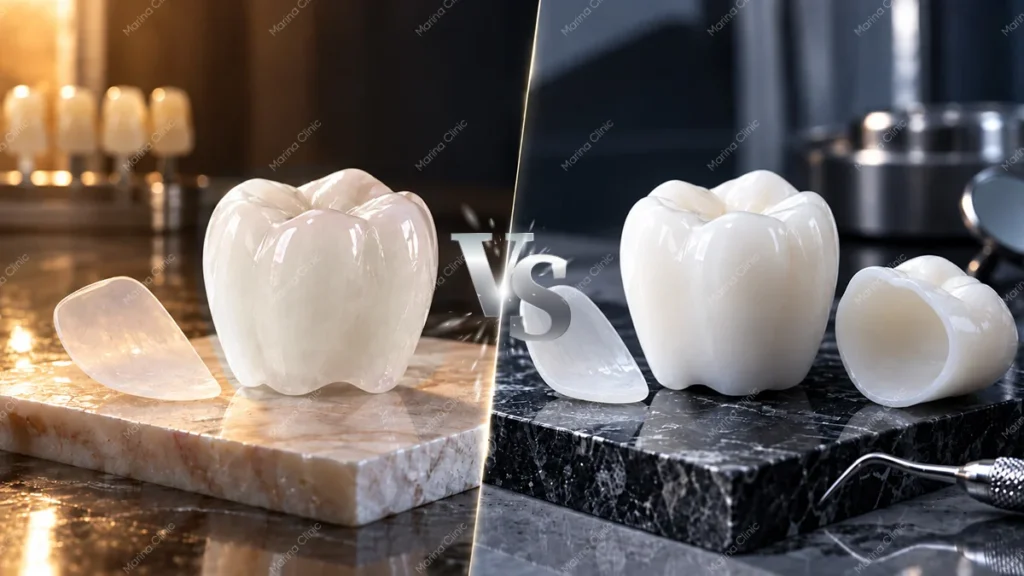
Choosing between E-max and zirconia is not simply a question of which material is stronger or more attractive. Both are advanced dental ceramics used for crowns, veneers, and smile restorations, but they have different optical and mechanical properties. The better option depends on the tooth being treated, bite forces, available tooth structure, aesthetic expectations, and the overall treatment plan.
Is E-max or Zirconia Better for Crowns and Veneers?
Neither material is universally better. E-max is often chosen for its high translucency and natural appearance, making it a popular option for front teeth and veneers. Zirconia is known for its strength and fracture resistance, making it suitable for areas exposed to greater chewing forces. Dentists select the most appropriate material after evaluating tooth position, bite, smile design, tooth preparation, and long-term treatment goals.
E-max vs Zirconia: What Is the Main Difference?
The main difference is the balance between aesthetics and mechanical strength. E-max is a lithium disilicate glass-ceramic known for its optical qualities, while zirconia is a highly crystalline ceramic available in different strength and translucency levels.
Material Composition
E-max is mainly made from lithium disilicate crystals within a glass-ceramic structure, allowing light to pass through in a way that can resemble natural enamel.
Zirconia is a polycrystalline ceramic with little or no glass phase, giving it different optical and mechanical properties.
Strength vs Aesthetics
E-max is commonly favored when translucency and subtle shade characteristics are important, while zirconia generally provides greater fracture resistance. Newer translucent zirconia has improved considerably in appearance, narrowing the aesthetic difference between the two.
How Dentists Choose Between Them
Dentists consider where the restoration will be placed, the forces it will receive, remaining healthy tooth structure, and the desired cosmetic result. Preparation design, restoration thickness, bonding conditions, and bite are also important.
Start a Conversation
Contact us through the communication method that suits you





Understanding E-max and Zirconia Restorations
E-max and zirconia can both be manufactured using digital dental technology, but their properties suit different restorative situations. This is why dentists do not automatically use the same material for every tooth.
What Are E-max Crowns?
E-max crowns are metal-free restorations made from lithium disilicate ceramic. Their translucency allows technicians to reproduce variations in shade and light transmission, making them a common choice for visible teeth.
What Are Zirconia Crowns?
Zirconia crowns are ceramic restorations made from zirconium dioxide. Different formulations range from high-strength materials for demanding functional areas to more translucent versions designed for improved aesthetics.
Can Both Materials Be Used for Veneers?
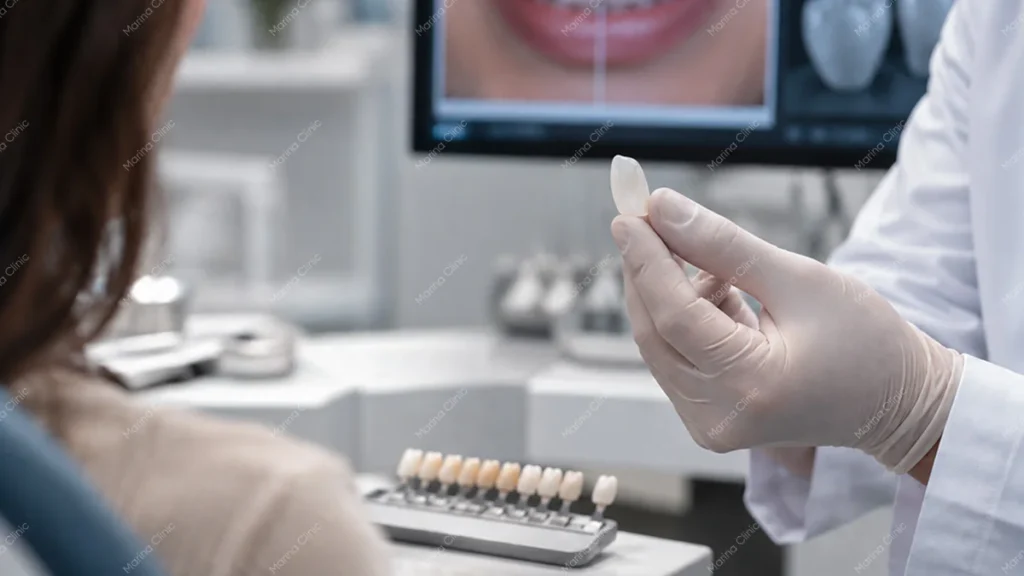
Both materials can be used for veneers in selected situations, but lithium disilicate such as E-max has a longer clinical history for laminate veneers. Zirconia veneers are also possible, although bonding requires careful planning and long-term clinical evidence remains more limited.
E-max Crown vs Zirconia Crown: Which Is Better?
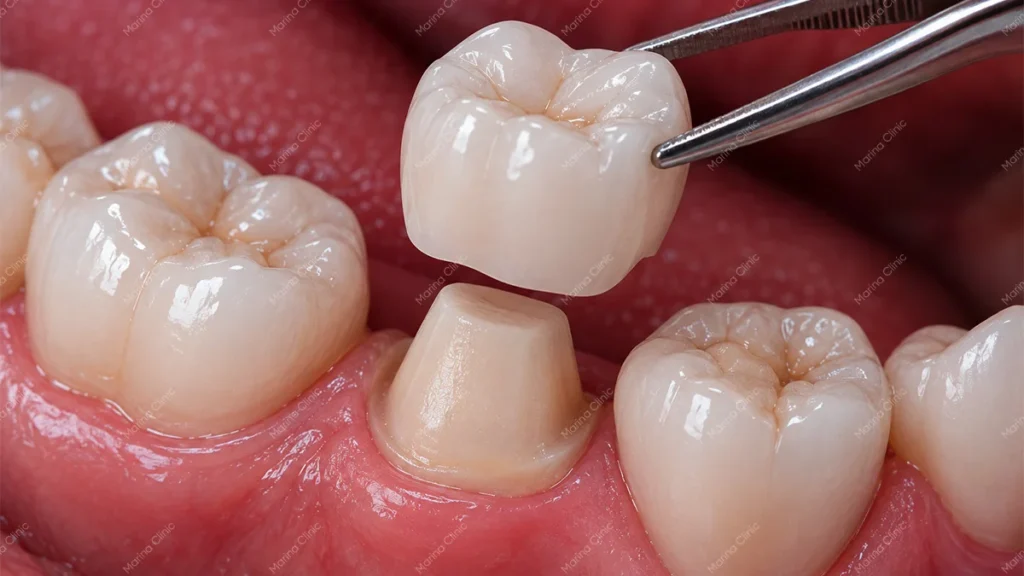
For crowns, the choice depends on tooth location and the balance between appearance and function. E-max is frequently considered for highly visible teeth, while zirconia is commonly selected when greater fracture resistance is required.
Appearance
E-max can reproduce the translucency and depth of natural enamel particularly well, which is valuable in the smile zone. Modern translucent and multilayer zirconia can also achieve highly aesthetic results, although its optical behavior differs from lithium disilicate.
Durability
Both materials can provide durable crowns when correctly designed and cemented. Zirconia generally offers greater fracture resistance, while E-max performance depends on appropriate thickness, preparation, bonding, bite conditions, and restoration design.
Tooth Preparation
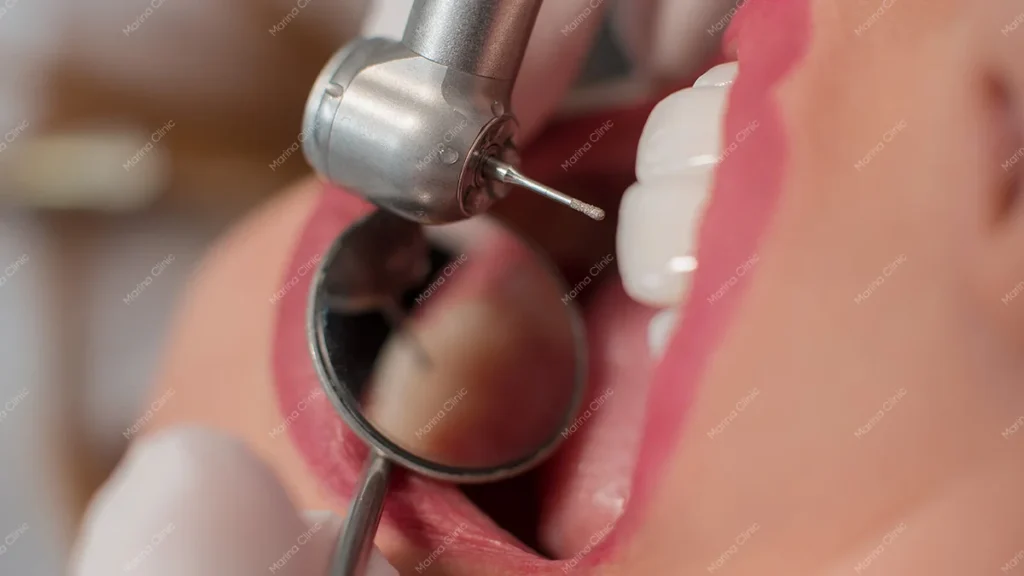
The amount of tooth preparation depends on the restoration design and ceramic system. Some zirconia restorations can function at reduced thicknesses, while E-max usually requires adequate ceramic thickness and preparation that supports predictable bonding and strength.
Long-Term Performance
Both E-max and zirconia crowns have demonstrated successful clinical use, but longevity depends on more than material choice. Marginal fit, cementation, bite forces, oral hygiene, tooth condition, and maintenance all influence performance.
Which Material Is Better for Veneers?
E-max is more commonly associated with ceramic veneers because it combines translucency with predictable adhesive bonding. Zirconia may still be considered when opacity, strength, or masking the underlying tooth color is important.
E-max Veneers
E-max veneers can be made as thin ceramic restorations that reproduce the shade, translucency, shape, and surface of natural teeth. They are frequently used to change tooth proportions, address minor cosmetic concerns, or create a more uniform smile.
Zirconia Veneers
Zirconia veneers can be used in selected aesthetic cases and may provide useful strength or masking ability. However, zirconia behaves differently during bonding, and less long-term clinical evidence is available compared with lithium disilicate veneers.
When Dentists Recommend Each
E-max may be preferred when enamel preservation, translucency, and adhesive bonding are priorities. Zirconia may be considered when greater opacity or mechanical resistance is required, although tooth condition and the available bonding surface remain important.
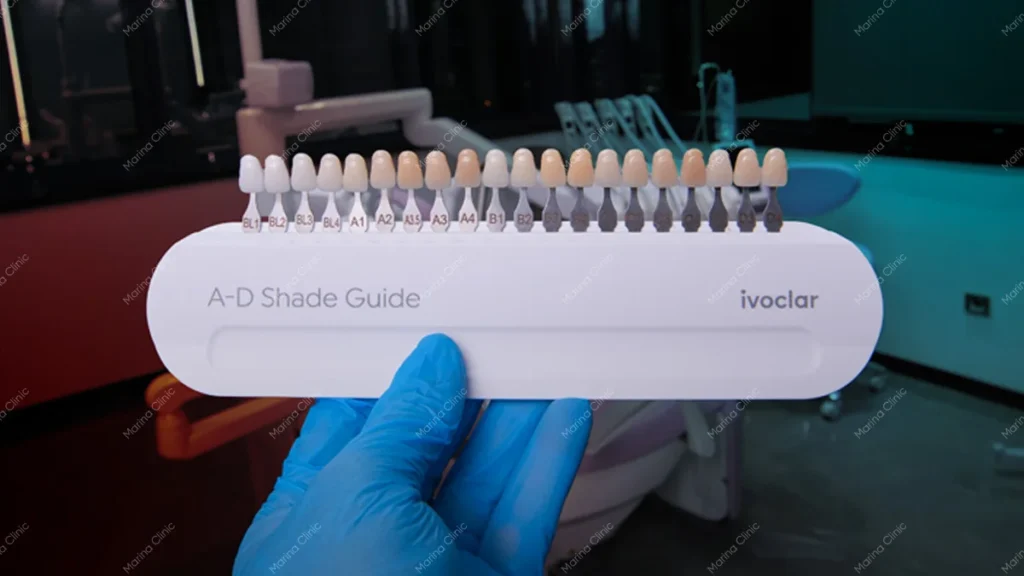
Which Material Is Better for Front Teeth and Back Teeth?
Tooth position strongly influences material selection because front and back teeth face different aesthetic and functional demands. Dentists therefore evaluate each tooth individually rather than selecting one ceramic for the entire mouth.
Front Teeth
E-max is frequently selected for front teeth because its translucency can reproduce natural enamel and incisal characteristics. Highly translucent zirconia can also be used when additional strength or masking of a darker tooth is required.
Premolars
Both E-max and zirconia may be suitable for premolars. The decision depends on remaining tooth structure, available restoration thickness, bite forces, aesthetic requirements, and bonding conditions.
Molars
Zirconia is commonly used for molars because these teeth experience significant chewing forces, especially in patients with a heavy bite. E-max crowns can also be used on posterior teeth when preparation, material thickness, and occlusion are carefully planned.
Bite Forces and Tooth Function
A ceramic restoration must withstand forces generated during biting, chewing, and jaw movements. Patients with heavy occlusal forces or grinding habits may require stronger designs, bite adjustments, or protective measures regardless of the ceramic selected.
Read more: Bruxism and Dental Crowns: Which Crown Type Holds Up Best?
Upload your photos and receive a free AI-powered preliminary analysis in minutes. No commitment required.
Zirconia vs E-max Cost: Why Are Prices Different?
The price difference does not come from the ceramic alone. Laboratory technique, restoration design, digital planning, technician experience, number of teeth, and additional dental treatment can all affect the final cost.
Material Manufacturing
E-max restorations may be pressed from ceramic ingots or milled from CAD/CAM blocks. Zirconia is typically milled from zirconia blanks and then sintered. The material system and fabrication method can influence laboratory time and production costs.
Laboratory Technology
Digital scanning, CAD/CAM design, precision milling, sintering, staining, glazing, and ceramic layering can affect laboratory fees. Highly customized restorations generally require more technical work regardless of the material used.
Digital Smile Design
Digital smile design can help evaluate tooth proportions, symmetry, smile line, and the relationship between restorations and facial features. When combined with mock-ups or provisional restorations, this additional planning can also influence treatment cost.
Complexity of Treatment
Replacing one crown is different from redesigning an entire smile. Tooth preparation, old restoration removal, gum treatment, root canal treatment, implant restorations, bite correction, and the number of teeth involved can all change the total cost.
Cost in Turkey
E-max and zirconia treatments in Turkey are generally priced according to restoration type, number of teeth, material system, laboratory work, and additional procedures. Patients should compare exactly what each quote includes rather than focusing only on the advertised price per tooth.
Read more: Dental Crowns Cost in Turkey 2026: Zirconia vs Porcelain Prices
Request pricing
By sending, you agree we may contact you on WhatsApp with pricing.
Got it! We’ll WhatsApp you the pricing shortly.
Which Material Lasts Longer?
There is no fixed lifespan for every E-max or zirconia restoration. Both can remain functional for many years when appropriately selected, manufactured, cemented, and maintained. Complications may occur earlier when clinical or functional conditions are unfavorable.
Fracture Resistance
Zirconia generally provides greater fracture resistance, which is why it is often considered for high-load areas. E-max also provides substantial strength for many single-tooth restorations, but suitability depends more on thickness, support, bonding, and bite conditions.
Wear Characteristics
How a ceramic interacts with opposing teeth depends heavily on its surface condition. Proper finishing and polishing are important for both E-max and zirconia, particularly after bite adjustments alter the ceramic surface.
Maintenance
Ceramic crowns and veneers require daily brushing, interdental cleaning, professional examinations, and routine dental hygiene. Dentists also monitor restoration margins, gum health, bite contacts, ceramic surfaces, and supporting teeth during follow-up appointments.
Oral Habits That Influence Longevity
Several habits and oral-health factors can influence how restorations perform over time:
- Bruxism: Grinding or clenching can increase stress on ceramic restorations and supporting teeth.
- Oral hygiene: Plaque around restoration margins can contribute to gum inflammation and decay of the underlying tooth.
- Smoking: Smoking can affect gum health and may contribute to discoloration around restorations.
- Alcohol: Excessive consumption can indirectly affect oral health through dry mouth, hygiene changes, or dietary habits.
- Regular dental care: Routine examinations allow dentists to identify bite problems, gum changes, or restoration damage before they progress.
Read more: Veneers vs Crowns: Which Is Better for a Perfect Smile in 2026?
Can E-max and Zirconia Be Combined in the Same Smile?
Yes. A treatment plan can include both E-max and zirconia when different teeth have different aesthetic and functional requirements. Dentists can select the material tooth by tooth instead of using one ceramic for the entire smile.
Smile Design Planning
Digital and clinical smile planning helps the dentist and technician select the appropriate material for each restoration. Highly visible teeth may require greater translucency, while posterior teeth may need additional resistance to functional forces.
Matching Color and Translucency
Combining materials requires careful shade selection because E-max and zirconia transmit and reflect light differently. Laboratory technicians can adjust shade, staining, layering, surface texture, and glaze to create a consistent appearance.
Combining Strength and Aesthetics
In some cases, E-max may be used for highly visible anterior restorations while zirconia is selected for teeth exposed to greater forces. This allows each material to be used where its properties are most useful.
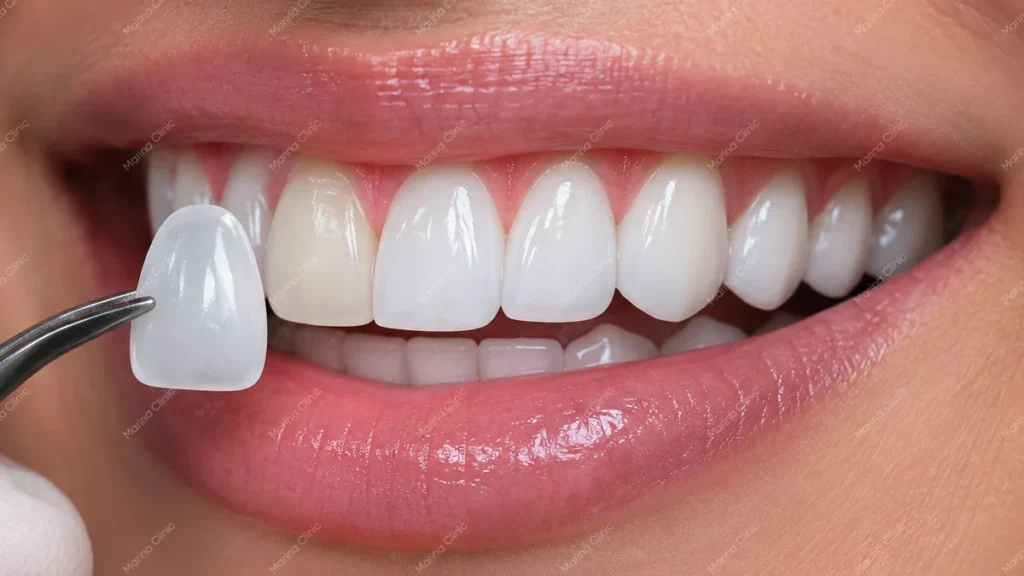
Which Material Is Right for Your Teeth?
The most appropriate material can only be selected after examining the teeth, gums, bite, existing restorations, and treatment goals. Choosing between E-max and zirconia should therefore be part of the complete restorative plan rather than based on material popularity alone.
What Dentists Evaluate Before Recommending a Material
Dentists evaluate remaining enamel and dentin, tooth position, existing fillings or crowns, gum condition, available restoration space, bite relationships, and aesthetic expectations before recommending a ceramic material.
Functional Needs
Posterior teeth, heavy bites, large restorations, and teeth exposed to increased forces may require different material properties from minimally restored front teeth. Bruxism, missing teeth, opposing restorations, and occlusal patterns may also influence the decision.
Cosmetic Expectations
Patients seeking natural translucency, subtle shade transitions, or significant cosmetic changes may have different material requirements from those prioritizing durability. Existing tooth color and the amount of discoloration that must be masked are also important.
Personalized Treatment Planning
The final recommendation should balance appearance, strength, tooth preservation, restoration thickness, bonding conditions, and long-term maintenance. A clinical examination and appropriate imaging help determine whether E-max, zirconia, or a combination of both is suitable.
Which treatment are you interested in?
FAQs
Neither is universally better. E-max suits cases that prioritize translucency and aesthetics, while zirconia offers greater strength.
E-max offers high translucency and can closely resemble natural enamel. Modern zirconia can also deliver highly aesthetic results.
Generally, yes. Zirconia offers greater fracture resistance, although thickness, design, support, and bite forces also affect performance.
Both can last many years. Longevity depends on bite forces, oral hygiene, restoration design, and regular dental care.
Yes. Dentists may use E-max for back teeth when tooth structure, ceramic thickness, bite forces, and bonding conditions allow it.
Yes. Dentists may use zirconia for veneers in selected cases, although lithium disilicate has stronger long-term clinical evidence.
Costs vary with the ceramic system, laboratory work, customization, technology, and treatment complexity.
Yes. Dentists can combine both materials to balance aesthetics and strength across different teeth.