
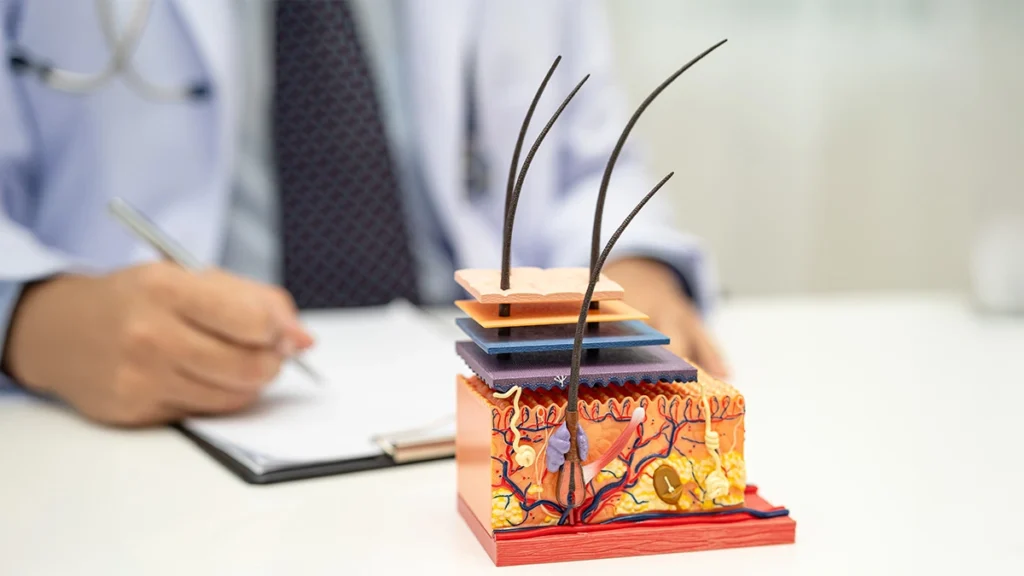
Getting a hair transplant is exciting, but the recovery journey can feel confusing if you do not know what is normal. Many patients worry when they see redness, scabs, shedding, slow growth, or uneven density during the first months.
The truth is that hair transplant recovery happens in stages. Some phases may look worrying, but they are often part of normal healing. This guide walks you through what to expect month by month, what to avoid, and when you should contact your clinic.
Quick Answer: How Long Does Hair Transplant Recovery Take?
Hair transplant recovery starts within the first 7–10 days, but visible hair growth takes several months. Shedding is common during the first month, early growth often begins around months 3–4, noticeable density usually appears between months 6–9, and final results are commonly seen around 12 months. Some crown-area results may take longer.
Before Hair Transplant Surgery — Preparing for the Journey
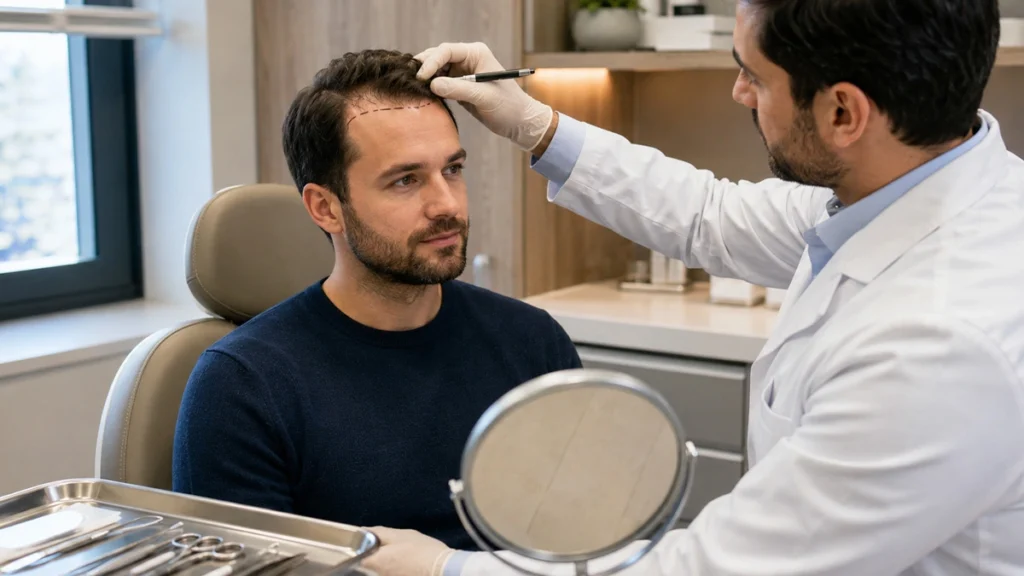
Before surgery, proper planning is essential. A successful hair transplant does not begin only on the day of the procedure; it starts with careful evaluation, realistic expectations, and a clear treatment plan.
Understanding Your Hairline Plan
Your clinic will usually assess several factors before designing the hairline. These may include your age, pattern of hair loss, donor area quality, facial proportions, and future risk of hair thinning.
A natural hairline should not only look good immediately after surgery, but should also remain suitable as you age. For this reason, hairline design is usually conservative, balanced, and customized to each patient.
Donor Area Evaluation
The donor area is commonly located at the back and sides of the scalp, where hair is usually more resistant to genetic hair loss. The quality, density, and availability of donor hair influence how many grafts can be safely harvested.
If the donor area is weak or limited, the surgeon may need to plan graft placement carefully to avoid overharvesting and to achieve the best possible coverage.
Realistic Density Planning
Hair transplant surgery can improve coverage and hairline appearance, but it cannot always recreate the same density a person had before hair loss. Final density depends on several factors, including:
- Number of grafts transplanted
- Donor hair quality
- Size of the bald or thinning area
- Hair thickness and texture
- Healing response
- Future hair loss progression
Realistic planning helps patients understand what can be achieved in one session and whether a second session may be needed later.
What Patients Should Know Before Surgery
Patients should understand that hair transplant results are not immediate. The transplanted grafts need time to heal, shed, rest, and regrow.
In the first few weeks, it is common for transplanted hairs to fall out. This can be alarming, but in many cases, the follicle remains under the skin and later begins a new growth cycle.
Why Expectations Matter Before Recovery Begins
Having realistic expectations helps prevent panic during normal recovery stages. Patients who understand the shedding phase, waiting phase, and gradual growth timeline are more likely to follow aftercare instructions correctly.
Recovery is not only about waiting for hair to grow. It is also about protecting the grafts, reducing inflammation, avoiding harmful habits, and attending follow-up visits when recommended.
First 24–72 Hours After Hair Transplant
The first few days after a hair transplant are very important because the transplanted grafts are still delicate. During this period, patients should carefully follow the clinic’s instructions and avoid anything that may disturb the grafts.
What You May Feel
During the first 24–72 hours, it is normal to experience mild discomfort. Patients may notice:
- Mild swelling
- Tightness in the scalp
- Tenderness in the donor area
- Mild redness
- Sensitivity around the transplanted area
These symptoms are usually part of the early healing response. Swelling may appear around the forehead or upper face, depending on the procedure and individual healing.
What You Should Avoid
During the first few days, patients should avoid:
- Touching or rubbing the grafts
- Scratching the scalp
- Sleeping flat
- Sweating
- Heavy physical activity
- Direct sun exposure
- Wearing tight hats or anything that presses on the grafts
Sleeping with the head elevated may help reduce swelling. Patients should also avoid bending forward for long periods, as this may increase pressure and swelling.
When to Contact Your Clinic
Although mild discomfort is expected, some symptoms should be reported to the clinic immediately. Contact your clinic if you experience:
- Severe pain
- Heavy bleeding
- Fever
- Unusual discharge
- Increasing swelling
- Pus or bad smell from the treated area
These symptoms may require clinical evaluation to rule out infection or another complication.
Start a Conversation
Contact us through the communication method that suits you





Days 3–10 — Scabs, Redness, and Early Healing
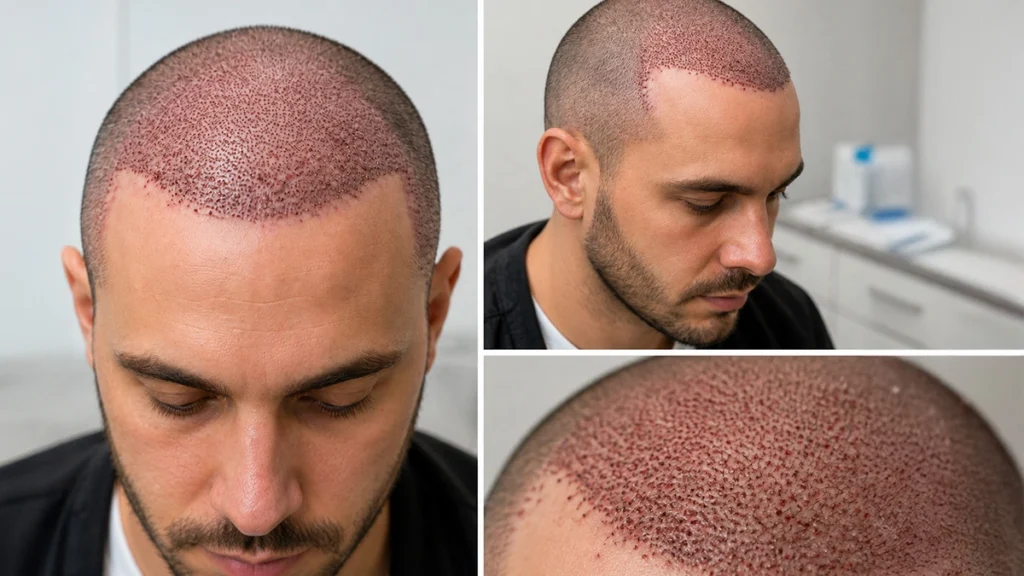
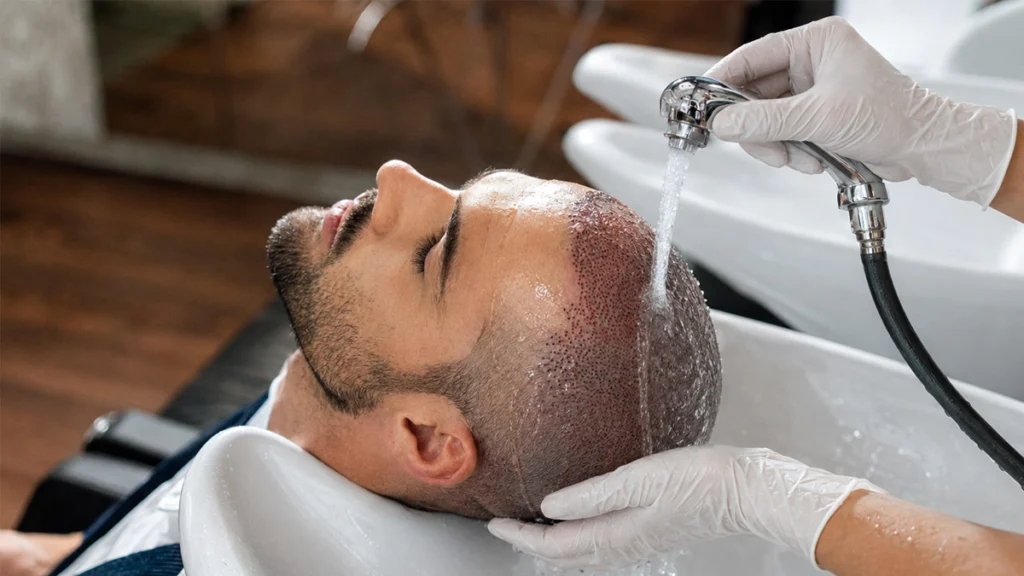
Between days 3 and 10, the scalp usually continues healing. Scabs may form around the transplanted grafts, and redness or itching may appear.
Scabbing Around Grafts
Small scabs or crusts around the grafts are common after a hair transplant. They form as part of the natural healing process.
Patients should not pick, scratch, or forcefully remove scabs. Removing scabs too aggressively may irritate the scalp or disturb healing grafts. Clinics usually provide specific washing instructions to help soften and remove crusts safely over time.
Redness and Itching
Mild redness and itching are also common during this stage. Itching often occurs as the scalp heals, but scratching should be avoided.
If itching becomes severe, patients should contact their clinic before applying any products. Not all creams, oils, or shampoos are safe to use during early recovery.
What Not to Believe
Some patients worry that scabs mean the transplant has failed. This is not usually true. Scabbing is often a normal part of healing.
Redness also does not always mean infection. Mild redness can be expected, especially in the transplanted area. However, redness that becomes more intense, painful, swollen, or associated with pus, fever, or bad smell should be checked by the clinic.
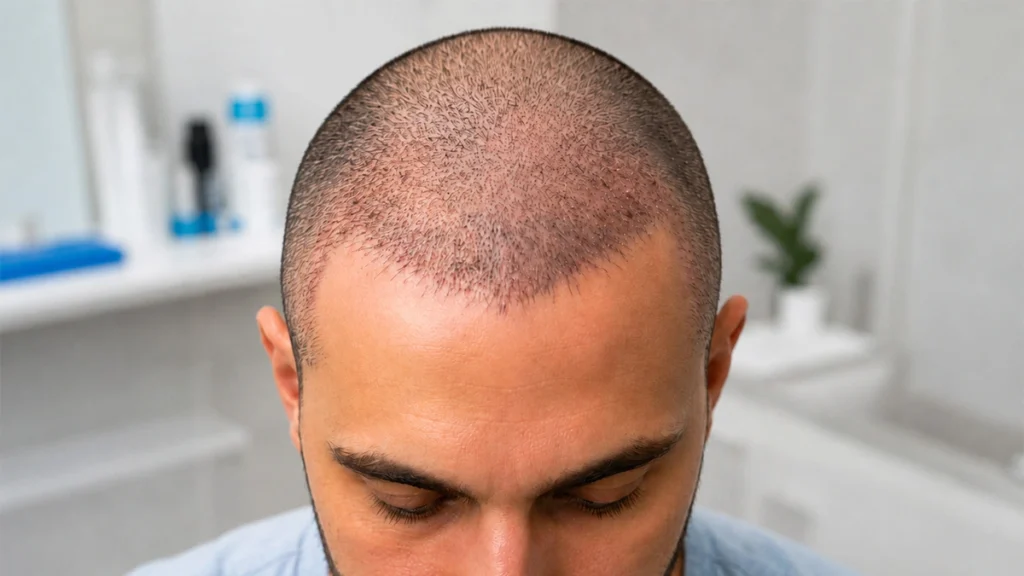
Weeks 2–4 — Shedding Phase and Shock Loss
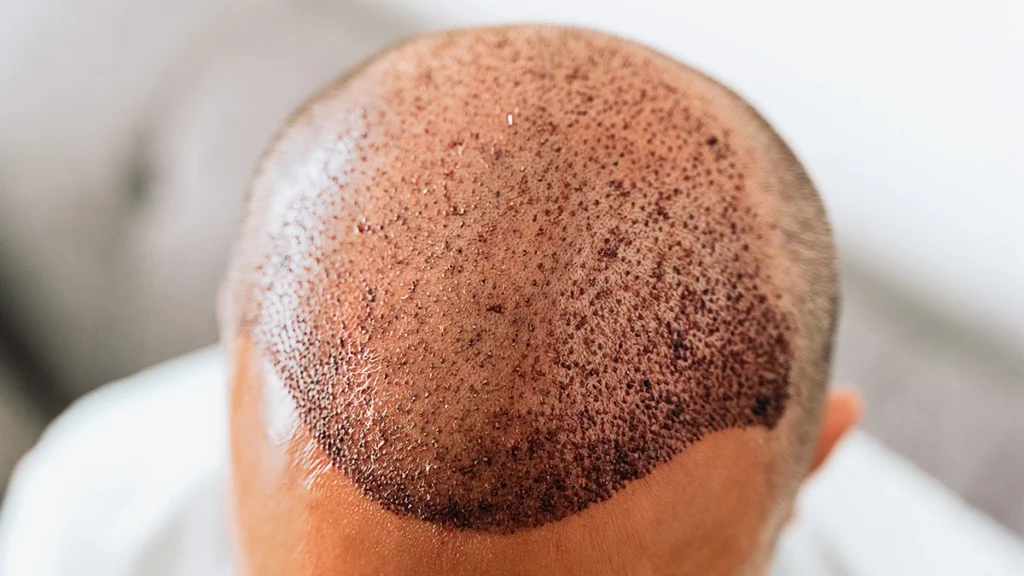
The shedding phase is one of the most misunderstood parts of hair transplant recovery. Many patients become worried when transplanted hairs begin to fall out, but this stage is usually expected.
Why Transplanted Hair Falls Out
In the first few weeks after surgery, the visible hair shaft may shed. This does not necessarily mean the graft has failed. In many cases, the follicle remains under the skin and later produces new hair.
This shedding happens because transplanted follicles go through stress after being moved from the donor area to the recipient area. The hair growth cycle resets before new growth begins.
Shock Loss Explained
Shock loss refers to temporary shedding that may affect transplanted hair or nearby native hair. It can occur because the scalp has experienced surgical stress.
In many cases, shock loss is temporary. However, the recovery pattern can vary depending on the patient’s hair condition, surgical plan, and existing hair loss.
Reassurance for Patients
Shedding during this stage does not usually mean the transplant failed. It often means the follicles are entering a resting phase before restarting growth.
Patients should avoid judging their results during the first month. The scalp is still healing, and the visible appearance may temporarily look worse before it improves.
Month 2 — The Waiting Phase
Month 2 is often called the waiting phase because many patients feel that nothing is happening. The transplanted hairs may have shed, and visible new growth may not have started yet.
Why Nothing Seems to Be Happening
During this phase, the follicles may be dormant beneath the skin. Although the scalp may look quiet from the outside, healing and biological activity are still taking place.
The skin continues to recover, and the follicles prepare for the next stage of growth.
Common Patient Concerns
During month 2, patients may notice:
- Sparse appearance
- Uneven-looking hairline
- Mild redness in some areas
- Slow visible progress
- Anxiety about whether the transplant worked
These concerns are common. However, month 2 is still too early to evaluate the final result.
What to Do During This Phase
Patients should continue following the clinic’s aftercare instructions. This may include gentle washing, avoiding harsh products, and attending follow-up appointments if scheduled.
It is also important not to compare your recovery too early with online photos. Hair growth speed varies from person to person.
Months 3–4 — Early Hair Growth Begins
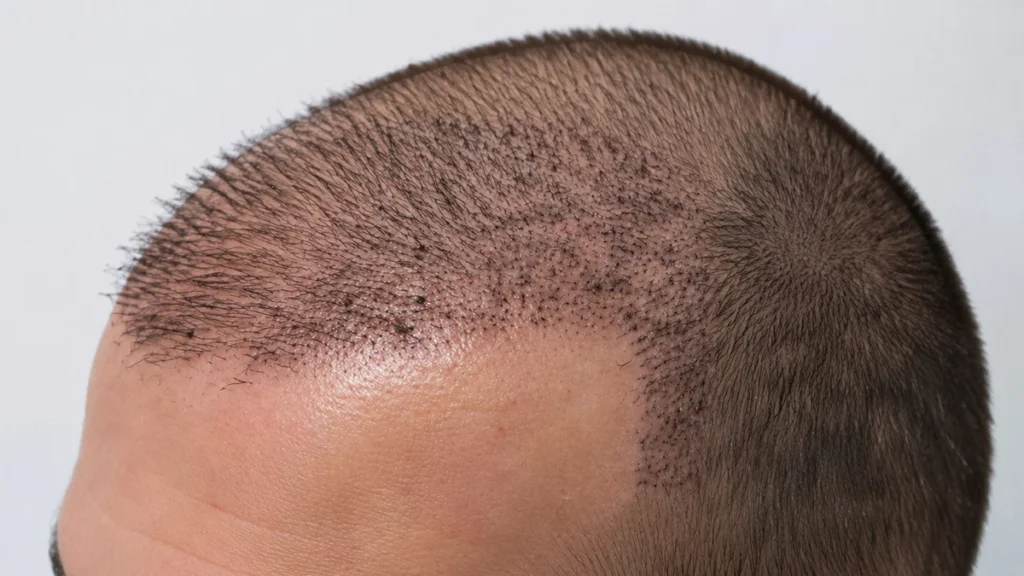
For many patients, early new growth begins around months 3–4. This stage can be exciting, but the result is still immature.
First New Hairs Appearing
The first new hairs may be thin, soft, and light in texture. They may not immediately match the thickness of the surrounding hair.
Early growth may also appear uneven. Some areas may grow faster than others, while other areas may still look sparse.
Why Growth Looks Patchy at First
Patchy growth during the early stage is common because follicles do not all grow at the same speed. Some follicles begin producing hair earlier, while others take longer.
The crown area may also respond more slowly than the hairline. Patients who had crown restoration should be especially patient, as this region often takes longer to show visible density.
What Patients Should Avoid
At this stage, patients should avoid judging the final result too early. Comparing month 3 or month 4 photos with final results online can create unnecessary stress.
The transplant is still developing, and stronger improvement usually appears in the following months.
Months 5–6 — Visible Improvement Starts
Between months 5 and 6, many patients begin to see more noticeable improvement. Hair coverage may increase, and the hairline may start to look more defined.
Hair Thickening Begins
New hairs may become stronger, thicker, and more visible. The hairline may begin to frame the face more naturally, and coverage may improve in previously thin areas.
However, the result is still not final. Hair texture, thickness, and density usually continue to mature over the following months.
Density Is Still Developing
Even if the hair looks better by month 6, patients should remember that density is still developing. Some areas may still appear thinner than expected, especially if the original bald area was large or the crown was treated.
The transplanted hair may still be fine in texture and may require more time to mature.
Helpful Care Tips
During this phase, patients may gradually return to more normal grooming habits if approved by their clinic. Helpful care tips include:
- Use gentle styling techniques
- Avoid harsh chemicals unless approved
- Do not aggressively brush or pull the hair
- Continue clinic-approved products if prescribed
- Protect the scalp from excessive sun exposure
Any medical shampoos, topical treatments, or oral medications should be used only as advised by the treating clinic or physician.
Read more: Hair Transplant in Istanbul 2026: Techniques, Results & What to Expect
Months 7–9 — Density and Hairline Shape Improve
Months 7–9 are often a period of stronger visible progress. Hair becomes thicker, coverage improves, and the hairline usually starts to look more natural.
Stronger Hair Growth
During this stage, transplanted hairs may gain strength, diameter, and better texture. Patients may notice improved styling ability and better coverage in the transplanted area.
Hair direction may also appear more natural as the new hairs mature.
Hairline Matures
The hairline may become softer and more blended with the surrounding hair. Instead of looking sharp or immature, it may begin to settle into a more natural appearance.
This stage can be especially encouraging for patients who were worried during the shedding or waiting phases.
Crown Area May Still Need Time
The crown can be slower to mature than the frontal hairline. Patients who had crown restoration may continue to see density improvements beyond month 9.
Read more: Hair Transplant Turkey 2026: Why Turkey Leads the World (FUE, DHI, Sapphire & Costs Explained)
Months 10–12 — Final Result Becomes Clearer
By months 10–12, the final result becomes much clearer for many patients. Hair usually has better thickness, texture, and styling flexibility.
Full Hairline Result
At this stage, the transplanted hairline may appear more mature and natural. Patients may be able to style their hair more confidently, depending on hair length, density, and growth pattern.
Final Density Expectations
Final density depends on several factors, including:
- Graft count
- Donor area quality
- Hair thickness
- Hair color contrast with the scalp
- Size of the transplanted area
- Healing response
- Future hair loss pattern
Some patients may achieve satisfying coverage after one session, while others may need additional treatment to improve density.
When a Second Session May Be Discussed
A second session may be discussed if the patient has:
- A large bald area
- Crown thinning that needs more density
- Limited graft coverage from the first session
- Progressive hair loss in untreated areas
- A desire for greater cosmetic density
The decision should be made after proper clinical evaluation, not too early in the recovery process.
Start a Conversation
Contact us through the communication method that suits you
Hair Transplant Recovery Timeline Table
| Stage | What Happens | What Patients Should Do |
| 1–3 days | Swelling, tenderness, tightness | Protect grafts and sleep elevated |
| 3–10 days | Scabs, redness, itching | Wash gently and avoid scratching |
| 2–4 weeks | Shedding phase | Do not panic; shedding is often normal |
| Month 2 | Waiting phase | Follow the care plan and avoid early judgment |
| Months 3–4 | Early growth begins | Be patient with thin or uneven growth |
| Months 5–6 | Visible improvement starts | Continue gentle care and approved products |
| Months 7–9 | Density improves | Resume normal styling gradually if approved |
| Months 10–12 | Final result becomes clearer | Review progress with the clinic |
What Is Normal vs Not Normal After Hair Transplant?
Knowing the difference between normal healing signs and warning symptoms is important during recovery.
Normal Signs
The following symptoms are commonly part of recovery:
- Mild redness
- Itching
- Scabbing
- Temporary shedding
- Mild swelling
- Slow early growth
- Patchy growth in the first few months
These signs usually improve gradually with proper aftercare.
Warning Signs
Some symptoms may indicate a problem and should not be ignored. Warning signs include:
- Severe pain
- Pus
- Fever
- Heavy bleeding
- Increasing swelling
- Bad smell
- Worsening redness
- Unusual discharge
When You Should Contact Your Clinic Immediately
Patients should contact their clinic immediately if they notice signs of infection, heavy bleeding, sudden worsening symptoms, fever, pus, or severe pain.
Early communication with the clinic can help prevent complications and ensure proper treatment if needed.
Start a Conversation
Contact us through the communication method that suits you
What to Avoid During Hair Transplant Recovery
Aftercare restrictions are designed to protect graft survival, reduce inflammation, and support healing.
First Two Weeks
During the first two weeks, patients are usually advised to avoid:
- Smoking
- Alcohol
- Sweating
- Scratching
- Direct sun exposure
- Touching the grafts unnecessarily
- Heavy exercise
- Tight hats or helmets
Smoking may affect blood circulation and healing, while alcohol may increase swelling or interfere with medications. Patients should follow their clinic’s specific instructions.
First Month
During the first month, patients may need to avoid:
- Heavy exercise
- Sauna
- Swimming
- Harsh styling products
- Chemical treatments
- Aggressive brushing
- Excessive sun exposure
The exact timeline for returning to normal activities may vary depending on the procedure, healing progress, and clinic protocol.
Why These Restrictions Matter
The early recovery period is important for graft stability and scalp healing. Ignoring aftercare instructions may increase irritation, inflammation, or the risk of poor healing.
Following restrictions carefully gives the transplanted follicles the best chance to recover and enter the growth cycle properly.
Read more: Hair Transplant Turkey vs Europe 2026: Medical Standards, Cost & Techniques Compared
Common Myths About Hair Transplant Recovery
“If Hair Sheds, the Transplant Failed”
This is one of the most common myths. Shedding after a hair transplant is usually part of the normal growth cycle. The visible hair shaft may fall out, while the follicle remains beneath the skin.
“You Should See Results Immediately”
Hair transplant results are gradual. The first visible improvement often begins around months 3–4, but density usually continues improving for several months.
“Patchy Growth Means Bad Surgery”
Patchy early growth does not always mean poor surgery. Follicles grow at different speeds, and early results can look uneven before they mature.
“The Crown Must Grow at the Same Speed as the Hairline”
The crown often grows more slowly than the frontal hairline. Patients who had crown restoration may need more time before judging the final result.
Read more: FUE vs DHI vs Sapphire Hair Transplant: Which Technique Is Better in 2026?
People Also Ask About Hair Transplant Recovery
How long does hair transplant recovery take?
Is shedding normal after hair transplant?
When do transplanted hairs start growing?
Why does my hair transplant look patchy after 4 months?
When can I exercise after hair transplant?
When will I see final hair transplant results?
Final Guidance — Recovery Is a Process, Not a Moment
Hair transplant recovery is a process that unfolds over months, not days. The first few weeks are focused on healing and graft protection. Shedding may occur, followed by a quiet waiting phase before new growth begins.
Patients should not judge their final result too early. Thin, patchy, or uneven growth during the first few months can be part of normal recovery. Density, texture, and hairline shape usually improve gradually.
The best approach is to follow clinic instructions carefully, avoid harmful habits, attend follow-up appointments, and contact the clinic if symptoms appear unusual or worsen over time.
Read more: Hair Transplant in Turkey 2026: Costs, Techniques, Results & Expected Hairline
Which treatment are you interested in?
FAQ
Yes. Hair shedding after a transplant is common, especially during the first month. It does not usually mean the transplant failed. In many cases, the hair shaft sheds while the follicle remains under the skin.
Early growth often begins around months 3–4. The first hairs may look thin or soft, but they usually become stronger and thicker over time.
A thin appearance after 4 months can be normal. Hair growth is still in the early stage, and many patients notice stronger improvement between months 6–9.
Light activity may resume after the early healing phase if approved by your clinic. Heavy exercise, sweating, swimming, and sauna use usually require more time and should only be resumed after clinical approval.
Most patients see final results around 12 months. Crown areas may take longer to fully mature.
You should contact your clinic if you experience severe pain, fever, pus, heavy bleeding, bad smell, unusual discharge, or swelling that continues to worsen. These symptoms may require professional evaluation.