
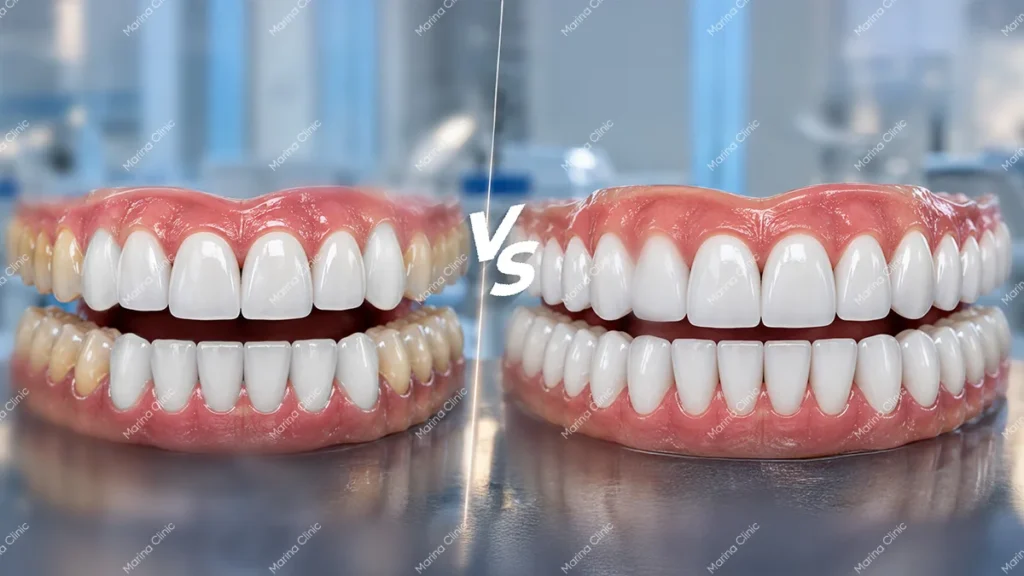
Choosing between 12 and 20 veneers can feel like choosing between a smaller smile makeover and a complete one. In reality, neither number describes what your teeth need. The right plan covers the teeth that affect your smile, fits your bite, and leaves suitable healthy teeth alone. This guide explains how dentists decide on the number, what changes the price, and why the final plan may include treatments other than veneers.
Do You Need 12 or 20 Veneers?
There is no standard number of veneers for every patient. Twelve may be enough when the cosmetic concerns are limited to the visible upper teeth. Twenty may suit someone whose wider smile shows more upper and lower teeth. The decision depends on tooth visibility, existing dental work, bite, and the look you want, rather than a package number.
12 vs 20 Veneers: What Is the Main Difference?
The main difference between 12 vs 20 veneers is the number of teeth included and how much of the visible smile the restorations cover. This can affect the overall appearance, treatment complexity, laboratory work, and cost.
Number of Teeth Being Treated
A 12-veneer treatment involves 12 teeth, which may be enough to improve the main visible part of the smile. A 20-veneer plan covers eight additional teeth and may be used when more teeth are visible or when both arches are included.
Smile Coverage
Twelve veneers can provide good coverage for patients whose smile mainly exposes the front and side teeth. Patients with a wider smile may need additional veneers to avoid a noticeable difference between treated and untreated teeth.
Upper Teeth vs Upper and Lower Teeth
In many cases, 12 veneers are concentrated on the upper teeth because they are usually the most visible. A 20-veneer plan may involve both arches, such as 10 upper and 10 lower teeth, depending on the patient’s smile.
How the Number of Veneers Influences the Treatment Plan
Treating more teeth requires broader evaluation of the bite, tooth proportions, gum levels, and how the upper and lower teeth meet. It may also increase preparation, laboratory work, appointment time, and long-term maintenance.
Start a Conversation
Contact us through the communication method that suits you





How Many Veneers Do You Actually Need?
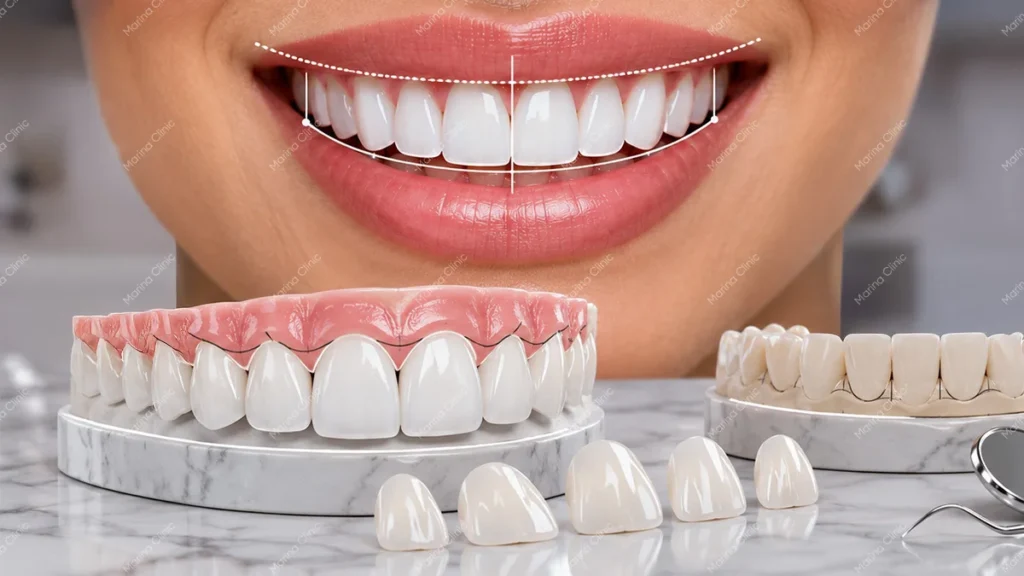
The ideal number of veneers depends on what can be seen when you smile naturally. Dentists usually assess several features together before deciding how many teeth should be included.
Smile Line
Your smile line shows how the upper teeth relate to the lower lip during a smile. It also helps identify which teeth remain visible and whether veneers need to extend farther toward the sides.
Smile Width
Some people show mainly their front teeth, while others reveal premolars farther toward the sides. A wider smile may require more veneers to create a smooth transition between treated and natural teeth.
Tooth Visibility
The number of visible teeth can change while smiling, laughing, or speaking. Dentists therefore evaluate the smile during natural facial movement rather than relying only on a static photograph.
Existing Dental Work
Previous fillings, crowns, veneers, or root canal treatments can affect the plan. The dentist must decide whether these restorations can remain, need replacement, or require a different type of treatment.
Upper and Lower Teeth
Some patients show very little of their lower teeth, so treating the upper smile alone may be enough. Others expose both arches, making the condition and appearance of the lower teeth more important.
Cosmetic Goals
A subtle smile improvement may require fewer veneers than a wider change in tooth shape, shade, and symmetry. The goal is to achieve balance while preserving healthy natural tooth structure whenever possible.
When Are 12 Veneers Enough and When Are 20 Recommended?
The choice between 12 vs 20 veneers depends on the area that needs improvement. Neither number is automatically better when the treatment is properly planned.
Cases Suitable for 12 Veneers
Twelve veneers may be sufficient when the aesthetic concern is mainly limited to the visible upper teeth, especially in patients with a moderate smile width and healthy lower teeth.
Cases That May Benefit From 20 Veneers
Twenty veneers may be considered when a patient has a wide smile, shows both upper and lower teeth, or wants to correct noticeable differences across a larger number of visible teeth.
Why More Veneers Are Not Always Better
Placing more veneers does not automatically improve the result. Adding restorations to teeth that do not need them can increase cost and treatment unnecessarily, so the aim is to use the most appropriate number.
12 Veneers Cost vs 20 Veneers Cost
The cost difference between 12 vs 20 veneers is mainly influenced by the number of restorations, but material, laboratory work, treatment complexity, and additional procedures also affect the final price.
Number of Veneers
The number of veneers has the most direct effect on price. If the same per-tooth rate is used, treating 20 teeth will naturally cost more than treating 12, before package discounts or additional procedures are considered.
Material Selection
Prices can vary according to the ceramic used. E-max, other porcelain ceramics, and zirconia differ in their properties, manufacturing requirements, and indications, so identical veneer counts may still have different costs.
Laboratory Work
The dental laboratory must reproduce natural proportions, texture, translucency, contacts, and shade. The amount of work generally increases as more teeth are included in the treatment.
Smile Design
Digital planning, photographs, scans, mock-ups, or trial smiles may be used before treatment. The extent of this planning depends on the clinic and complexity of the case rather than simply the number of veneers.
Temporary Veneers
Temporary restorations may be needed after tooth preparation while the final restorations are produced. Patients should confirm whether temporaries are required and whether their cost is included.
Additional Dental Treatment
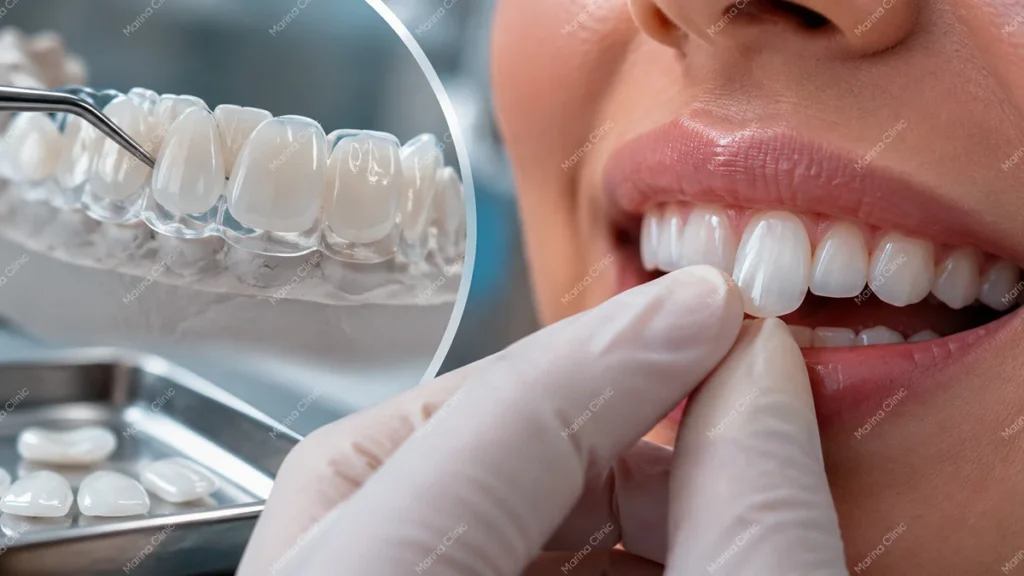
The final price can rise if cleaning, gum treatment, root canal therapy, replacement of old restorations, or other procedures are required before veneer placement.
Request pricing
By sending, you agree we may contact you on WhatsApp with pricing.
Got it! We’ll WhatsApp you the pricing shortly.
Porcelain, E-max, or Zirconia Veneers: Which Material Is Right?
Material choice affects appearance, bonding, preparation, and how restorations respond to bite forces. Choosing between 12 and 20 veneers should therefore include selecting the right material for each tooth.
Porcelain Veneers
Porcelain veneers are thin ceramic restorations used to improve the visible surface of the teeth. Because the term can refer to different ceramic systems, patients should ask which specific material is being offered.
E-max Veneers
E-max is a lithium disilicate ceramic commonly used for aesthetic restorations because it combines translucency with useful strength. It is often considered for visible front teeth when clinical conditions allow predictable bonding.
Zirconia Veneers
Zirconia offers high strength and can be useful when greater masking or durability is required. However, tooth position, bite forces, material thickness, and aesthetic goals should be assessed before choosing it.
Appearance, Strength, and Longevity
No material is ideal for every patient. Translucency may be important for front teeth, while strength matters more in high-force areas. Longevity also depends on preparation, bonding, bite, oral hygiene, and habits such as grinding.
How Material Choice Influences Cost
Ceramic type can affect the price because different materials require different manufacturing techniques and laboratory work. Patients should confirm that quotations include comparable materials before judging price differences.
Veneers vs Crowns: When Does the Treatment Plan Change?
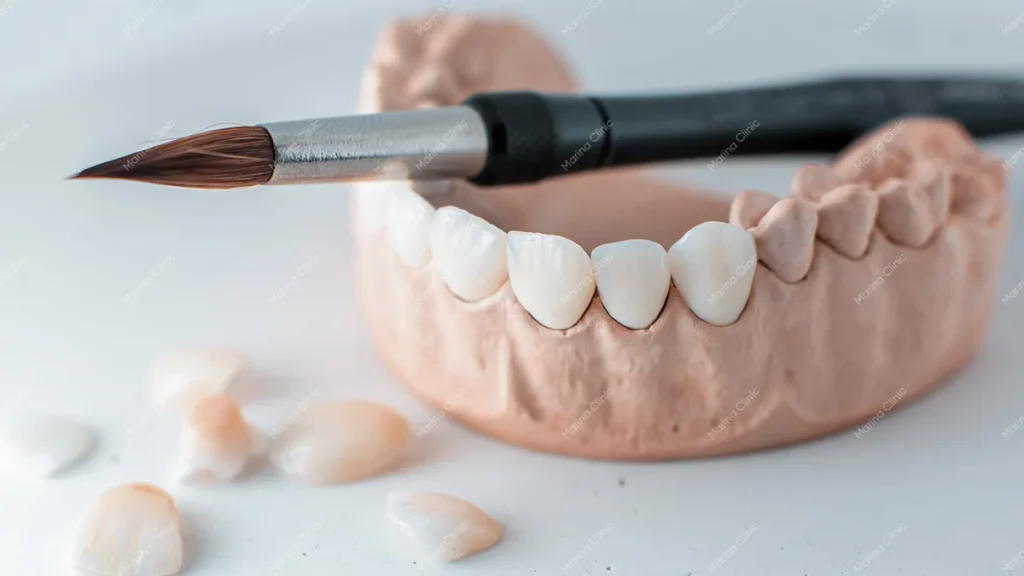
Not every tooth in a smile makeover should automatically receive a veneer. Crowns may be recommended for teeth that require greater structural support.
Healthy Teeth
Teeth with healthy structure that mainly need changes in shade, shape, or proportion may be suitable for veneers when the bite and enamel conditions allow predictable bonding.
Structurally Compromised Teeth
A tooth with extensive damage, large fillings, or major loss of structure may require more coverage than a veneer provides. In such cases, a crown may offer better structural protection.
Mixed Smile Makeover Cases
A smile makeover may combine different restorations. A patient can receive veneers on healthy teeth and crowns on teeth that have already lost substantial structure.
Combining Veneers and Crowns
Veneers and crowns can be designed together so their shade, proportions, texture, and overall appearance remain consistent across the smile.
Read more: Dental Crowns Explained: When Crowns Are Better Than Veneers
Upload your photos and receive a free AI-powered preliminary analysis in minutes. No commitment required.
How Does a Dentist Decide Between 12 and 20 Veneers?
A dentist should not decide between 12 vs 20 veneers based only on photographs or package size. A complete plan requires evaluation of the teeth, gums, bite, facial features, and existing dental work.
Digital Smile Design
Digital smile design can help assess tooth dimensions, smile width, midline, gum levels, and the relationship between the teeth and face. It may also help patients visualize the proposed treatment.
Clinical Examination
The dentist checks each tooth for decay, cracks, restorations, enamel quality, gum health, and structural strength. This helps determine how many teeth should be treated and whether veneers are suitable.
Bite Analysis
The way the upper and lower teeth contact matters because veneers must withstand chewing and jaw movements. Grinding, clenching, or certain bite patterns may influence material choice and treatment design.
Smile Symmetry
Dentists evaluate tooth length, width, gum position, midline, and visible spaces across both sides of the smile. These factors can influence how far treatment needs to extend.
Facial Proportions
Tooth shape and size should fit the patient’s lips and facial features. A design that suits one person may appear too long, wide, or dominant on another.
Long-Term Function
The dentist also considers chewing forces, cleaning access, gum health, maintenance, and possible future repairs when determining the appropriate number and type of restorations.
What Should International Patients Compare Before Choosing Veneers in Turkey?
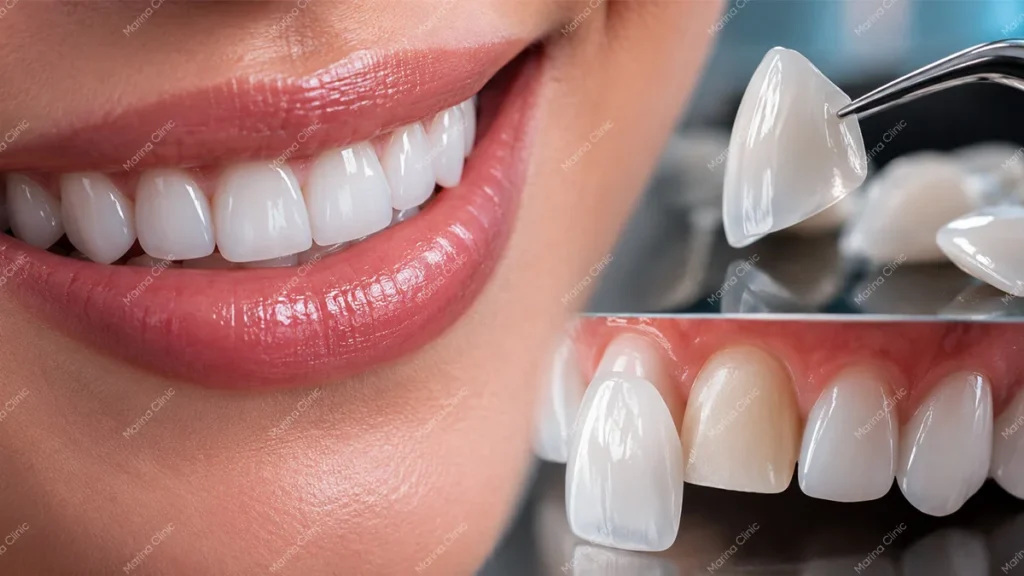
International patients comparing veneer treatment in Turkey should look beyond the advertised package price. Two clinics may offer the same number of veneers while differing in materials, planning, laboratory work, and aftercare.
Number of Veneers Included
Check exactly how many teeth are included and where they will be placed. A 20-unit package, for example, may involve both arches or another distribution.
Veneer Material
Ask for the exact ceramic material being used. Terms such as porcelain, ceramic, E-max, and zirconia should not automatically be treated as interchangeable.
Laboratory Quality
Laboratory quality influences tooth anatomy, translucency, texture, shade variation, contact points, and symmetry, all of which affect the final appearance.
Dentist Experience
The dentist’s experience with similar cosmetic and restorative cases can influence treatment planning, preparation, bite management, bonding, and communication with the laboratory.
Number of Visits
Patients should confirm how many appointments are needed for examination, preparation, fitting, adjustments, and final placement, as well as how long they may need to stay in Turkey.
Aftercare
Before treatment, confirm how follow-up is handled if a veneer needs adjustment after returning home, including maintenance, communication with the clinic, and any guarantee offered.
Read more: Dental Tourism in Turkey: What You Need to Know Before Booking
Final Verdict
There is no ideal number of veneers for every patient. Choosing between 12 and 20 veneers depends on smile width, tooth visibility, bite, facial proportions, existing restorations, and aesthetic goals. At Marina Clinic in Istanbul, smile makeovers are planned individually using digital smile design and clinical evaluation to determine the appropriate treatment area and material.
Which treatment are you interested in?
FAQs
For many patients, yes. If 12 restorations provide enough coverage of the visible upper smile, they may create a balanced result without treating additional teeth unnecessarily.
Not necessarily. Twenty veneers may suit patients with a broader smile or visible upper and lower teeth, but the right number depends on what actually needs treatment.
There is no standard number. Dentists base their recommendation on smile width, tooth visibility, dental condition, facial proportions, bite, and aesthetic goals.
A “full set” is not a fixed number. It may refer to the main visible upper teeth or a wider treatment involving both upper and lower teeth.
Generally, yes. Treating 20 teeth requires more restorations and laboratory work, although material choice, package pricing, and additional procedures also affect cost.
There is no single best material. E-max, porcelain, and zirconia have different properties, so the choice depends on tooth condition, bite forces, aesthetics, and treatment design.
Yes. Dentists may combine veneers and crowns when some teeth mainly need cosmetic improvement while others require greater structural coverage.
The dentist evaluates smile width, tooth visibility, bite, gum levels, existing restorations, facial proportions, and treatment goals before deciding how many teeth should be included.