
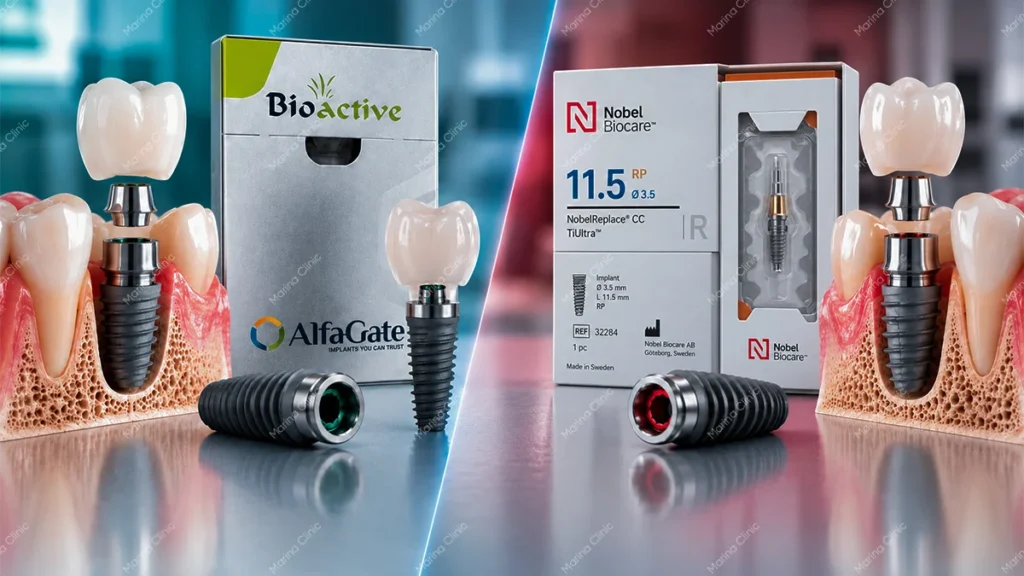
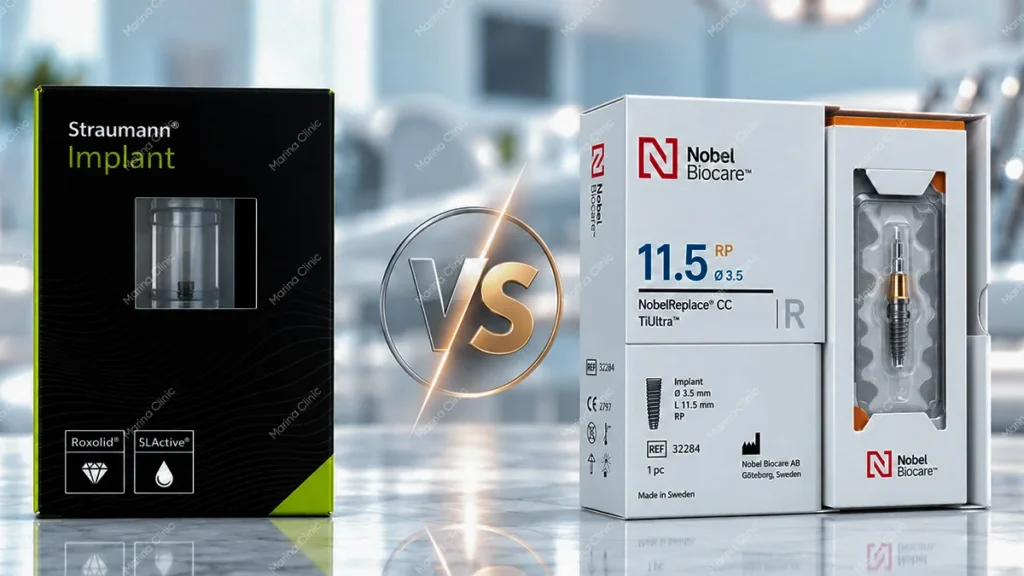
Choosing between Straumann and Nobel Biocare can be confusing because both are established premium dental implant brands used for single teeth, multiple missing teeth, and full-mouth rehabilitation. However, comparing the logos alone does not tell you which implant is more suitable. The implant system, bone condition, prosthetic design, surgical approach, and experience of the treatment team all influence the final decision.
Is Straumann or Nobel Biocare Better for Dental Implants?
Straumann and Nobel Biocare are both internationally recognized premium implant brands supported by extensive clinical use and research. Neither system is automatically better for every patient. Dentists choose between them according to bone anatomy, implant position, restorative requirements, available components, esthetic goals, and the complete treatment plan rather than the brand name alone.
Straumann vs Nobel Biocare: What Is the Main Difference?
The main difference between Straumann and Nobel Biocare is not simply quality. Each company uses different implant designs, surface technologies, prosthetic components, and digital workflows, so the specific implant system matters more than the brand name alone.
Brand Overview
Straumann and Nobel Biocare are long-established implant manufacturers with broad surgical and restorative portfolios. Both provide implants, prosthetic components, digital planning tools, and solutions for cases ranging from one missing tooth to full-arch rehabilitation.
Implant Systems
Straumann offers systems such as BLX, Bone Level Tapered, and Tissue Level implants, while Nobel Biocare offers NobelActive, NobelParallel, and Nobel Biocare N1. These systems differ in implant shape, dimensions, connections, drilling protocols, and restorative compatibility.
Surface Technologies
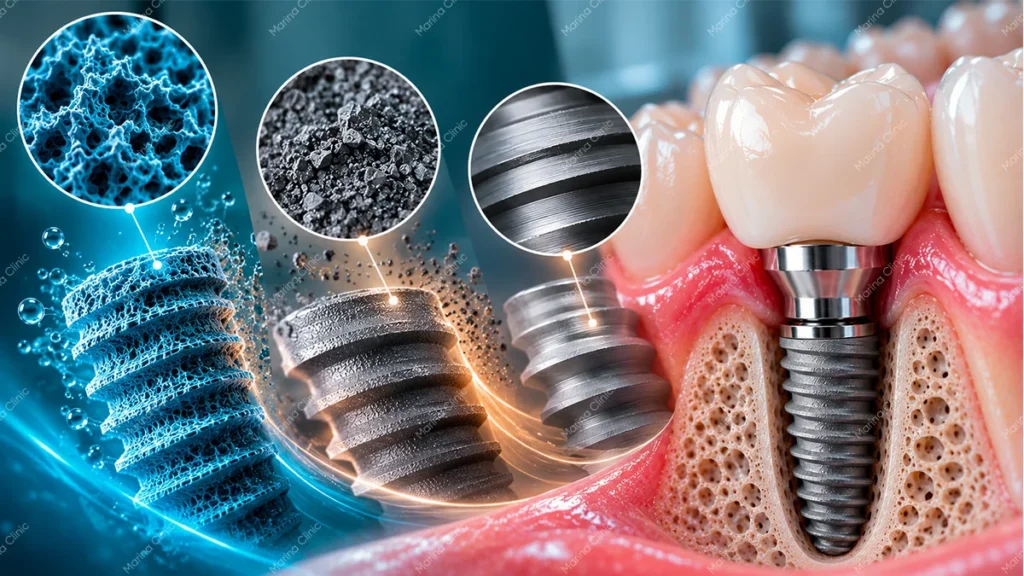
Straumann is known for surfaces such as SLActive, designed to support early osseointegration. Nobel Biocare offers TiUltra, an anodized hydrophilic surface with changing characteristics along different areas of the implant.
Restorative Ecosystems
Both brands provide restorative components for crowns, bridges, temporary teeth, and full-arch prostheses. Their systems include different abutments, digital components, and restorative options matched to specific implant families.
Typical Clinical Applications
Both Straumann and Nobel Biocare can be used for single-tooth replacement, implant bridges, and full-arch rehabilitation. The final choice depends on available bone, implant position, loading strategy, restorative space, and the planned prosthesis.
Start a Conversation
Contact us through the communication method that suits you





Understanding Straumann and Nobel Biocare Dental Implants
A closer look at what each brand offers helps explain why a dentist may recommend one implant system for one patient and a different system for another.
What Are Straumann Dental Implants?
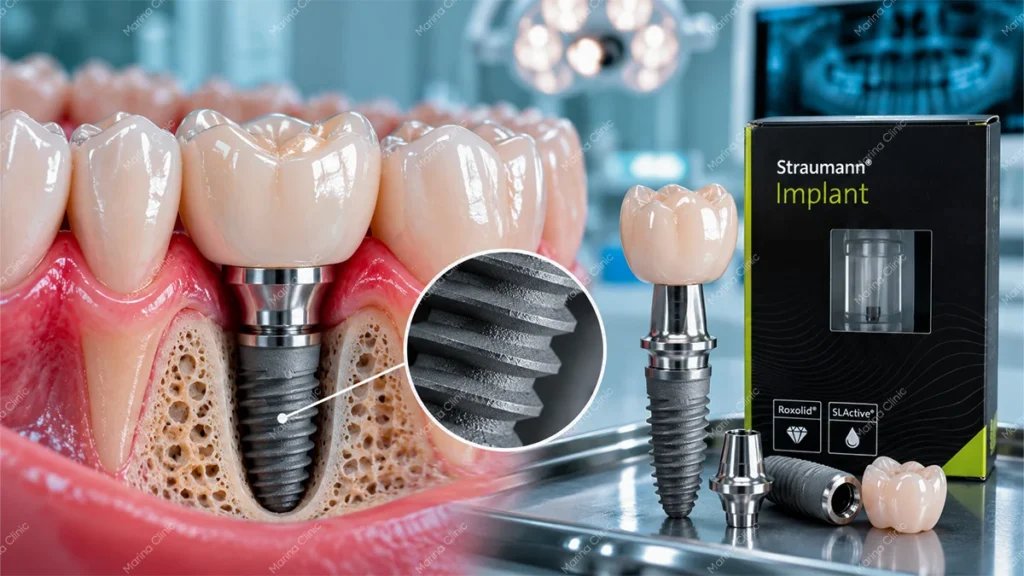
Straumann offers several implant families for different anatomical and restorative situations. Certain systems, including BLX, combine Roxolid titanium-zirconium alloy with SLActive surface technology and can be used from single-tooth replacement to full-arch cases.
What Are Nobel Biocare Dental Implants?
Nobel Biocare provides several titanium implant systems with different designs and restorative options. NobelActive TiUltra, for example, combines commercially pure titanium, an internal conical connection, and the TiUltra surface.
How the Two Systems Compare
Both manufacturers offer several implant models rather than one standard product. Therefore, comparing Straumann and Nobel Biocare is most useful when the exact implant systems proposed for treatment are identified.
Which Implant Brand Has Better Materials and Technology?
Materials and technology matter, but their value depends on the clinical situation. A feature that is useful in one case may provide little additional benefit in another.
Implant Materials
Both companies offer titanium-based implants. Straumann also uses Roxolid, a titanium-zirconium alloy, in selected systems and offers reduced-diameter implant options for certain clinical situations.
Surface Treatments
Implant surfaces are designed to support bone healing around the implant. Straumann uses technologies such as SLActive, while Nobel Biocare offers TiUltra, with different surface characteristics along the implant.
Connection Design
The connection joins the implant with the abutment supporting the crown or bridge. Both manufacturers use different connection designs across their implant families, so this feature should be assessed at the individual system level.
Digital Workflows
Modern implant treatment may combine CBCT imaging, intraoral scanning, virtual planning, guided surgery, and digitally designed restorations. Both Straumann and Nobel Biocare provide digital workflows that connect these stages.
Prosthetic Components
Both companies offer a broad range of original components for crowns, bridges, angled restorations, and full-arch prostheses. The selected abutment and final restoration can be just as important as the implant fixture itself.
Upload your photos and receive a free AI-powered preliminary analysis in minutes. No commitment required.
Which Brand Is Better for Different Treatment Plans?
The type of restoration often matters more than choosing a brand first. Dentists usually determine what needs to be replaced and how the final teeth should function before selecting the implant system.
Single-Tooth Replacement
Either Straumann or Nobel Biocare may be suitable for replacing one missing tooth. Available bone, gum thickness, implant position, bite forces, and the appearance of the final crown usually influence the decision more than the brand alone.
Multiple Missing Teeth
When several teeth are missing, implants may support individual crowns or a bridge. Implant spacing, bone distribution, bite forces, cleaning access, and restorative design all influence which system and components are selected.
Full-Arch Rehabilitation
Both brands can be used in fixed full-arch treatment. Implant distribution, primary stability, jaw anatomy, prosthetic space, bite design, and long-term maintenance are especially important in these cases.
All-on-4 and All-on-6
The All-on-4 treatment concept is specifically associated with Nobel Biocare and uses four implants to support a full-arch restoration in selected cases. Straumann also offers solutions for fixed full-arch rehabilitation, but these should not automatically be described as the branded All-on-4 concept.
Immediate Loading Cases
Both brands offer systems that may support immediate or early restoration in selected patients. The final decision depends on factors such as implant stability, bone quality, implant position, bite forces, and the overall restorative plan.
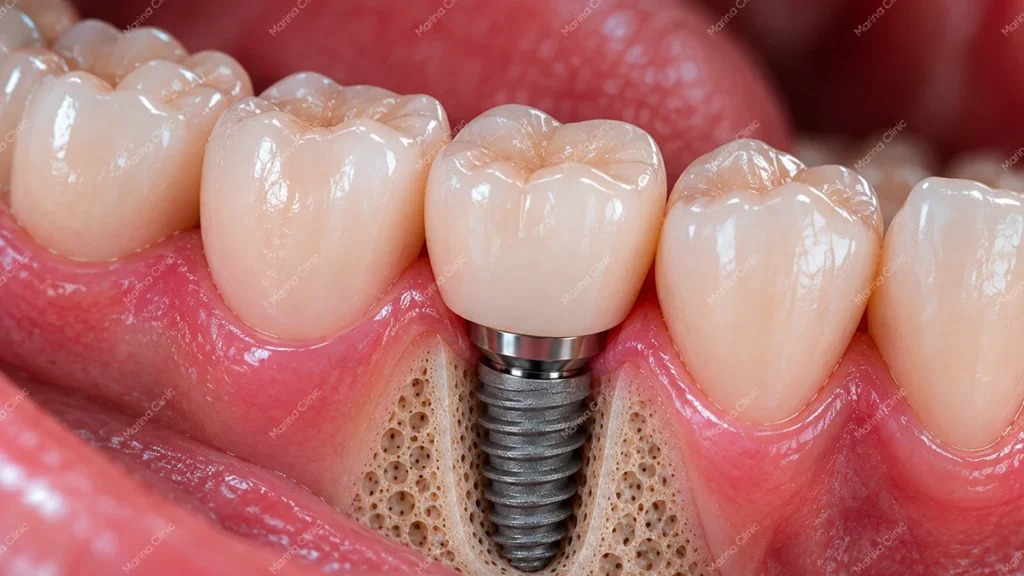
Straumann vs Nobel Biocare Cost: Why Can Prices Differ?
The price difference between Straumann and Nobel Biocare treatment cannot be judged by the implant fixture alone. The final quote may include surgical, restorative, laboratory, and additional treatment costs.
Implant Fixture
The fixture is only one part of the total treatment. Its price may vary according to the implant family, size, supplier, country, and whether original surgical and restorative components are used.
Abutment
The abutment connects the implant to the crown or bridge. Standard, customized, straight, angled, and multi-unit abutments can have different costs.
Crown or Bridge
The final restoration may be made from zirconia, ceramic, metal-ceramic, or another appropriate material. In full-arch cases, the bridge design and material can significantly affect the total cost.
Digital Planning
CBCT imaging, intraoral scanning, virtual planning, surgical guides, and digital design may be included in some packages but charged separately in others.
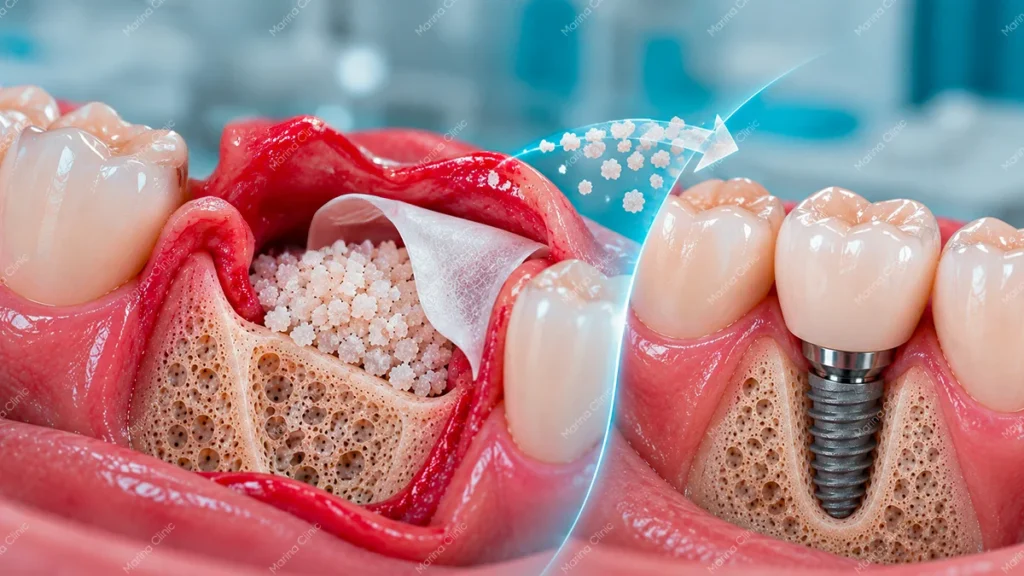
Bone Grafting
If there is not enough bone, grafting or another augmentation procedure may be needed. This can increase the overall treatment cost regardless of the implant brand.
Temporary Restorations
Some plans include a temporary tooth or fixed provisional bridge during healing, while others charge for it separately. This should be checked when comparing quotes.
Laboratory Work
Laboratory fees depend on the complexity of the restoration, number of implants, selected materials, digital design, and the type of crown or bridge being produced.
Request pricing
By sending, you agree we may contact you on WhatsApp with pricing.
Got it! We’ll WhatsApp you the pricing shortly.
Which Implant Brand Is Better for Patients With Bone Loss?
Bone loss does not automatically make Straumann or Nobel Biocare the better choice. The dentist first needs to assess where the bone is missing and whether the remaining anatomy can safely support implants.
Bone Volume Assessment
CBCT imaging helps evaluate bone height, width, density, anatomical structures, and possible implant positions. This information guides implant selection and determines whether additional surgery may be needed.
Implant Dimensions
Both brands provide implants in different diameters and lengths. Straumann also offers reduced-diameter options using Roxolid in selected systems, while Nobel Biocare provides various implant shapes and dimensions across its portfolio.
Grafting Considerations
Some patients can receive implants without major augmentation, while others need bone grafting, ridge augmentation, or sinus procedures. Implant design may influence the plan but cannot replace missing supporting bone in every case.
Individual Treatment Planning
For significant bone loss, the decision should be based on available bone, implant distribution, prosthetic design, medical factors, and surgical options rather than choosing a brand first.
Read more: Dental Implants Before and After: Real Patient Cases and Treatment Plans
Upload your photos and receive a free AI-powered preliminary analysis in minutes. No commitment required.
How Should You Compare Straumann and Nobel Implant Quotes?
Two implant quotes should be compared component by component. A lower price may include a different implant system, restoration material, temporary option, or level of aftercare.
Exact Implant System
Ask for the exact implant model, not only the manufacturer’s name. Both companies produce several implant families, so “Straumann implant” or “Nobel implant” alone is not enough for a detailed comparison.
Original Components
Confirm whether original components from the manufacturer will be used for the abutment and restoration. This can also affect future maintenance and replacement options.
Crown Material
Check whether the restoration is zirconia, ceramic, metal-ceramic, or another material. For full-arch cases, ask about both the framework and the tooth material.
Temporary Teeth
Ask whether temporary teeth are included and whether they are removable or fixed. In immediate-loading cases, the provisional restoration may be a separate treatment stage.
Grafting Included?
If grafting may be necessary, confirm whether graft material, membranes, sinus procedures, or other augmentation techniques are included in the quoted price.
Follow-Up and Maintenance
Ask whether postoperative checks, restorative adjustments, hygiene visits, and later maintenance are included or charged separately.
Warranty and Aftercare
Compare the actual warranty conditions, including implant fixture coverage, prosthetic work, laboratory components, maintenance requirements, and exclusions.
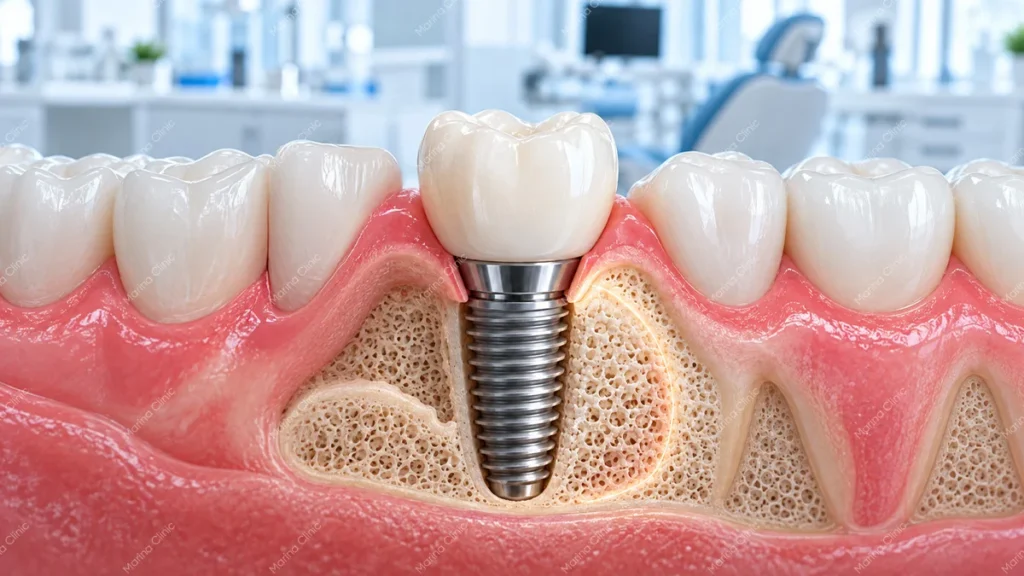
Straumann or Nobel Biocare: Which Brand Is Right for Your Case?
The most suitable implant is the system that allows the dentist to complete the surgical and restorative plan predictably. Several patient-specific factors guide that decision.
Bone Quality
Bone density and volume affect implant dimensions, positioning, surgical technique, and whether immediate loading is possible. The implant system should therefore be selected after proper imaging and assessment.
Esthetic Expectations
Visible implants require careful planning of implant position, gum contours, abutment design, and crown shape. Both brands provide options for esthetic cases, but the final result depends heavily on treatment planning.
Functional Requirements
A front tooth, posterior molar, implant bridge, and full-arch restoration experience different forces. Bite pattern, grinding, restorative space, and implant distribution all influence system selection.
Long-Term Maintenance
Implants should be planned with hygiene, professional maintenance, component access, and future repairs in mind. Long-term care remains important regardless of the implant brand.
Personalized Treatment Planning
A proper recommendation combines clinical examination, imaging, bone assessment, bite analysis, and restorative planning. This allows the dentist to choose the implant system and components that best fit the planned restoration.
Final Verdict
Both Straumann and Nobel Biocare offer premium implant systems with extensive clinical use, modern technology, and broad restorative options. The right choice depends on bone anatomy, restorative needs, esthetic goals, function, and the long-term treatment plan. At Marina Clinic in Istanbul, implant selection follows a comprehensive clinical and radiographic assessment rather than brand preference alone.
Which treatment are you interested in?
FAQs
Neither brand is universally better. Straumann and Nobel Biocare are both well-established implant systems, and the better choice depends on your bone anatomy, implant position, restorative plan, and clinical needs.
The main differences involve implant designs, surface technologies, material options, prosthetic components, and digital workflows. Which differences matter most depends on the individual treatment plan.
Neither brand can be expected to last longer in every patient. Long-term outcomes also depend on implant placement, bone health, prosthetic design, oral hygiene, smoking, and regular maintenance.
Not always. Prices vary by implant system, clinic, country, and treatment complexity. The total cost may also include the abutment, crown, imaging, laboratory work, grafting, and follow-up care.
Yes. Nobel Biocare implant systems can be used for full-arch treatments such as All-on-4. Suitability depends on bone anatomy, implant positioning, bite, and the planned final restoration.
Neither brand is automatically better for bone loss. The dentist must first assess bone volume and quality, implant dimensions, anatomical limitations, and whether bone grafting is required.
Both brands offer titanium-based implant systems. However, materials and surface technologies vary between product lines, so patients should ask which specific implant model will be used.
Compare the exact implant system, original components, abutment, crown or bridge material, imaging, temporary teeth, bone grafting, follow-up care, and warranty rather than comparing the final price alone.