
Losing a single tooth may seem like a minor problem, but its effects can extend beyond a visible gap to influence smile symmetry, chewing comfort, and confidence when speaking. A single dental implant offers a treatment option that combines restoring the function of the missing tooth with preserving the surrounding natural teeth. In this article, we explore the stages and costs of single tooth implant treatment, the factors that contribute to a natural-looking replacement tooth, and how to determine whether one implant is enough or whether your smile may benefit from additional cosmetic treatments.
Is One Dental Implant Enough for a Smile Makeover?
A single dental implant may be enough to complete a smile makeover when only one tooth is missing and the surrounding teeth already have a satisfactory appearance and function. The implant replaces the missing tooth root and supports a crown designed to match neighboring teeth. However, if the patient also has discoloration, damaged teeth, uneven shapes, or alignment concerns, additional cosmetic or restorative treatments may be considered. The appropriate treatment plan depends on the patient’s oral health, bite, aesthetic goals, and the condition of the remaining teeth.
Single Dental Implant Explained: Components and Treatment Purpose
A single tooth implant replaces a missing tooth with a fixed restoration that receives its support from the jawbone rather than relying on the neighboring teeth.
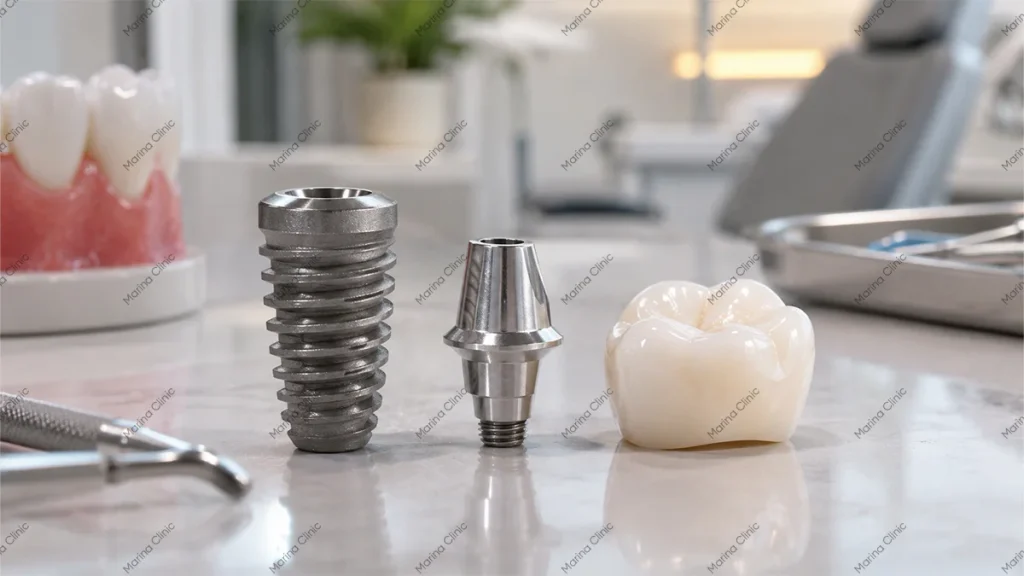
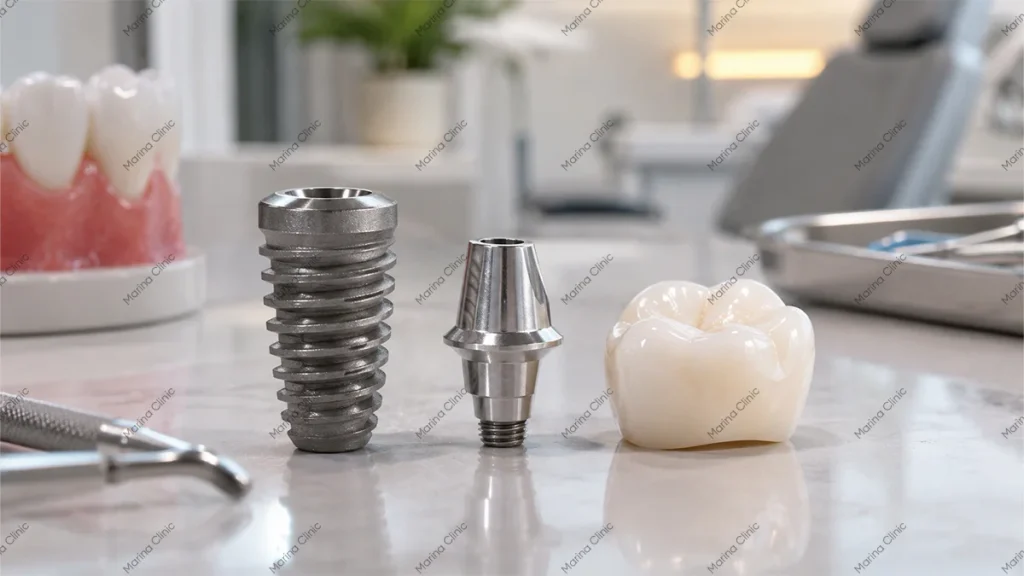
Implant Fixture, Abutment and Dental Crown
An implant-supported replacement tooth consists of three main components:
- Implant fixture: A component typically made of titanium that the dentist places inside the jawbone to replace the missing tooth root.
- Abutment: A connecting piece between the implant fixture and the dental crown that helps secure the crown in the appropriate position.
- Dental crown: The visible part of the replacement tooth, designed to complement the shape, shade, and size of the surrounding natural teeth.
These three components work together to replace the missing tooth both functionally and aesthetically. The implant fixture itself is generally not visible when smiling, as the crown is the component that resembles a natural tooth.
When One Missing Tooth Can Be Replaced Independently
A single missing tooth can be replaced with one dental implant when there is sufficient space between the neighboring teeth, adequate jawbone volume, and healthy gum tissue. Certain conditions, such as insufficient bone or gum inflammation, may need to be treated before implant placement.
One advantage of this treatment is that the implant independently supports the replacement tooth, meaning the dentist generally does not need to reshape the neighboring teeth to secure the restoration. This makes a single dental implant a suitable option for patients who have lost one tooth and wish to preserve their healthy natural teeth.
Start a Conversation
Contact us through the communication method that suits you





Single Tooth Implant Cost: Implant, Abutment and Crown Prices
The cost of a single dental implant depends on the implant system, crown material, jawbone condition, and procedures required to complete the treatment. When comparing dental implant prices between clinics, it is important to understand exactly what the quoted price includes.
Implant-Only Price vs Complete Tooth Replacement Cost
An advertised dental implant cost per tooth may refer only to the implant fixture and its surgical placement within the jawbone, excluding the abutment and final crown. Other clinics may provide a price that includes all three components.
For this reason, it is advisable to request a detailed treatment quotation that outlines the total cost up to the placement of the final replacement tooth. This allows you to compare quotations that cover the same components and services.
Dental Implant Crown Cost and Abutment Fees
The dental implant crown cost varies depending on the material used, such as zirconia or certain types of dental ceramics, and the level of customization required to match the shape and shade of the natural teeth.
The cost of the abutment also depends on its type. The dentist may use a prefabricated abutment or select a custom-designed abutment to accommodate the implant position, gum contour, and planned crown design.
Additional Costs: Scans, Bone Grafting and Temporary Teeth
Before implant placement, you may require three-dimensional dental imaging to help the dentist assess the jawbone and determine the appropriate implant position.
If there is insufficient bone to support the implant, bone grafting may be necessary. This procedure involves adding bone graft material to help establish a suitable foundation for implant placement.
The cost of a temporary replacement tooth may also be included in the treatment plan, particularly when replacing a missing front tooth.
| Cost component | What it covers |
| Implant fixture | Implant placed inside the jawbone |
| Abutment | Connection between the implant and crown |
| Final crown | Visible replacement tooth |
| Diagnostic imaging | Jawbone assessment and implant planning |
| Temporary tooth | Provisional restoration when required |
| Bone graft | Additional procedure when there is insufficient bone for implant placement |
Single Dental Implant Procedure: Placement, Healing and Final Crown
The single dental implant procedure involves several stages. It begins with a dental examination and treatment planning. The dentist then places the implant into the jawbone. Once the implant and surrounding tissues are ready, the dentist fits the final crown.
Implant Planning and Surgical Placement
The dentist examines the patient’s mouth and reviews their medical history. Diagnostic imaging helps the dentist assess the available bone. It also helps determine the implant’s position and angle in relation to the neighboring teeth.
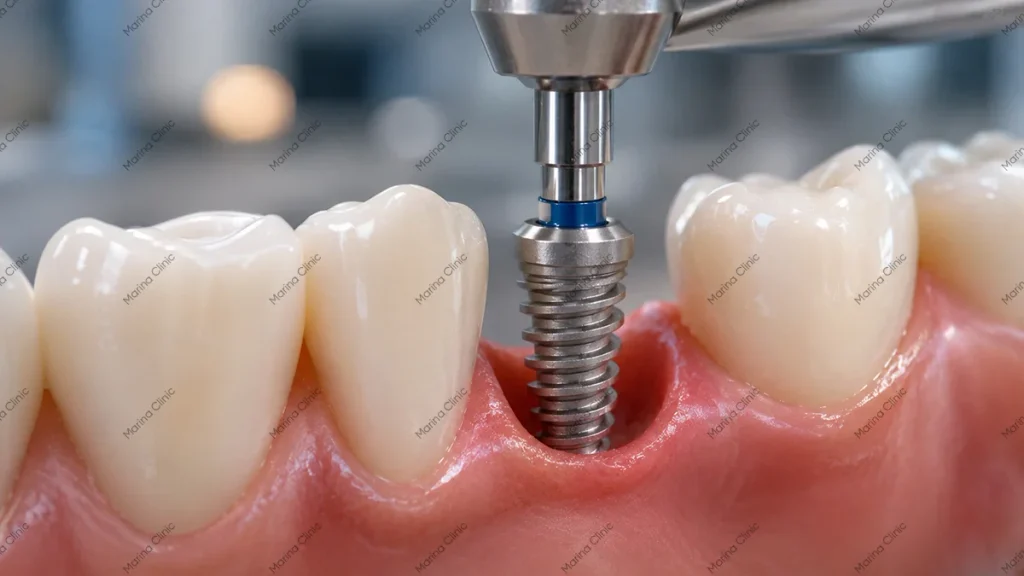
The dentist usually places the implant fixture inside the jawbone under local anesthesia. In some cases, the dentist can place the implant immediately after tooth extraction. Other cases may require a healing period or bone grafting before implant placement.
Healing and Osseointegration
After implant placement, the surrounding bone gradually grows around and integrates with the implant surface. This process, known as osseointegration, provides the stability necessary to support the replacement tooth.
The healing process typically takes several months. However, its duration depends on the condition of the jawbone and the patient’s general health. Additional dental procedures may also affect the healing time.
During this period, patients should follow their dentist’s oral hygiene and dietary instructions. They should also avoid excessive pressure on the implant site and attend scheduled follow-up appointments.
Final Crown Placement and Bite Adjustment
Once the implant can support the final restoration, the dentist takes impressions of the teeth and surrounding gum tissues. The dentist may use conventional impression techniques or digital scanning. These measurements help create a crown with the appropriate shape and dimensions.
After placing the final crown, the dentist checks the patient’s bite, also known as dental occlusion. This term describes how the upper and lower teeth meet when the mouth closes.
The dentist also checks whether the replacement tooth experiences excessive pressure during chewing. Finally, the dentist ensures that patients can clean the surrounding area properly.
Request pricing
By sending, you agree we may contact you on WhatsApp with pricing.
Got it! We’ll WhatsApp you the pricing shortly.
Is One Dental Implant Enough for a Complete Smile Makeover?
One dental implant may be enough to achieve the desired aesthetic result. This is particularly true when a missing tooth is the primary concern affecting the appearance of the smile.
When Replacing One Missing Tooth May Complete the Smile
You may lose a front tooth due to an injury or severe tooth decay. If the remaining teeth already complement each other in shape and color, replacing the missing tooth may restore smile symmetry. In these cases, the other teeth may not require any changes.
The dentist can use the corresponding natural tooth and surrounding teeth as references when designing the implant crown. The dentist also considers how much of the teeth you show when smiling and speaking.
In such cases, a single dental implant may provide the desired smile makeover result without additional cosmetic procedures.
When One Implant Cannot Address Other Cosmetic Concerns
A dental implant addresses tooth loss but does not change the appearance of the remaining natural teeth. Your dentist may recommend additional treatments if you have any of the following concerns:
- Tooth discoloration and staining.
- Enamel wear or chipped tooth edges.
- Differences in tooth size and shape.
- Misaligned teeth or gaps unrelated to tooth loss.
The dentist should evaluate each cosmetic concern individually. This approach helps address aesthetic concerns without exposing healthy natural teeth to unnecessary procedures.
Functional Tooth Replacement vs Comprehensive Smile Design
Functional tooth replacement aims to restore chewing ability and improve the appearance of the missing tooth area. In contrast, comprehensive smile design takes a broader approach. It evaluates the relationship between tooth shapes, shades, sizes, the gum line, and the lips.
However, a complete smile makeover does not necessarily involve treating every tooth. Improving a limited number of teeth may achieve the desired harmony while preserving as much natural tooth structure as possible.
Read more: Full Smile Makeover Price in Turkey 2026: Implants, Veneers & Gum Aesthetics Explained
Front Tooth Implant: Crown Aesthetics, Gum Line and Smile Symmetry
A front tooth implant requires particular attention to aesthetic details because the anterior teeth are highly visible when smiling and speaking. Differences between an implant-supported crown and the surrounding natural teeth may therefore be more noticeable.
Matching Crown Shape, Shade and Translucency
Achieving a natural-looking replacement tooth involves more than selecting the appropriate shade. The dentist also considers the crown’s length, width, contours, and edge shape.
Natural teeth have varying degrees of translucency, particularly along the edges of the front teeth, where some light passes through the enamel.
For this reason, the dentist selects the crown material and fabrication method to help reproduce these characteristics and achieve a harmonious appearance alongside the neighboring teeth.
Gum Contour and Emergence Profile
The appearance of an implant-supported tooth is influenced by the height and contour of the surrounding gum tissue in relation to the gums around neighboring teeth.
If gum recession occurs at the implant site, the replacement tooth may appear longer than the adjacent natural teeth.
The dentist also considers the emergence profile, which describes how the implant-supported restoration transitions through the gum tissue to form the visible tooth.
Some patients may require additional procedures to improve bone volume or gum tissue contours, helping achieve a more balanced appearance and making the surrounding area easier to clean.
Temporary Teeth and Aesthetic Planning
A temporary replacement tooth may be used during the treatment period to maintain the appearance of the smile.
A temporary crown may also help gradually shape the surrounding gum tissue and prepare it for the final restoration.
The choice of temporary restoration and whether it can be attached directly to the implant depend on the implant’s initial stability and the condition of the surrounding bone and gum tissues.
Read more: Dental Implants Before and After: Real Patient Cases and Treatment Plans
Upload your photos and receive a free AI-powered preliminary analysis in minutes. No commitment required.
Combining One Dental Implant With Veneers, Crowns or Whitening
A single dental implant can form part of a broader smile makeover treatment plan. This approach may be suitable when the surrounding natural teeth require aesthetic improvements or restorative procedures.
Single Implant and Dental Veneers for Smile Design
Dental veneers are thin restorations that cover the front surfaces of natural teeth. They improve tooth shape or color. Dentists may also use veneers to address certain differences in tooth size or minor surface damage.
When combining a single dental implant with veneers, the dentist coordinates the design of both restorations. This approach helps achieve a consistent and harmonious appearance.
The dentist may recommend veneers for selected teeth only. Conventional veneer placement often requires the removal of some natural tooth enamel.
Single Implant and Crowns for Damaged Natural Teeth
A patient may require a dental implant to replace a missing tooth. Fractures or extensive decay may also weaken surrounding natural teeth, creating a need for dental crowns.
A conventional dental crown covers the remaining natural tooth structure after preparation. In contrast, an implant-supported crown relies on the abutment and implant fixture for support.
Although their methods of attachment differ, the dentist can design both types of crowns to complement each other. This involves carefully matching their shape and shade.
For natural teeth with limited damage, dental fillings or partial restorations may be more appropriate than full-coverage crowns.
Single Implant and Teeth Whitening for Shade Matching
If you wish to lighten the color of your natural teeth, consider planning teeth whitening first. Ideally, this should take place before the dentist selects the final shade of the implant crown.
Whitening agents work on natural teeth but do not change the original color of artificial dental crowns.
After whitening, the dentist allows the natural tooth shade to stabilize. The dentist then selects the appropriate color for the final implant crown.
The overall smile makeover cost depends on the number of teeth that require restoration. The types of dental procedures and the choice of materials also influence the total cost.
Read more: Dental Crowns Explained: When Crowns Are Better Than Veneers
Single Dental Implant vs Other Tooth Replacement Options
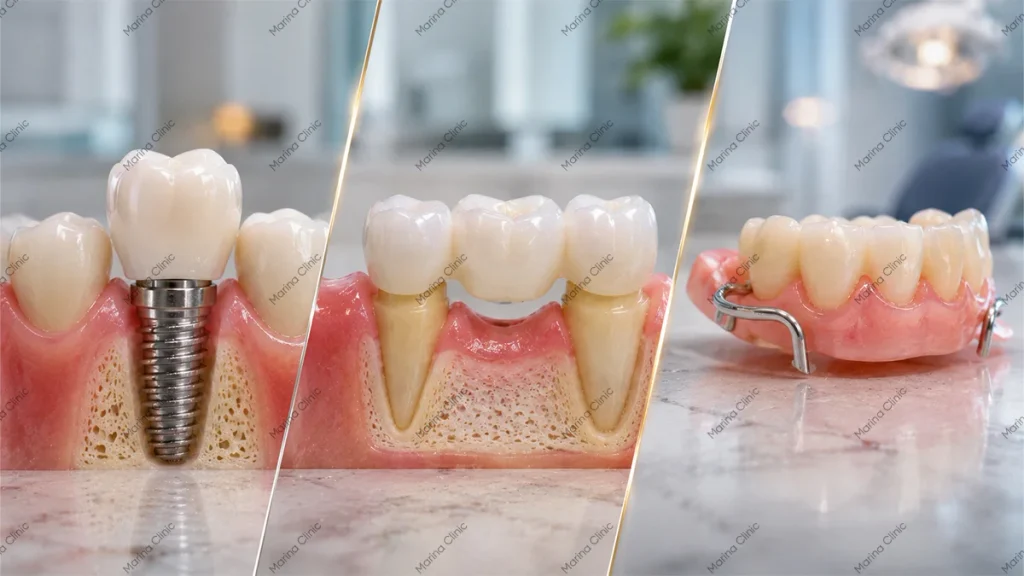
A dental implant is not the only available option for replacing a missing tooth. In certain cases, a fixed dental bridge or removable partial denture may be considered, with each treatment having different advantages and requirements.
Single Dental Implant vs Dental Bridge
A traditional dental bridge replaces a missing tooth using an artificial tooth supported by the adjacent natural teeth. These supporting teeth generally need to be prepared and fitted with dental crowns.
A single dental implant, by comparison, receives its support directly from the jawbone.
An implant may be suitable when the neighboring teeth are healthy, while a dental bridge may be a reasonable alternative if those teeth already require crowns or if implant treatment is not appropriate for the patient.
Single Implant vs Partial Denture
A removable partial denture is a dental restoration that can replace one or more missing teeth. It may be used temporarily during the implant healing period or as an alternative when dental implant treatment is not feasible.
Unlike a dental implant, fitting a removable partial denture generally does not require surgery, and its initial cost may be lower.
However, a partial denture requires regular removal and cleaning and may not provide the same level of stability and comfort as a fixed implant-supported restoration.
When Multiple Implants or Other Restorations May Be Needed
If you have lost more than one tooth, multiple dental implants or an implant-supported bridge may be considered.
However, losing several teeth does not necessarily mean that a separate implant is required for every missing tooth. Certain restorations can replace multiple missing teeth using a smaller number of supporting implants.
The dentist determines the appropriate number of implants based on the locations of the missing teeth, the condition of the jawbone, and the distribution of chewing forces.
How Dentists Decide Whether One Implant Is Enough for Your Smile
The dentist determines the appropriate treatment plan after assessing whether an implant can be placed safely, examining the remaining natural teeth, and understanding the functional and aesthetic results you wish to achieve.
Bone, Gum Health and Bite Assessment
The dentist evaluates the available jawbone volume and the condition of the gum tissues, checking for any inflammation or underlying conditions that may require treatment before implant surgery.
The dentist also assesses the patient’s bite and asks about habits such as bruxism, which involves clenching or grinding the teeth. These habits may expose the implant-supported crown and surrounding structures to excessive forces.
Other factors, including smoking and poorly controlled diabetes, are also considered because of their potential effects on healing and implant treatment outcomes.
Evaluating Surrounding Teeth and Smile Makeover Goals
The dentist examines the teeth surrounding the missing tooth to identify any signs of decay, wear, or fractures, while also evaluating their shapes, shades, and alignment.
It is important to explain exactly what concerns you about your smile. You may already be satisfied with the natural color and appearance of your teeth and simply wish to replace the missing tooth.
Alternatively, you may want to address additional aesthetic or restorative concerns as part of the same treatment plan.
Understanding these goals helps the dentist determine whether a single dental implant is sufficient or whether selected additional treatments may be beneficial.
Single Dental Implant Treatment Planning at Marina Clinic in Istanbul
Marina Clinic in Istanbul provides dental implant and smile makeover treatments based on individualized treatment plans that consider the needs of each patient.
If you are planning to travel to Turkey for a single dental implant, it is important to discuss the different treatment stages, expected healing period, and number of appointments required.
Patients should also clarify the costs of the procedures included in their treatment plan and the arrangements for follow-up care after returning to their home country.
An individualized assessment helps determine whether replacing one missing tooth is enough to achieve the desired result or whether additional cosmetic or restorative treatments should be considered.
Final Verdict: Is a Single Dental Implant Enough for Your Smile?
A single dental implant can be an effective solution for replacing one missing tooth and restoring the appearance and function of your smile. When the surrounding teeth are healthy and aesthetically satisfactory, one implant-supported crown may be all that is needed.
However, a complete smile makeover may involve additional treatments when patients have concerns such as tooth discoloration, worn enamel, damaged teeth, or uneven tooth shapes. In these cases, dental implants can be combined with other restorative or cosmetic procedures when clinically appropriate.
For international patients considering a single dental implant in Turkey, Marina Clinic in Istanbul is an option for individualized implant and smile makeover treatment planning. A comprehensive assessment helps determine whether one implant can achieve the desired result or whether other treatments should be considered.
The goal is not to perform more dental procedures, but to select the treatment that restores your missing tooth while preserving healthy natural teeth and achieving a balanced smile.
Which treatment are you interested in?
FAQs
Yes. A single dental implant supports a crown that restores tooth function and appearance, provided the jawbone and gums are healthy enough.
Not necessarily. Some quotations include the implant fixture, abutment, and crown, while others price them separately. Always confirm what the treatment cost includes.
Yes, if a missing tooth is your main aesthetic concern. Discoloration, tooth damage, or alignment issues may require additional treatments.
The cost of a single tooth implant depends on the implant system, crown material, abutment type, and surgical placement fees. Additional procedures, such as bone grafting or temporary tooth placement, may also affect the total cost.
Yes. Dentists can combine dental implants and veneers within the same smile makeover treatment plan when clinically appropriate. The implant replaces the missing tooth, while veneers improve the shape or color of selected natural teeth.
Yes. A well-designed implant crown can match the shade, shape, and size of neighboring teeth. Gum health and implant positioning also influence the aesthetic result.
Yes, but whitening agents do not change the implant crown’s color. Dentists generally recommend whitening before selecting the final crown shade.
Not necessarily. A single dental implant may be enough if the remaining teeth are healthy and complement each other aesthetically.