
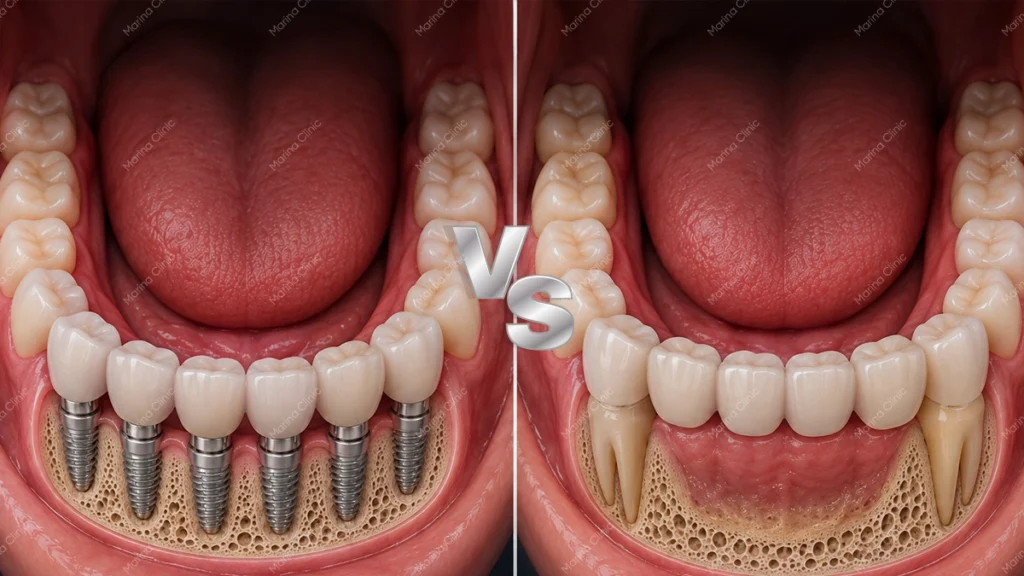
When comparing dental implants vs bridge for six missing teeth, the right choice depends on more than simply filling the gaps. The position of the missing teeth, condition of the remaining teeth, available bone, bite forces, and long-term goals can all affect the treatment plan. For some patients, dental implants offer greater independence and stability, while others may benefit more from a conventional or implant-supported bridge.
Is a Dental Implant or Bridge Better for Six Missing Teeth?
There is no single solution for every patient with multiple missing teeth. Dentists evaluate the number and position of missing teeth, bone quality, neighboring teeth, bite forces, and long-term goals before recommending dental implants, an implant-supported bridge, or a conventional dental bridge. Looking at a real treatment case can also help explain why one option may be more suitable than another.
Understanding Our Patient’s Case: Six Missing Teeth
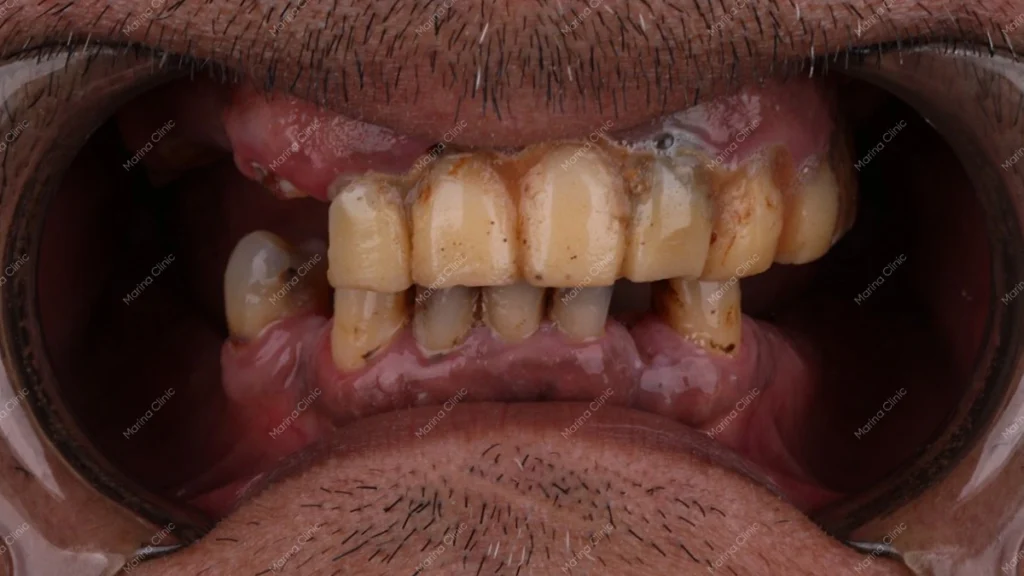
When several teeth are missing, the treatment plan needs to consider the entire bite rather than each gap separately. In this case, the patient had six missing teeth and needed a fixed solution that could restore both function and appearance.
The Patient’s Main Concerns
With six missing teeth, the main concern was not simply filling visible spaces. The treatment also needed to restore comfortable chewing, maintain bite stability, and provide a result that could function reliably over the long term.
Clinical Examination
A clinical examination is essential before deciding between dental implants and a bridge. The dentist evaluates the remaining teeth, gums, bite, and available bone, while imaging helps determine whether implant placement is possible. The exact tooth positions, bone measurements, and individual diagnoses in this case are not specified here, so they should not be assumed.
Treatment Goals
The goal was to replace the missing teeth with a stable, natural-looking solution while protecting the remaining teeth as much as possible. Long-term maintenance, chewing function, and how the restoration would interact with the patient’s bite were also important parts of the planning process.
Start a Conversation
Contact us through the communication method that suits you





Dental Implants vs Bridge: What’s the Difference?
Dental implants and bridges can both replace missing teeth, but they work in very different ways. Understanding what supports each restoration makes the comparison much easier.
How Dental Implants Replace Missing Teeth
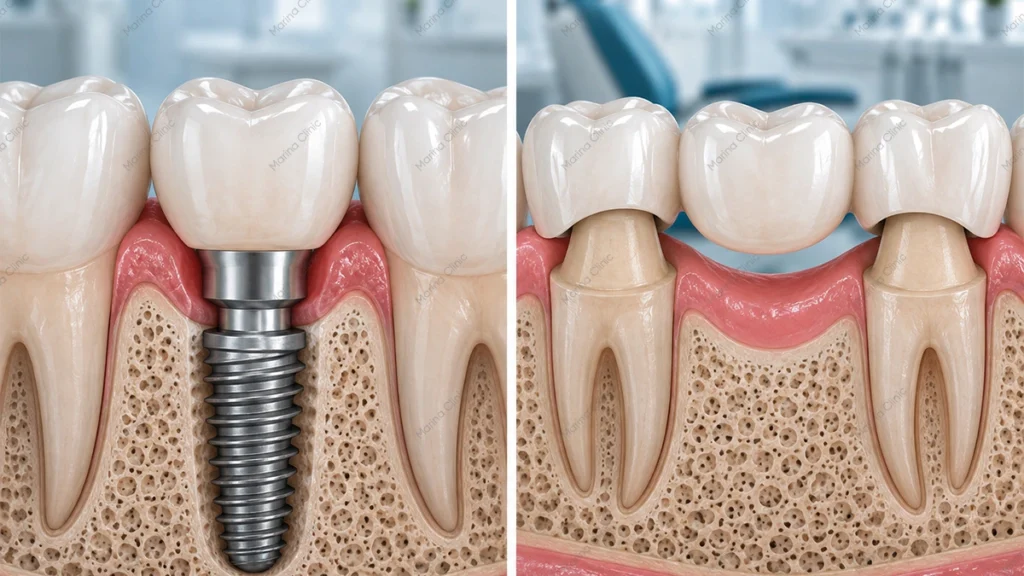
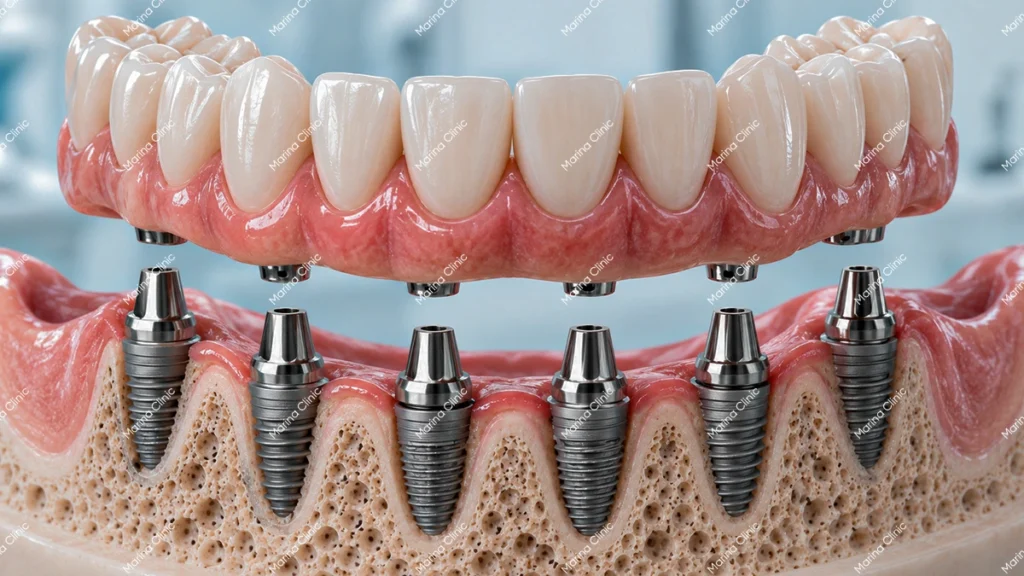
A dental implant replaces the root portion of a missing tooth with an implant placed in the jawbone. After healing, the implant can support an individual crown or become part of an implant-supported bridge that replaces several teeth.
How Dental Bridges Work
A conventional dental bridge fills a gap by attaching replacement teeth to natural teeth beside the missing area. These neighboring teeth usually need preparation so crowns can fit over them and support the bridge.
Key Differences Between the Two Treatments
The biggest difference is where the restoration gets its support. Implants gain support from the jawbone and do not normally require neighboring teeth to carry the missing tooth, while a conventional bridge depends on adjacent natural teeth. Implants also require surgery and healing, whereas a bridge can usually be completed without implant surgery.
Which Is Better for Six Missing Teeth?
When comparing dental implants vs bridge for six missing teeth, the number alone does not decide the treatment. The pattern of tooth loss and condition of the rest of the mouth are often more important.
Function and Stability
Dental implants can provide strong support because they transfer chewing forces through the implant into the jawbone. A well-designed bridge can also restore comfortable chewing, but its stability depends heavily on the condition and position of the supporting teeth.
Bone Preservation
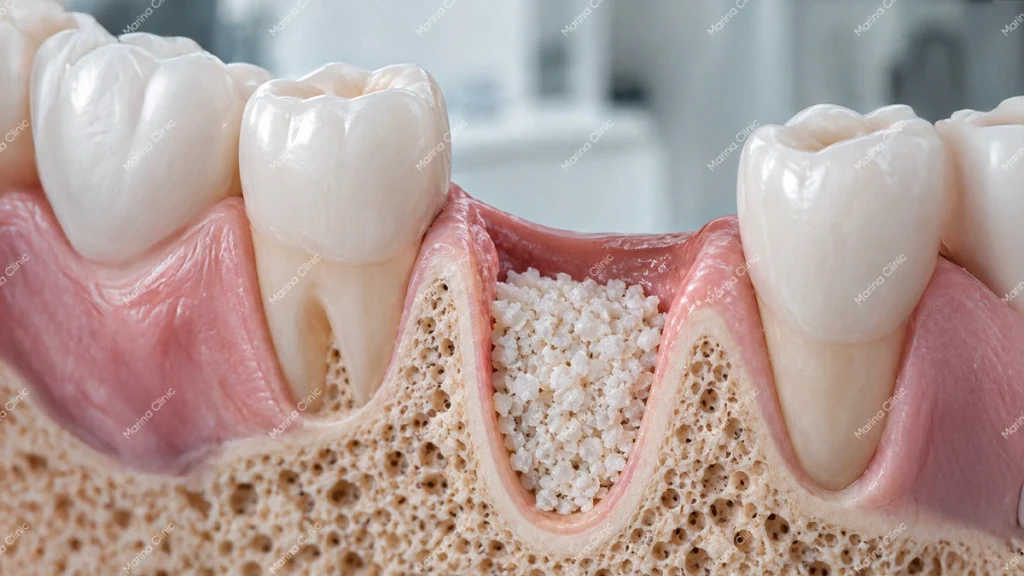
After a tooth is lost, the bone in that area may gradually change because the natural root is no longer present. An implant placed in the missing-tooth area can help maintain functional loading of the surrounding bone, while a conventional bridge replaces the visible tooth without replacing its root.
Long-Term Maintenance
Both options require good oral hygiene and regular dental care. Implants need careful cleaning around the implant and restoration, while bridges require patients to clean beneath the replacement teeth and around the supporting teeth to reduce plaque buildup and gum problems.
Smile Appearance
Both implants and bridges can produce a natural-looking smile when treatment planning and laboratory work are done carefully. The final appearance depends on factors such as tooth shape, shade, gum levels, available space, and how the restoration fits with the surrounding teeth.
Upload your photos and receive a free AI-powered preliminary analysis in minutes. No commitment required.
Can Dental Implants Replace Multiple Missing Teeth?
Yes. Having six missing teeth does not automatically mean that six separate implants are required. Dentists can often design different implant configurations depending on where the missing teeth are located.
Implant-Supported Bridges
An implant-supported bridge replaces several missing teeth using implants as the supporting foundations. For example, multiple connected replacement teeth may sometimes be supported by fewer implants rather than placing one implant beneath every missing tooth.
Full-Arch Implant Solutions
Full-arch implant treatment replaces most or all teeth in one jaw using several strategically positioned implants. It would not normally be recommended simply because six teeth are missing, but it may become relevant when many remaining teeth in the same arch have a poor prognosis and require a broader treatment plan.
Do You Need One Implant for Every Tooth?
Not always. The dentist determines the number of implants according to the size and location of the gap, bone conditions, bite forces, implant positions, and the design of the final restoration. Using an implant-supported bridge can sometimes reduce the number of implants needed.
When Is a Dental Bridge the Better Choice?
Although implants are attractive for many patients, a dental bridge should not automatically be considered an inferior treatment. In the right clinical situation, it can provide a predictable and practical way to replace missing teeth.
Suitable Clinical Situations
A conventional bridge may be considered when the neighboring teeth can provide appropriate support, especially if they already require crowns or substantial restorative treatment. It may also suit patients who cannot undergo implant surgery or who prefer a treatment without an implant-healing period.
Advantages of a Bridge
One major advantage is treatment speed because a conventional bridge does not require the implant to integrate with the bone before the final restoration can be fitted. It can also involve a lower initial cost and avoids implant surgery.
Limitations Compared With Implants
The main limitation is that a conventional bridge depends on neighboring teeth for support. Preparing healthy adjacent teeth may remove natural tooth structure, and future problems affecting one supporting tooth can potentially influence the entire bridge.
Dental Implants vs Bridges: Key Differences
Both dental implants and bridges can replace missing teeth successfully, but they differ in how they are supported, how treatment is completed, and what they require over the long term.
| Comparison Factor | Dental Implants | Dental Bridge |
| Support | Supported by implants placed in the jawbone | Supported by neighboring natural teeth |
| Effect on adjacent teeth | Usually does not require preparing healthy neighboring teeth | Usually requires preparation of the supporting teeth |
| Bone preservation | Helps maintain functional stimulation of the bone | Does not replace the missing tooth root |
| Treatment process | Requires surgery and usually a healing period | No implant surgery and usually faster to complete |
| Initial cost | Usually higher | Usually lower |
Upload your photos and receive a free AI-powered preliminary analysis in minutes. No commitment required.
Dental Implant Cost vs Bridge Cost
Price often plays an important role when patients compare dental implants vs bridges, but the initial quote does not tell the whole story. Treatment complexity and future maintenance should also be considered.
Initial Investment
A conventional bridge often costs less initially because it does not involve implant placement or implant components. Implant treatment generally has a higher starting cost, especially when several implants, bone grafting, extractions, or other preparatory procedures are required.
Long-Term Value
The better long-term value depends on the individual mouth rather than price alone. Implants can avoid preparing healthy neighboring teeth and may provide independent support, while a bridge can be a sensible investment when the supporting teeth already need crowns.
Maintenance Costs
Future costs can arise with either option. Implant crowns, bridge components, supporting teeth, gums, and bite relationships can all require maintenance over time, so patients should consider follow-up care rather than comparing only the original treatment price.
Which Offers Better Value Over Time?
For a suitable implant candidate, the higher initial investment may make sense when the goal is to protect adjacent healthy teeth and create independent support for the restoration. However, a well-planned bridge can offer excellent value when the clinical conditions favor it and the supporting teeth are appropriate.
Read more: Affordable Dental Implants: How to Save Without Compromising Quality
Request pricing
By sending, you agree we may contact you on WhatsApp with pricing.
Got it! We’ll WhatsApp you the pricing shortly.
Why This Patient Chose Dental Implants Instead of a Bridge
In this patient’s treatment plan, the dental team chose dental implants rather than relying entirely on a conventional tooth-supported bridge. The decision focused on creating a stable, fixed replacement for the missing teeth while considering the remaining natural teeth.
Clinical Findings
The confirmed case information identifies six missing teeth that required replacement. A complete implant decision would normally depend on imaging, bone availability, gum health, neighboring teeth, and bite conditions. However, the available case information does not specify these individual findings, so we should not assume them.
Why the Dental Team Recommended Dental Implants
Dental implants allowed the treatment plan to replace the missing teeth without depending solely on natural neighboring teeth for support. This approach can be particularly valuable when preserving existing tooth structure is an important part of the long-term restorative plan.
Expected Functional Benefits
The treatment plan used an implant-supported restoration to provide stable support for chewing and restore the gaps caused by the missing teeth. Proper implant positioning and bite adjustment help distribute chewing forces comfortably across the mouth.
Long-Term Treatment Plan
Implant treatment continues after the dentist fits the final teeth. Long-term care includes good daily cleaning, professional check-ups, monitoring the gums and bone around the implants, and evaluating the restoration and bite during follow-up visits.
Read more: How Long Do Dental Implants Last? Brands, Costs, and What Affects Longevity
Things to Consider Before Choosing Dental Implants or a Bridge
Choosing between a bridge and implants should come after a complete dental assessment rather than starting with price or treatment popularity. Several clinical and personal factors influence which option makes more sense.
Bone Quality
Dental implants need enough suitable bone to provide stable support. When bone volume is limited, the dentist may need to modify the implant plan or consider additional procedures before implant placement.
Number of Missing Teeth
Six missing teeth can represent very different situations. Six neighboring teeth in one area require a different plan from six separate gaps distributed across both jaws, which is why the exact pattern of tooth loss matters.
Overall Oral Health
Healthy gums, controlled dental disease, good oral hygiene, and suitable remaining teeth all influence treatment planning. Existing infections or untreated dental problems generally need attention before the dentist proceeds with a major restorative plan.
Budget
A bridge may have a lower initial cost, while implant treatment can involve several stages and additional procedures. Patients should ask what the proposed price includes so they can compare complete treatment plans rather than isolated procedure fees.
Long-Term Expectations
Patients should consider how much treatment time they can accept, whether they want to preserve neighboring teeth, how comfortable they are with surgery, and what level of future maintenance they expect. The best choice should fit both the clinical situation and the patient’s priorities.
Have a Similar Case? Get a Personalized Treatment Plan
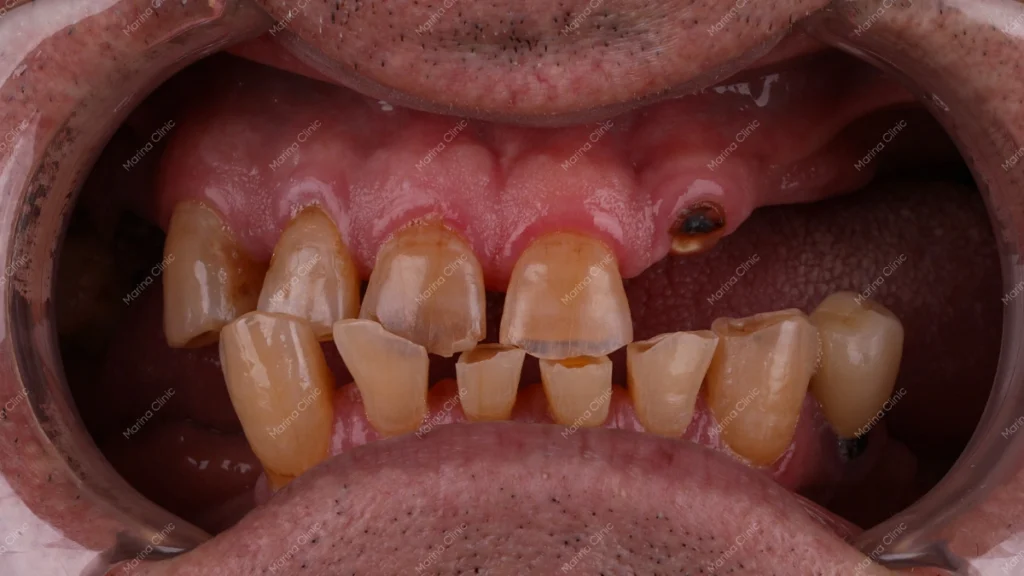
If you have several missing teeth, photographs alone cannot determine whether implants or a bridge will be the better option. A personalized assessment can help identify which teeth need replacement, what can provide reliable support, and whether additional treatment is necessary.
What Information to Prepare
Providing the right information can make an initial treatment assessment more useful:
- Clear photos of your teeth and smile
- Any recent panoramic X-ray or CBCT scan available
- Details about previous dental treatments
- Relevant medical conditions and medications
- Your main concerns and treatment expectations
- Your approximate travel dates if you are considering treatment in Turkey
Digital Smile Assessment
A digital assessment can provide an early overview of visible tooth loss, existing restorations, smile proportions, and possible treatment directions. However, final decisions about implants, bridge design, bone availability, and surgery still require professional clinical evaluation and appropriate imaging.
Personalized Consultation
During your consultation, the dental team can compare conventional bridges, individual implants, and implant-supported bridges according to your own case. This allows the treatment plan to focus on function, appearance, long-term maintenance, and the health of the remaining teeth rather than choosing a treatment based on price alone.
Which treatment are you interested in?
FAQs
Yes. Depending on the position of the missing teeth, bone availability, and treatment goals, dentists may use individual implants or an implant-supported bridge to replace several teeth.
Neither option is always better. The right choice depends on bone health, neighboring teeth, gum condition, bite forces, medical history, and the patient’s long-term priorities.
No. Implant-supported bridges can sometimes replace several missing teeth using fewer implants, depending on the location of the gaps and the clinical treatment plan.
A dental implant gains support from an implant placed in the jawbone. A conventional bridge replaces missing teeth by using neighboring natural teeth as its main support.
Both can provide long-term function with proper care. Implant components and bridges may still need maintenance or replacement over time, so longevity depends on oral health, hygiene, bite forces, and restoration quality.
A conventional bridge usually has a lower initial cost. Implant treatment often requires a larger initial investment because it includes surgery, implant components, healing, and the final restoration.
Yes. Depending on the condition of the mouth, fixed options may include conventional bridges, individual dental implants, or implant-supported bridges without relying on a removable denture.
Dentists assess the position of the missing teeth, bone volume, gum health, neighboring teeth, bite function, medical history, imaging findings, and long-term treatment goals before making a recommendation.