
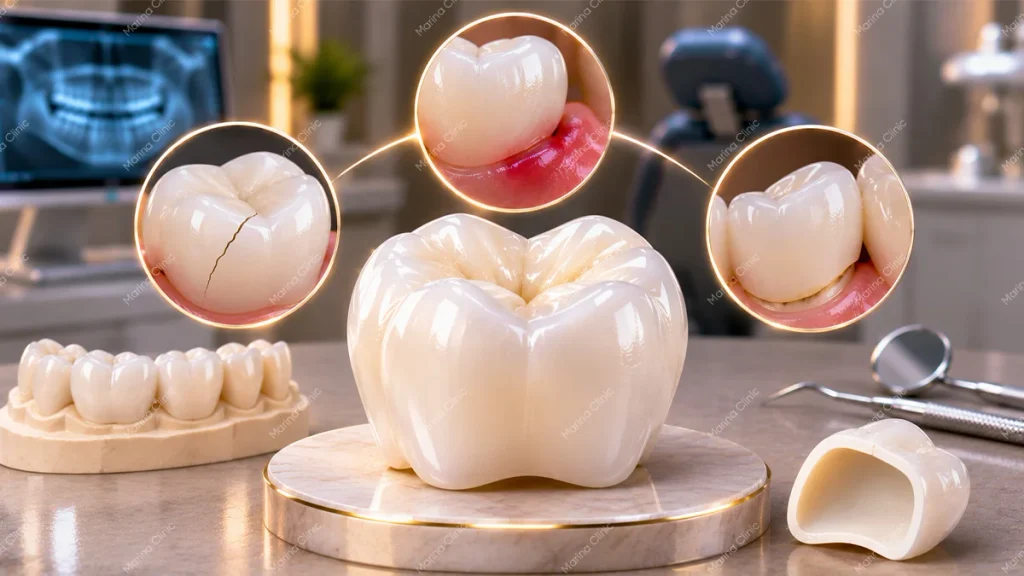
Zirconia crowns are widely used to restore damaged or weakened teeth because of their strength, durability, and natural-looking appearance. But are they suitable for both front and back teeth? And how do they compare with other crown materials? Understanding their benefits, limitations, costs, and expected lifespan can help patients make informed treatment decisions. This article explains when zirconia crowns may be recommended, what affects their price in Turkey, and which factors determine whether they are the right choice for your teeth.
Are Zirconia Crowns a Good Choice for Front and Back Teeth?
Zirconia crowns are metal-free dental restorations made from zirconium dioxide, a strong ceramic material. They can restore damaged or heavily filled teeth and are suitable for many front and back teeth. However, zirconia is not the best choice for every tooth. The decision depends on tooth position, remaining tooth structure, bite forces, gum health, and aesthetic requirements. Back teeth may need greater strength, while some front teeth require a level of translucency better achieved with another material.
Zirconia Crowns Explained: Material, Structure and Dental Uses
Understanding the materials that make up zirconia crowns, how dental laboratories manufacture them, and when dentists recommend them can help patients determine whether they suit a particular tooth.
What Zirconia Crowns Are Made Of
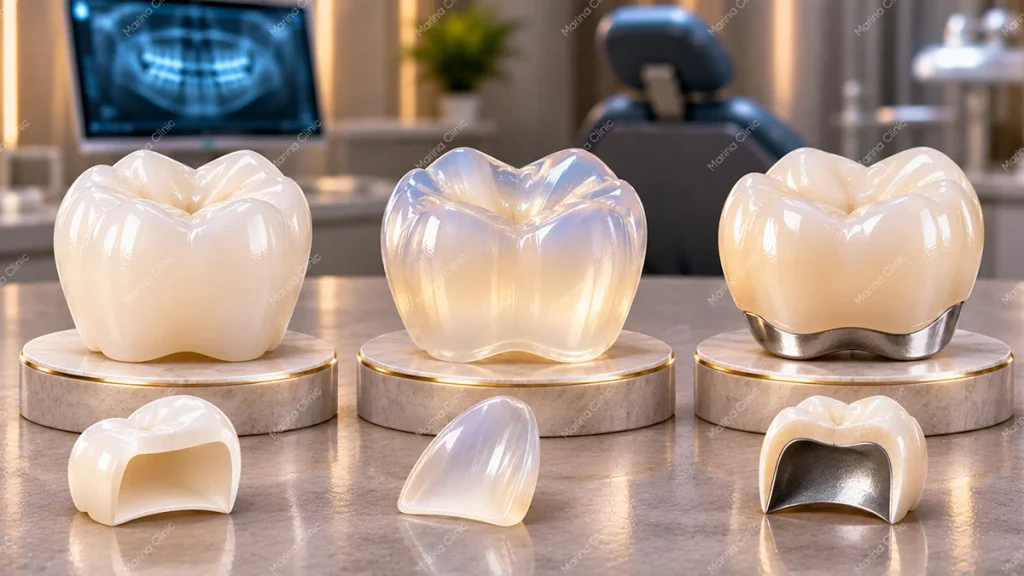
Dental laboratories create zirconia crowns from zirconium dioxide, a strong ceramic material that helps restore the shape and function of damaged teeth. Manufacturers produce different types of zirconia crowns to meet specific functional and aesthetic needs:
- Monolithic zirconia: Consists of a single piece of ceramic that offers high strength and resistance to chipping.
- Layered zirconia: Combines a zirconia framework with an outer porcelain layer to improve its appearance.
- High-translucency zirconia: Allows more light to pass through, helping the crown achieve a more natural appearance.
- Multilayer zirconia: Incorporates different shades and optical properties to closely resemble natural teeth.
The dentist selects the appropriate type according to tooth position, bite forces, and aesthetic needs.
How CAD/CAM Technology Is Used to Create Zirconia Crowns
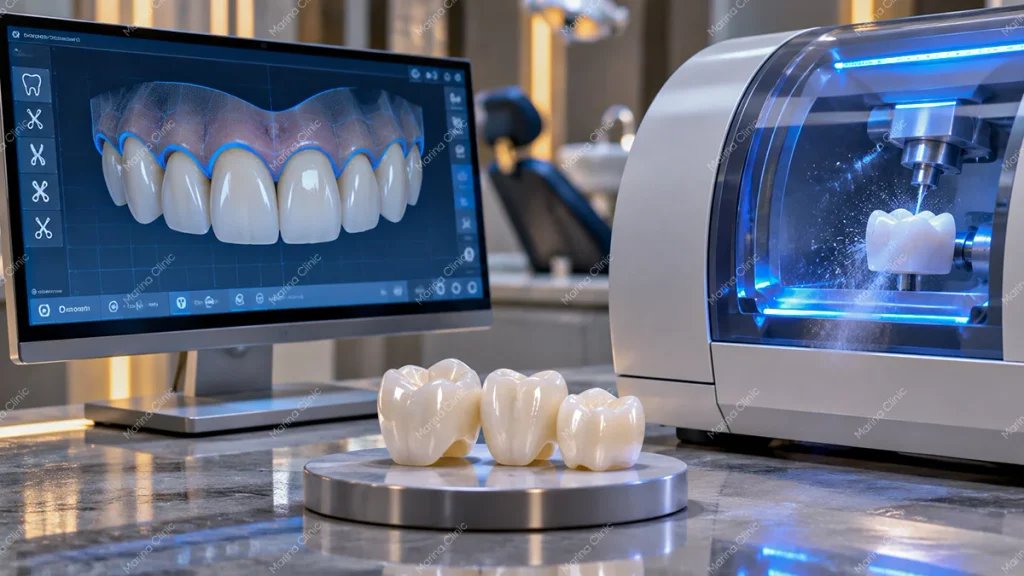
Dental laboratories commonly use computer-aided design and manufacturing (CAD/CAM) technology to create zirconia crowns.
The process involves several stages:
- Tooth preparation: The dentist prepares the tooth and assesses the surrounding structures.
- Digital scanning: The dentist captures a digital scan or takes a conventional impression to record the tooth’s shape.
- Computer-aided design: Specialized software generates a customized crown design.
- Milling and sintering: A milling machine shapes the zirconia, and the laboratory then sinters it at high temperatures to achieve the required strength.
- Fitting and cementation: The dentist checks the crown’s fit, margins, and bite before securing it in place.
Although digital technology supports precise manufacturing, clinical examination and proper fitting remain essential.
When a Tooth May Need a Zirconia Crown
Dentists may recommend a zirconia crown when a tooth develops fractures, severe wear, extensive decay, or damage from large fillings. They may also suggest a crown after root canal treatment if the tooth requires additional protection.
However, dentists may choose a filling or partial-coverage restoration when these options can restore the tooth effectively while preserving more natural tooth structure.
Start a Conversation
Contact us through the communication method that suits you





Benefits of Zirconia Crowns for Dental Restoration
Zirconia crowns offer several functional and aesthetic advantages. However, dentists must consider the condition and position of each tooth before recommending this type of restoration.
Strength and Resistance to Fracture
Zirconia crowns offer high strength and resistance to chewing pressure, making them particularly useful for back teeth. Monolithic zirconia crowns are also less likely to experience surface-layer chipping than porcelain-layered restorations. However, excessive pressure, unsuitable crown design, or teeth grinding can still cause fractures.
Metal-Free Construction and Tooth-Colored Appearance
Zirconia crowns contain no metal framework, which prevents dark metal margins from appearing near the gums. Dentists can also choose a crown shade that closely matches the surrounding teeth. However, crown thickness, underlying tooth color, and laboratory finishing all influence the final appearance.
Translucent Zirconia and Natural-Looking Smile Results
High-translucency and multilayer zirconia crowns allow light to pass through more naturally, improving their appearance on visible teeth. However, increased translucency may reduce fracture resistance in some zirconia formulations and may not adequately conceal dark underlying teeth. Choosing the right type requires balancing aesthetics with strength.
Zirconia Crown Cost: Prices and Factors That Affect Treatment
Zirconia crown prices vary according to the country, clinic, ceramic material, and any additional procedures needed before placement.
Average Zirconia Crown Prices
In the United States, zirconia crowns may cost approximately $1,000-$2,500 per tooth before insurance. This is an indicative price range rather than a worldwide average.
Several factors influence the final cost:
- Type and quality of zirconia.
- Tooth location and condition.
- Dentist and dental laboratory expertise.
- Crown design and shade-matching requirements.
- Additional restorative procedures.
- Clinic location and treatment complexity.
Front teeth requiring detailed aesthetic customization may involve higher laboratory costs.
Zirconia Crown Cost in Turkey
Zirconia crowns in Turkey may cost approximately €150–€200 per tooth, based on indicative advertised prices. However, costs vary depending on the clinic, number of crowns, zirconia type, and individual treatment requirements. Additional dental procedures may increase the total price, so patients should request a detailed treatment plan before proceeding.
Additional Costs: Tooth Preparation, Root Canals and Temporary Crowns
Some teeth require decay treatment or structural rebuilding before crown placement. Root canal treatment is necessary only when there is a clinical reason for it. Diagnostic imaging, temporary crowns, and gum treatment may also involve separate fees. A written quotation should clarify which procedures are included and whether additional charges may apply.
Request pricing
By sending, you agree we may contact you on WhatsApp with pricing.
Got it! We’ll WhatsApp you the pricing shortly.
Zirconia Crowns for Front Teeth vs Back Teeth
Front and back teeth have different needs when it comes to dental crowns. While front teeth play a key role in the appearance of your smile, back teeth handle stronger chewing forces.
Front Teeth: Translucency, Shade Matching and Smile Aesthetics
Restoring a front tooth requires careful matching of color, shape, and translucency, particularly when only one tooth needs a crown. High-translucency zirconia can produce natural-looking results, but the underlying tooth color and gumline must also be considered. In some cases, E-max may provide a better aesthetic match.
Back Teeth: Chewing Forces, Strength and Crown Design
Molars experience repeated chewing pressure, making crown thickness, strength, and bite alignment important. Monolithic zirconia may be suitable because of its fracture resistance. However, the dentist must also examine the remaining tooth structure, opposing teeth, and any signs of bruxism before choosing the restoration.
Choosing the Right Zirconia Type for Each Tooth Position
Zirconia types differ in strength and translucency. More translucent formulations may be preferred for visible front teeth, while stronger types are often considered for back teeth. The final choice also depends on the underlying tooth color, bite alignment, and available space for the crown.
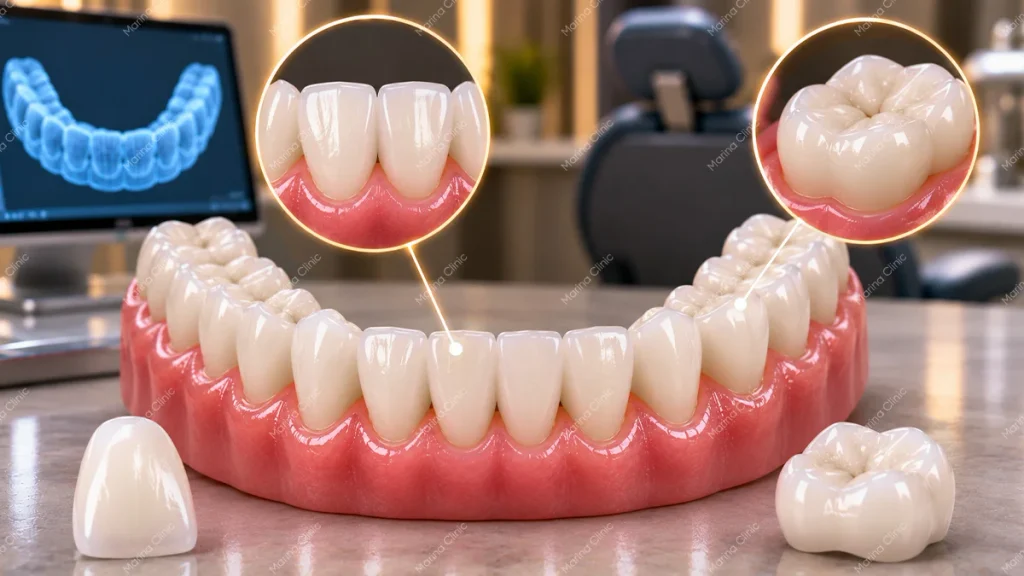
Read more: E-max vs Zirconia: Which Is Better for Crowns and Veneers?
Zirconia vs Porcelain Crowns: Strength, Appearance and Tooth Preparation
Comparing zirconia with porcelain helps explain why dentists may recommend different crown materials. However, the term porcelain can refer to several types of ceramic restorations.
Zirconia vs Porcelain: Material and Durability Differences
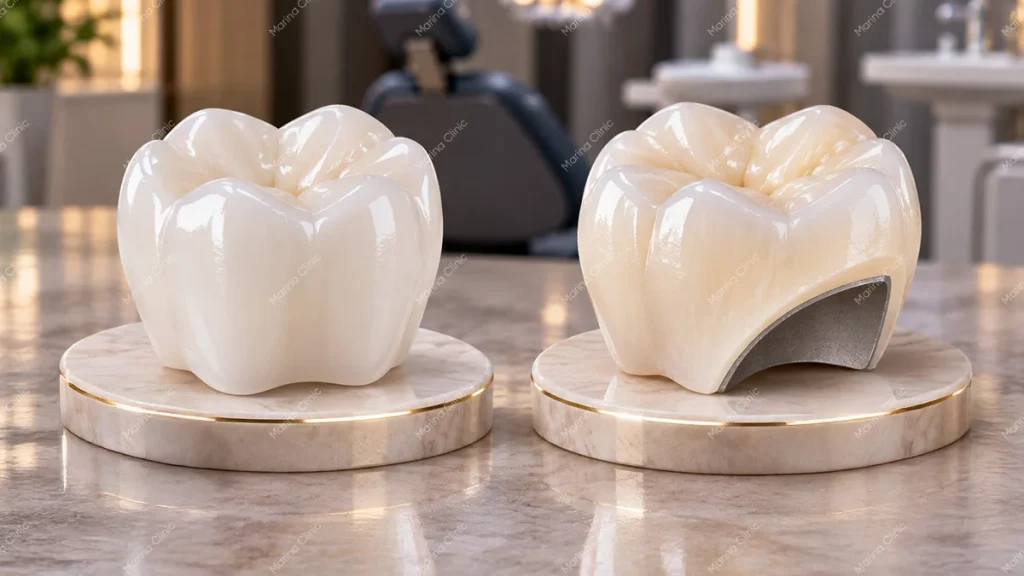
Zirconia offers high fracture resistance, making it suitable for teeth exposed to substantial chewing forces. Porcelain crowns vary in strength depending on their composition and construction. Some porcelain restorations may be more susceptible to cracking or chipping, particularly when porcelain is used as an outer layer.
Aesthetic Results and Natural Tooth Translucency
Some porcelain-based ceramics provide excellent translucency and color depth, making them suitable for visible front teeth. Modern translucent zirconia has improved aesthetically, although stronger formulations may appear more opaque. Accurate shade selection helps the final restoration blend with neighboring teeth.
Tooth Preparation and Clinical Suitability
Both zirconia and porcelain crowns require the removal of some tooth structure to create adequate space. Certain zirconia designs may allow reduced crown thickness, but the amount of preparation depends on tooth condition, bite alignment, and manufacturing requirements. When possible, a partial restoration may offer a more conservative alternative.
Upload your photos and receive a free AI-powered preliminary analysis in minutes. No commitment required.
Zirconia Crown Lifespan: Durability, Staining and Fracture Risks
Zirconia crowns can remain functional for many years, but their longevity depends on crown quality, oral hygiene, chewing forces, and the health of the supporting tooth.
How Long Zirconia Crowns Typically Last
Dental crowns generally last around 5–15 years, and zirconia crowns may last longer with appropriate care. Their lifespan depends on the quality of preparation and fitting, bite forces, oral hygiene, and regular dental examinations. No crown material can guarantee a fixed lifespan.
Staining, Surface Discoloration and Color Stability
Zirconia maintains its color well and resists intrinsic staining. However, plaque, tartar, surface deposits, and changes to the outer glaze can affect the crown’s appearance over time. A dentist can examine the crown and determine whether professional cleaning, polishing, or further treatment will help restore its appearance.
Chipping, Fractures and the Effects of Bruxism
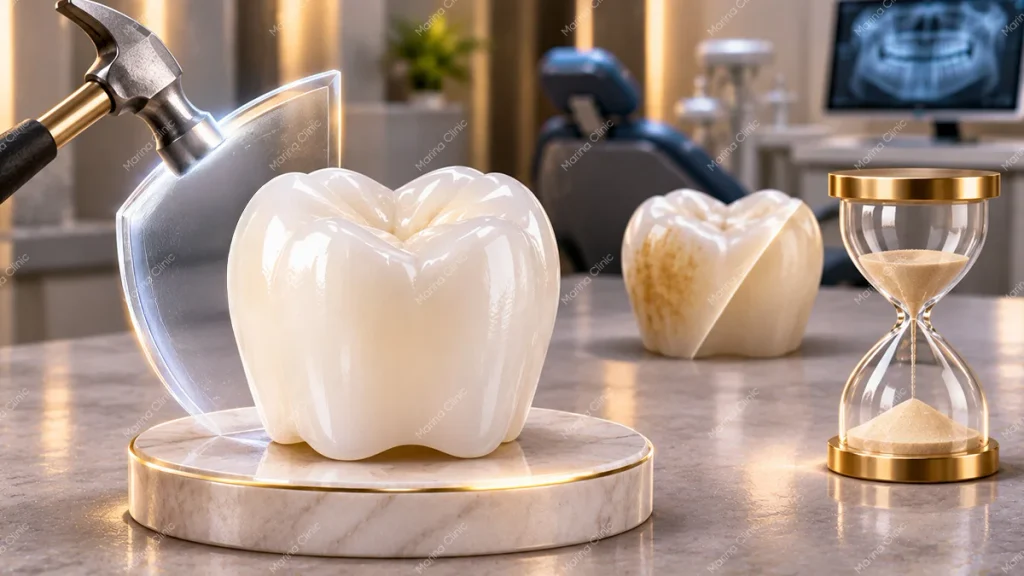
Despite its strength, zirconia can fracture under excessive pressure. Layered crowns may also experience porcelain chipping. Patients who grind or clench their teeth should inform their dentist, as bite adjustments or a custom night guard may help reduce excessive forces.
Oral Hygiene and Long-Term Crown Maintenance
Daily oral care protects the natural tooth beneath the crown and the surrounding gums. To help maintain zirconia crowns:
- Brush twice daily with fluoride toothpaste and clean between teeth.
- Avoid biting extremely hard objects or using teeth to open packaging.
- Attend regular dental examinations, especially if the crown causes discomfort.
- Use a night guard if recommended by the dentist for teeth grinding.
Read more: Bruxism and Dental Crowns: Which Crown Type Holds Up Best?
Zirconia Crown Safety, Limitations and Possible Complications
Zirconia is generally considered biocompatible, but crown safety also depends on proper fitting, gum health, and interaction with opposing teeth.
Biocompatibility and Gum Tissue Health
Zirconia crowns are generally well tolerated by oral tissues and contain no metal framework. However, poorly fitting margins or plaque accumulation can cause gum inflammation around any crown. Maintaining oral hygiene and addressing existing gum problems are therefore important regardless of the material.
Crown Fit, Bite Alignment and Opposing Tooth Wear
A zirconia crown should fit securely and maintain comfortable bite contact. An excessively high crown may cause chewing discomfort, while a rough surface may contribute to opposing tooth wear. Proper polishing and bite adjustment help reduce these risks. Persistent discomfort should be evaluated by a dentist.
Cases Where Zirconia May Not Be the Preferred Material
Another ceramic may be preferable when a front tooth requires particularly precise translucency or shade matching. Zirconia may also be unsuitable when insufficient tooth structure remains or when the available space prevents an appropriate crown design. The dentist must first determine whether the tooth can be restored successfully.
Choosing the Right Dental Crown: Zirconia, E-max or Other Materials
The best crown is the one that suits the tooth’s condition and treatment goals. Choosing the appropriate material begins with a clinical examination rather than a comparison of appearance or price alone.
Clinical Examination and Remaining Tooth Structure
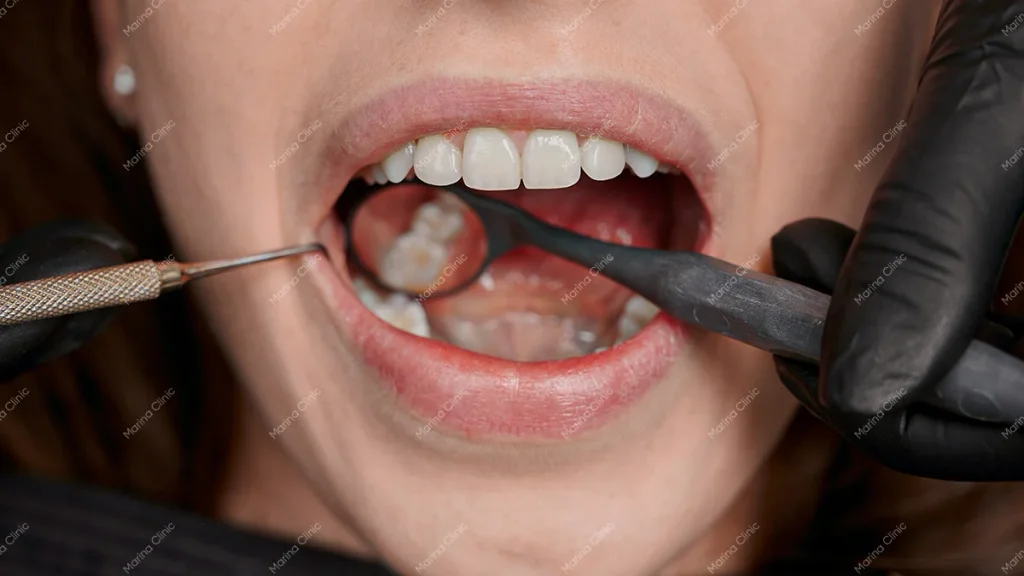
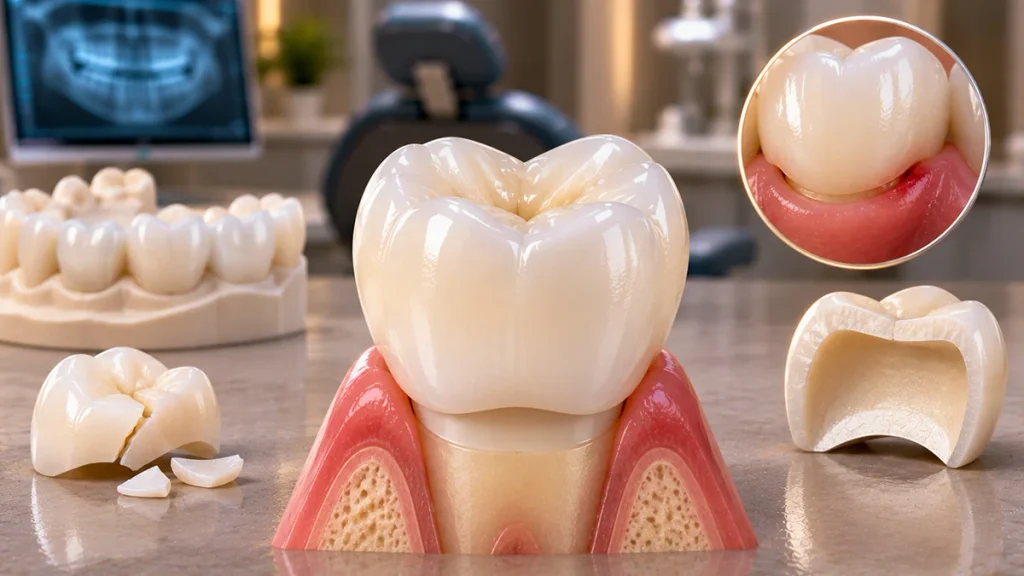
The dentist examines existing fillings, decay, fractures, and the amount of healthy tooth structure that remains. They may also take X-rays to evaluate the roots and surrounding tissues. Some teeth need additional rebuilding before the dentist can place a crown. In other cases, the dentist may recommend fillings or partial crowns to preserve more natural tooth structure.
Tooth Position, Bite Forces and Aesthetic Expectations
Tooth position determines how visible the crown will be, while bite alignment influences the forces it must withstand. The dentist also evaluates teeth grinding and compares natural tooth shades. Discussing aesthetic expectations helps ensure the chosen restoration provides a suitable balance of appearance and function.
When E-max or Another Crown Material May Be More Appropriate
E-max is a glass-ceramic system valued for its translucency and natural-looking appearance, making it suitable for selected front teeth. High-strength zirconia may be preferable for molars exposed to substantial chewing forces. However, the ideal material depends on tooth condition, bite requirements, and aesthetic goals.
Personalized Zirconia Crown Treatment Planning in Istanbul
Treatment planning begins with an examination of the teeth, gums, and bite, followed by an assessment of crown materials, shade selection, and treatment costs. For patients considering dental restoration in Turkey, Marina Clinic in Istanbul is an option to explore for individualized planning based on clinical and aesthetic needs.
Read more: Dental Crowns vs Veneers: Which Is Right for Your Teeth?
Final Verdict: Are Zirconia Crowns Right for Every Tooth?
Zirconia crowns combine strength, durability, and a natural-looking appearance, making them suitable for restoring many damaged, weakened, or heavily filled teeth. Their metal-free construction and different translucency options allow them to be considered for both front and back teeth.
However, zirconia is not the best choice for every tooth. Front teeth may require greater attention to translucency and shade matching, while molars need adequate strength to withstand chewing pressure. Remaining tooth structure, bite alignment, gum health, and opposing teeth also influence the decision.
Patients considering zirconia crowns in Turkey can explore individualized treatment planning at Marina Clinic in Istanbul, taking into account their dental condition and functional and aesthetic requirements.
Ultimately, the best crown is not simply the strongest or most expensive option. It is the restoration that balances natural appearance, chewing function, tooth preservation, and long-term oral health.
Which treatment are you interested in?
FAQ
Dental laboratories make zirconia crowns from zirconium dioxide, a strong, metal-free ceramic material. Dentists use these crowns to restore damaged teeth, improve their shape, and support normal chewing function.
Zirconia crowns are generally safe and biocompatible. However, their success depends on accurate fitting, proper bite alignment, and healthy surrounding teeth and gums.
Prices vary by country, crown type, and additional procedures. In Turkey, indicative prices may range from €150 to €200 per tooth, although the final cost depends on the treatment plan.
Yes. Dentists often recommend high-translucency zirconia crowns for front teeth because they can closely resemble natural teeth. However, dentists may recommend other ceramic materials when patients need a more precise match in colour, translucency, and overall appearance.
Zirconia crowns can last 10–15 years or longer with appropriate care, although longevity varies according to crown quality, bite forces, oral hygiene, and maintenance.
Zirconia resists intrinsic staining, but surface deposits or changes to its outer glaze may affect its appearance over time.
Yes. Although zirconia is very strong and does not break easily, too much biting force, teeth grinding, or poor crown design can cause cracks or breaks.
Not always. Zirconia generally offers high strength, while certain porcelain-based ceramics provide greater translucency. The best option depends on tooth position, bite forces, and aesthetic requirements.


