
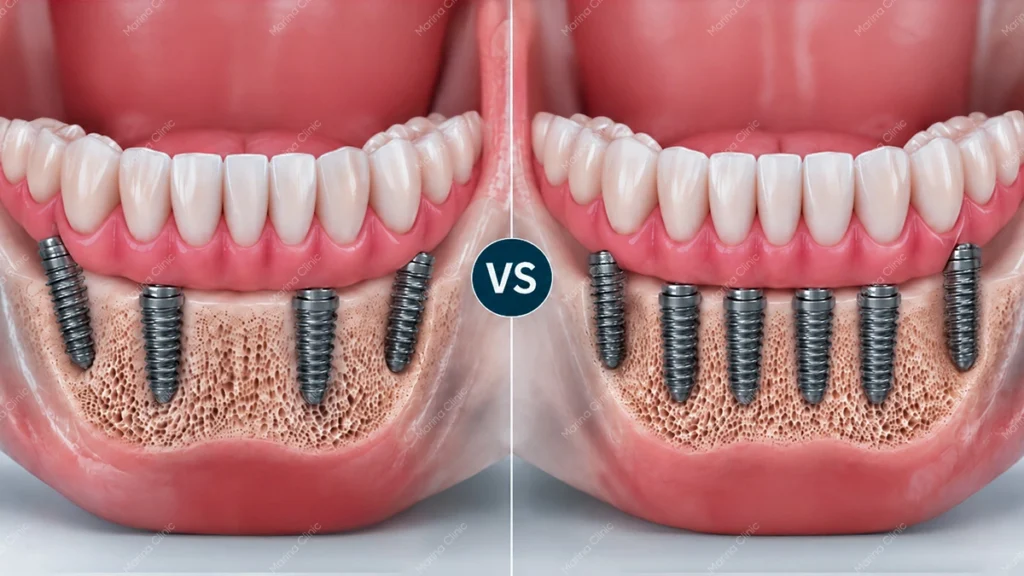
Choosing between All-on-4 and All-on-6 dental implants in Turkey is not simply about whether four or six implants are better. Both treatments can replace a complete arch of missing or failing teeth with a fixed restoration, but the right option depends on bone volume, jaw anatomy, bite forces, medical history, and the design of the final bridge.
What Is the Difference Between All-on-4 and All-on-6 Dental Implants?
All-on-4 and All-on-6 are both full-arch dental implant solutions designed to replace an entire row of missing teeth. The main difference is the number of implants supporting the fixed bridge. All-on-6 uses two additional implants that may provide greater support in selected cases, but the best option depends on bone volume, bite forces, jaw anatomy, and long-term treatment planning—not simply implant count.
All-on-4 vs All-on-6: What Is the Main Difference?
The clearest difference between All-on-4 and All-on-6 is the number of implants supporting the full-arch restoration. This can also affect implant positioning, bone requirements, force distribution, and treatment cost.
| Comparison | All-on-4 | All-on-6 |
| Number of implants | 4 per arch | 6 per arch |
| Full-arch restoration | Yes | Yes |
| Immediate temporary teeth | Possible in suitable cases | Possible in suitable cases |
| Bone requirements | May suit patients with more limited bone | Usually requires enough bone for six implants |
| Load distribution | Across four implants | Across six implants |
| Bone grafting | May sometimes be avoided | Depends on available bone |
| Treatment cost | Usually lower | Usually higher |
| Best option determined by | Bone, bite, anatomy, prosthetic plan | Bone, bite, anatomy, prosthetic plan |
Number of Implants Supporting the Bridge
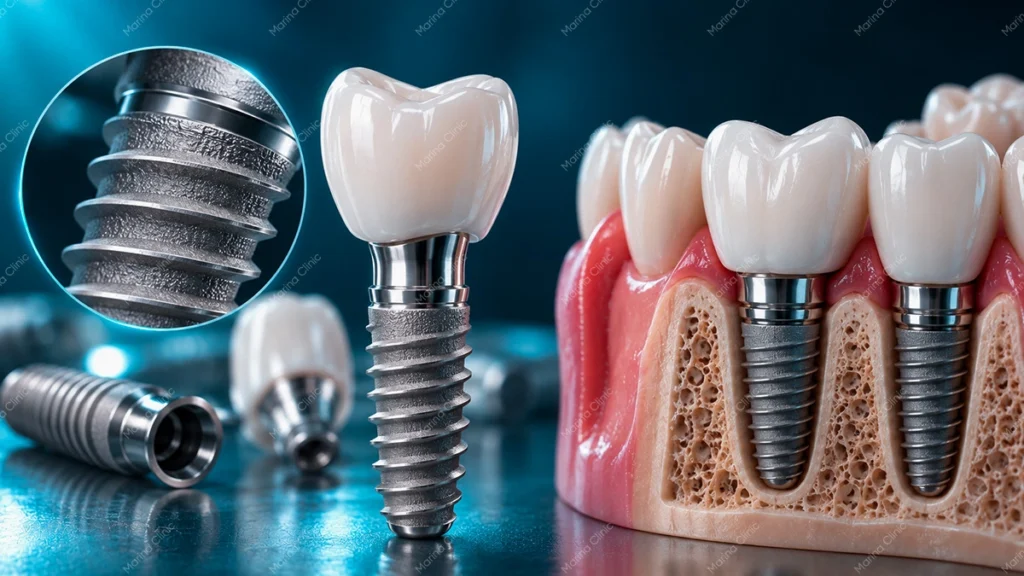
All-on-4 uses four implants to support a complete fixed arch, while All-on-6 uses six. The two additional implants can create more support points when there is enough bone to place them in useful positions.
How the Treatment Concepts Differ
All-on-4 often relies on strategic implant positioning to use available bone efficiently, with posterior implants sometimes placed at an angle. All-on-6 follows the same full-arch concept but adds two implant positions when the anatomy allows.
Why More Implants Do Not Automatically Mean Better Results
Six implants are not automatically better than four. Long-term performance also depends on implant position, bone quality, bite forces, implant stability, prosthetic design, and maintenance.
Start a Conversation
Contact us through the communication method that suits you





How Does All-on-4 Work?
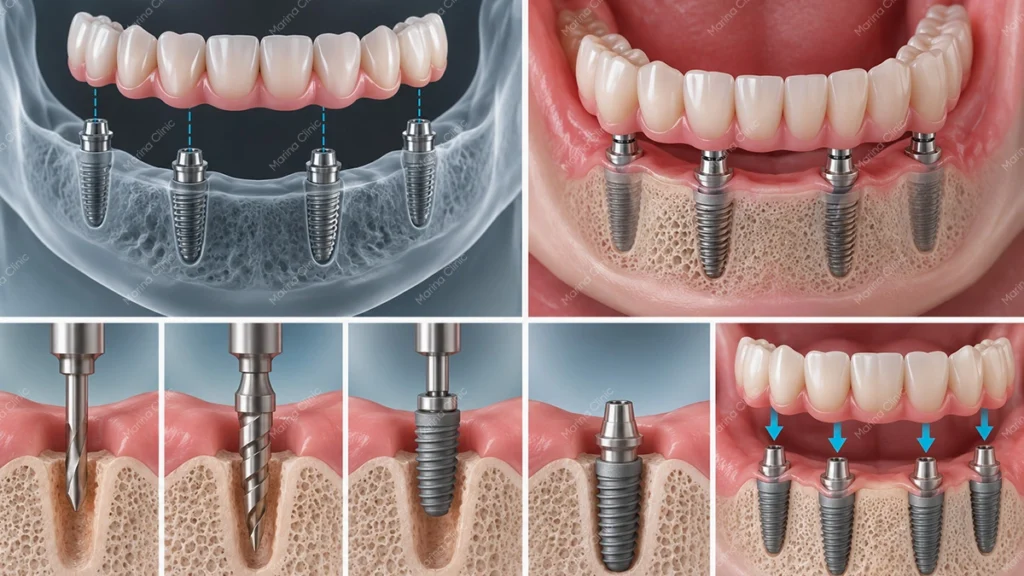
All-on-4 restores a complete upper or lower arch using four strategically positioned implants that support a fixed bridge. It is often designed to make efficient use of the patient’s existing bone.
Implant Placement Strategy
Two implants are generally placed toward the front of the jaw, while the posterior implants may be angled depending on anatomy. This can help use available bone and, in selected cases, reduce the need for more extensive grafting.
Immediate Fixed Teeth
Some patients can receive a fixed temporary bridge shortly after implant placement if sufficient initial implant stability is achieved. The definitive bridge is usually completed after the implants and surrounding tissues have healed.
When Dentists Recommend All-on-4
All-on-4 may be considered for patients with full-arch tooth loss, severely compromised remaining teeth, or limited bone in certain areas. CBCT findings, bone quality, implant stability, and bite forces still determine whether the approach is suitable.
How Does All-on-6 Work?
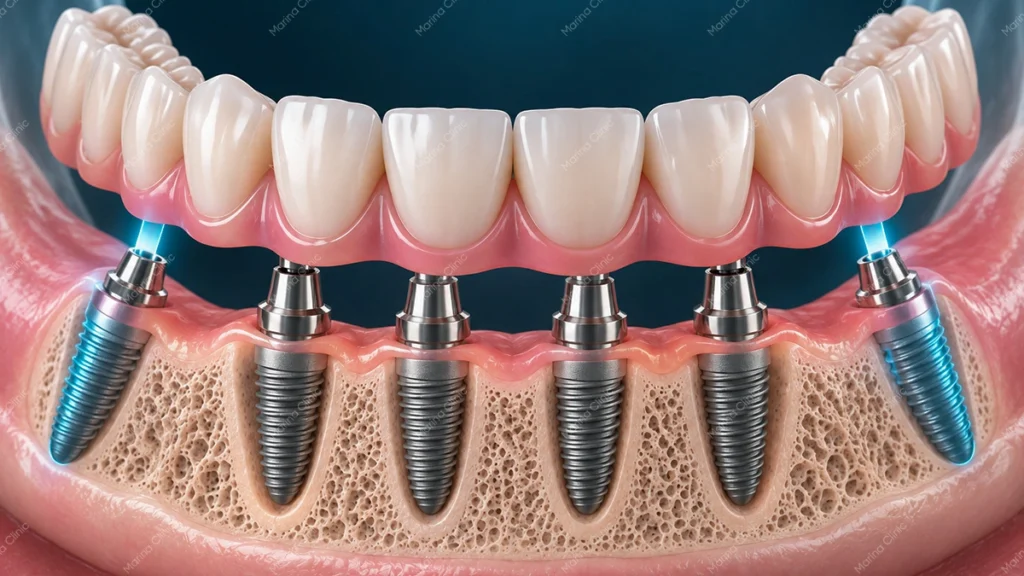
All-on-6 uses six implants instead of four to support a full-arch bridge. The additional implants can provide more supporting points when enough bone is available across the jaw.
Additional Implant Support
Two extra implants may increase the number of load-bearing points beneath the bridge. This can be useful when the dentist wants additional support and the patient’s bone anatomy allows appropriate placement.
Load Distribution Across the Jaw
Using six implants may distribute chewing forces across more areas of the jaw. However, the benefit depends on implant position, bone quality, bite forces, and the design of the final restoration.
When All-on-6 May Be Recommended
All-on-6 may be considered for patients with sufficient bone support, higher chewing forces, or restorative plans that benefit from additional implant support. The decision should follow a full clinical and radiographic assessment.
All-on-4 or All-on-6: Which Is Better for You?
There is no single option that is better for every patient. The most suitable treatment is the one that provides stable implant positioning, adequate support, a functional bite, and a maintainable final restoration.
Bone Volume
Available bone is one of the main factors in treatment planning. Some patients may have enough bone for four well-positioned implants but not six, while others may have sufficient bone across the arch for either approach.
Bite Force and Bruxism
Strong chewing forces, clenching, or teeth grinding can place additional stress on implants and the bridge. These factors may influence the number, position, and design of the implant-supported restoration.
Jaw Anatomy
Sinus cavities, nerves, bone height, bone width, and jaw shape can limit where implants can safely be placed. CBCT imaging helps the dentist evaluate these structures before choosing an implant configuration.
Medical History
Health conditions, medications, smoking, previous treatments, and healing ability can all affect implant planning. A complete medical history should therefore be reviewed before treatment begins.
Smile Design Goals
Tooth size, tooth position, lip support, gum display, and facial proportions can influence the final restoration. Implant placement should support the planned smile rather than being considered separately from it.
Long-Term Maintenance
Both All-on-4 and All-on-6 require daily cleaning, professional monitoring, and periodic prosthetic maintenance. The bridge should also be designed so the patient can clean beneath and around it effectively.
Upload your photos and receive a free AI-powered preliminary analysis in minutes. No commitment required.
Does All-on-6 Provide More Stability Than All-on-4?
All-on-6 may provide additional support in suitable cases, but stability depends on much more than implant number. Bone support, implant positioning, bite forces, primary stability, and prosthetic design all contribute to the result.
Load Distribution
Six implants provide more potential support points for the bridge. However, the actual force placed on each implant still depends on its position, angulation, and how the patient’s bite functions.
Bone Support
Every implant needs adequate surrounding bone. Adding more implants does not necessarily improve stability if some of them must be placed in areas with poor or insufficient bone.
Prosthetic Design
Bridge length, cantilevers, restorative materials, implant spacing, and bite contacts can all change how forces are transferred through the restoration.
Why Stability Depends on More Than Implant Number
Four well-positioned implants supported by adequate bone and a properly designed bridge can provide a stable restoration. Simply increasing the number to six cannot compensate for poor planning or unsuitable implant positions.
Read more: Full Mouth Dental Implants in Istanbul: Cost and Treatment Process
Who Is a Better Candidate for All-on-4 or All-on-6?
Both options are intended for patients who need full-arch tooth replacement. The main difference in candidacy is whether the available bone and jaw anatomy can support four or six implants in useful positions.
Typical Candidates for All-on-4
All-on-4 may be suitable for patients who:
- Need to replace most or all teeth in one arch
- Have limited bone in some areas of the jaw
- Have enough bone to support four strategically positioned implants
- May be able to avoid more extensive bone grafting when clinically appropriate
Typical Candidates for All-on-6
All-on-6 may be suitable for patients who:
- Need full-arch tooth replacement
- Have enough bone to accommodate six well-positioned implants
- Can support a wider distribution of implants across the jaw
- Have a prosthetic plan that benefits from two additional support points
Read more: Dental Implants Cost in Turkey 2026: Full Price Breakdown
Request pricing
By sending, you agree we may contact you on WhatsApp with pricing.
Got it! We’ll WhatsApp you the pricing shortly.
All-on-4 vs All-on-6 Cost: Why Are Prices Different?
The cost difference between All-on-4 and All-on-6 dental implants in Turkey involves more than the two additional implants. Implant systems, temporary teeth, final bridge materials, diagnostics, laboratory work, and additional procedures can all affect the final price.
Number of Implants
All-on-6 normally costs more because it requires two additional implants, components, and related surgical work.
Implant Brand
Different implant systems vary in price, component availability, and restorative options. Patients should ask which exact implant brand and system are included in the treatment plan.
Temporary Teeth
Some packages include a fixed temporary bridge during healing, while others charge for it separately. This should be confirmed before comparing quotations.
Final Prosthetic Material
The material used for the definitive bridge can significantly affect the total cost. Patients should confirm what type of final restoration is included rather than comparing package prices alone.
Digital Planning and CBCT
CBCT imaging, digital impressions, and treatment planning may be included in the package or charged separately. These steps help determine safe implant positions and plan the final restoration.
Bone Grafting or Sinus Lift
Patients with insufficient bone may need bone grafting, sinus augmentation, or other procedures. These can increase both the total treatment cost and the time needed to complete treatment.
What’s Included in the Treatment Plan
Patients should check whether imaging, extractions, temporary teeth, final teeth, anesthesia, medications, implant components, laboratory work, and follow-up care are included in the quoted price.
Read more: Dental Implants Guide 2026: Cost, Types, Procedure & Full Mouth Options
Upload your photos and receive a free AI-powered preliminary analysis in minutes. No commitment required.
Which Lasts Longer: All-on-4 or All-on-6?
There is no reliable rule that All-on-6 lasts longer simply because it uses more implants. Long-term performance depends on implant integration, oral hygiene, prosthetic quality, bite forces, lifestyle factors, and regular maintenance.
Oral Hygiene
Plaque can accumulate around the implants and beneath the bridge. Daily cleaning is important for maintaining healthy tissues and reducing the risk of inflammation around the implants.
Implant Quality
The implant system is an important part of treatment, but brand alone does not determine longevity. Placement, bone support, restorative planning, and aftercare remain equally important.
Prosthetic Maintenance
Even when the implants remain stable, screws, restorative surfaces, bite contacts, or other bridge components may require maintenance over time.
Smoking/Alcohol
Smoking can negatively affect healing and implant health. Excessive alcohol use may also interfere with recovery, oral hygiene, and consistent aftercare.
Bruxism
Grinding and clenching can increase mechanical stress on the bridge and implant components. Bite adjustment or a night guard may be considered when bruxism is significant.
Regular Follow-Up Care
Professional follow-up allows the dentist to monitor the implants, surrounding tissues, bite, and bridge and address developing problems before they become more serious.
How Does a Dentist Decide Between All-on-4 and All-on-6?
The decision should follow a complete diagnostic and restorative assessment rather than a fixed package. Dentists consider available bone, bite forces, medical history, implant positions, and the final prosthetic design.
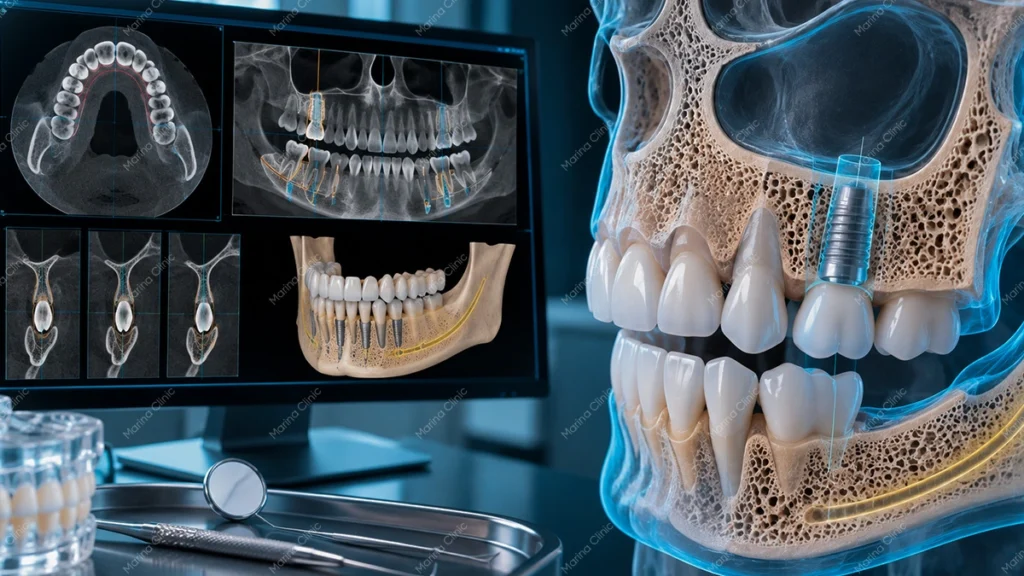
CBCT Bone Analysis
CBCT imaging provides a three-dimensional view of bone dimensions, sinus anatomy, nerve positions, and other structures that affect implant placement.
Bone Distribution
Having enough bone overall is not sufficient if it is not available in useful areas. The dentist evaluates where stable implants can actually be positioned across the jaw.
Bite Evaluation
The bite is assessed to understand how forces will be distributed across the restoration and whether grinding or other functional issues may increase mechanical stress.
Smile Design
Smile planning helps determine tooth position, proportions, arch form, and lip support. Implant placement is then planned to support the intended final restoration.
Restorative Space
There must be enough space for the bridge, framework, teeth, and cleaning access. Limited restorative space can affect both surgical and prosthetic planning.
Medical History
Medical conditions, medications, smoking, and healing history may influence implant placement, surgical timing, and the overall treatment plan.
All-on-4 vs All-on-6 in Turkey: What Should International Patients Compare?
When comparing All-on-4 vs All-on-6 in Turkey, international patients should look beyond the advertised package price. Implant brand, prosthetic materials, number of visits, temporary teeth, final teeth, and aftercare can make similar-looking offers very different.
Implant Brand
Ask which implant manufacturer and exact system will be used. This can also matter if replacement components or maintenance are needed later.
Prosthetic Material
Confirm what materials will be used for both the temporary and final bridge, as they can differ in cost, appearance, strength, and maintenance requirements.
Number of Visits
Full-arch implant treatment may require an initial surgical visit and another visit for the definitive bridge after healing. Patients should know the expected treatment timeline before arranging travel.
Temporary and Final Teeth
The treatment plan should clearly state whether both temporary and definitive teeth are included in the quoted price.
Aftercare
International patients should ask how follow-up is managed after they return home and what support is available if adjustments or maintenance are needed.
Written Treatment Plan
A written plan should identify the implant number, implant system, procedures, temporary restoration, final prosthetic material, treatment stages, and major inclusions.
Read more: Dental Implants Before and After: Real Patient Cases and Treatment Plans
Which Full-Arch Implant Option Is Right for You?
The right full-arch implant option is the one that matches your anatomy, bite, bone condition, and restorative needs. Choosing six implants because the number is higher—or four simply because the price is lower—can overlook more important clinical factors.
Why Every Patient Needs an Individual Treatment Plan
Bone volume, bite forces, remaining teeth, medical history, and aesthetic goals vary between patients. For this reason, the same implant configuration cannot be recommended for every case.
Questions to Ask Before Choosing
Before choosing between All-on-4 and All-on-6, ask:
- Is my available bone suitable for the proposed implant positions?
- What implant system will be used?
- Will I receive fixed temporary teeth?
- What material will be used for the final bridge?
- Do I need bone grafting or a sinus lift?
- How many visits will treatment require?
- How will follow-up and maintenance be managed?
Building a Long-Term Smile
Long-term success depends on careful treatment planning, stable implant support, a balanced bite, a cleanable bridge, and consistent maintenance. These factors remain important whether the restoration is supported by four implants or six.
Which treatment are you interested in?
FAQ
The main difference is the number of implants supporting the bridge. Dentists choose between them based on bone, anatomy, bite forces, and restorative needs.
Six implants may provide additional support in some cases, but stability also depends on bone quality, implant position, bite forces, and prosthetic design.
Not always. Some patients have enough natural bone, while others may require grafting depending on their anatomy and planned implant positions.
Neither automatically lasts longer. Longevity depends on implant stability, hygiene, prosthetic quality, bite forces, lifestyle factors, and regular maintenance.
Usually, because it uses fewer implants. However, implant brand, prosthetic materials, diagnostics, and additional procedures also affect the final cost.
No. Many patients can restore a full arch with four implants, while others may benefit from six depending on bone availability and treatment needs.
Patients with sufficient bone and treatment plans that benefit from additional implant support may be suitable candidates for All-on-6.
Dentists assess CBCT scans, bone distribution, jaw anatomy, bite forces, medical history, restorative space, and smile design before deciding.