
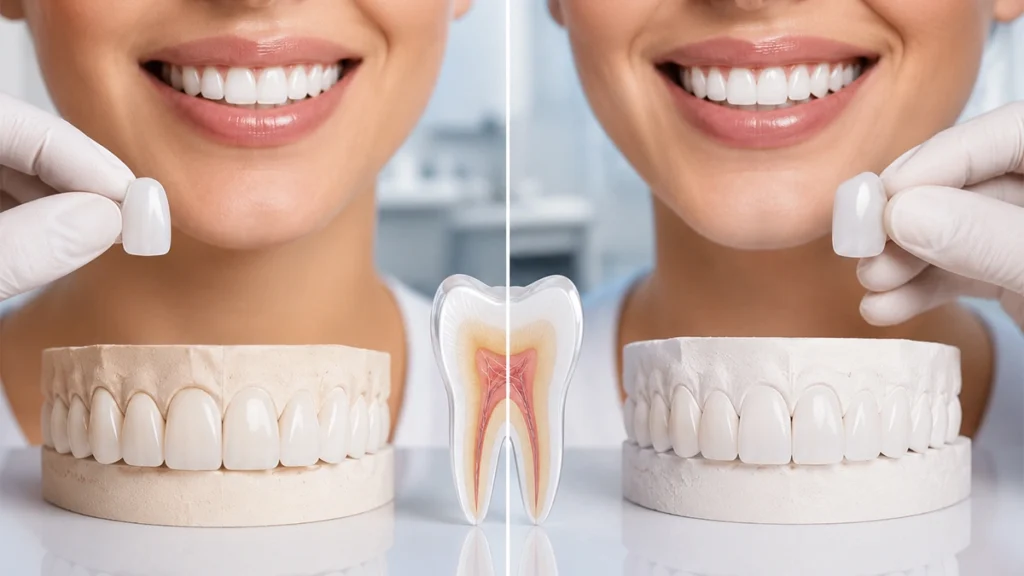
A confident smile can make a major difference in how people feel about their appearance. Among the most searched cosmetic dentistry treatments for front teeth are Lumineers and laminate veneers. Both are designed to improve smile aesthetics, but they are not exactly the same. Patients comparing these options often want to know which looks more natural, which lasts longer, and whether tooth shaving is required.
Quick Answer: What Is the Difference Between Lumineers and Laminate Veneers?
Lumineers and laminate veneers are both thin cosmetic shells placed on the front surface of teeth to improve smile appearance. The main difference is that Lumineers are designed as no-prep or minimal-prep veneers, while laminate veneers may require slight tooth preparation depending on tooth position, color, and smile design goals. The best option depends on the patient’s teeth, aesthetic expectations, and long-term treatment plan.
What Are Laminate Veneers?
Laminate veneers are a popular cosmetic dentistry option used to improve the shape, color, and overall appearance of front teeth.
Definition of Laminate Veneers
Laminate veneers are thin cosmetic shells placed on the front surface of teeth to improve color, shape, size, and symmetry. Depending on the material and treatment plan, they may require little or slight tooth preparation.
How Laminate Veneers Improve Front Teeth Aesthetics
These veneers are commonly used on visible front teeth to improve concerns such as:
- discoloration
- chipped edges
- worn enamel
- uneven tooth size
- mild gaps
- irregular tooth shape
- smile asymmetry
By enhancing the front surface of the teeth, laminate veneers can create a brighter, smoother, and more balanced smile while preserving as much healthy tooth structure as possible.
Common Materials Used for Laminate Veneers
Common veneer materials include porcelain-based ceramics and lithium disilicate options such as E-max. These materials are often chosen because they can provide:
- strength
- translucency
- durability
- masking ability
- natural-looking results
Why Laminate Veneers Are Popular in Smile Makeovers
Laminate veneers are popular in smile makeover planning because they offer flexibility. They may support subtle improvements or more dramatic cosmetic changes while giving dentists greater control over tooth shape, smile line, and overall facial balance.
What Are Lumineers?
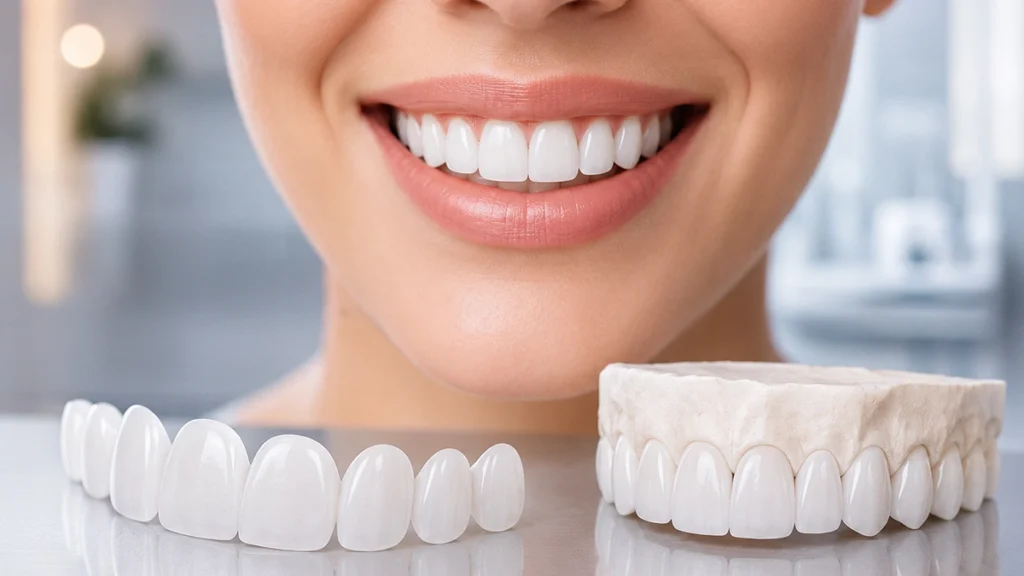
Lumineers are ultra-thin veneers designed for patients who want a more conservative approach to smile enhancement.
Lumineers Definition
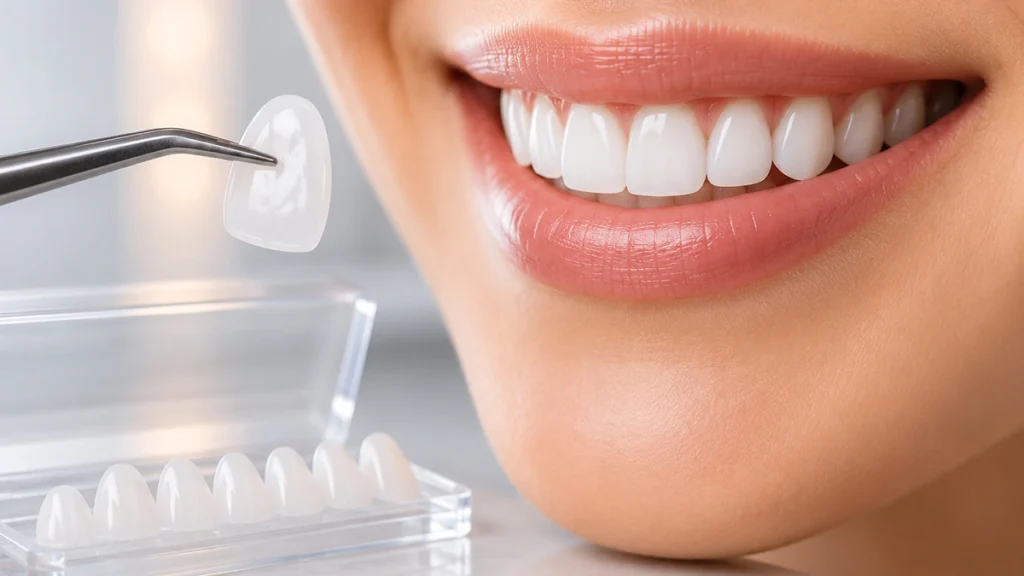
This branded veneer system uses ultra-thin shells bonded to the front of teeth. Treatment generally requires minimal or no tooth reduction and may offer a less invasive way to improve smile aesthetics.
How Lumineers Differ From Traditional Veneers
Dental providers often market Lumineers as minimal-prep or no-prep veneers. Traditional laminate veneers may require slight enamel reshaping to create space and improve the final contour.
However, Lumineers are not automatically better. In some cases, slight preparation may help veneers look more natural and balanced.
The No-Prep Veneer Concept
The no-prep veneer concept focuses on preserving natural tooth structure. In selected cases, dentists can place very thin veneers with little or no enamel reduction.
Even with no-prep treatment, dentists need careful planning because veneers add thickness and must still look proportionate and natural.
When Dentists Consider Lumineers
Dentists may consider Lumineers when the patient has:
- relatively well-aligned front teeth
- healthy enamel
- minor cosmetic concerns
- a preference for conservative treatment
- limited need for strong color masking
Lumineers may be useful when only subtle cosmetic changes are needed and the natural teeth already have good proportions.
Start a Conversation
Contact us through the communication method that suits you





Lumineers vs Laminate Veneers — Main Differences
To choose the better option, patients should compare Lumineers and laminate veneers based on preparation, thickness, aesthetics, masking ability, and treatment goals.
Tooth Preparation Requirements
Dental providers usually describe Lumineers as requiring minimal or no tooth preparation, while laminate veneers may require slight preparation to create space and improve contour.
Less preparation may sound appealing, but dentists may recommend a small amount of enamel reduction to help prevent a bulky look and create a more natural result.
Veneer Thickness
Lumineers are known for being ultra-thin. Laminate veneers are also thin, but they may allow slightly more variation in thickness depending on the material and treatment plan.
Thickness matters because it can affect:
- translucency
- durability
- color masking
- final tooth contour
Aesthetic Outcome
Both options can look attractive when properly planned. However, laminate veneers often offer more smile design flexibility, especially for refining length, shape, symmetry, and edges.
Color Masking Ability
Laminate veneers may be better for patients with dark stains or significant discoloration because they can offer stronger masking.
Because Lumineers are ultra-thin, the natural tooth shade may have more influence on the final result.
Treatment Planning Differences
Lumineers usually suit simpler cases with conservative goals, while laminate veneers are often used in more complete smile makeover plans.
Successful results depend more on proper planning and case selection than on the veneer name alone.
Lumineers vs Laminate Veneers
The table below summarizes the main differences between Lumineers and laminate veneers in a simple side-by-side format.
| Feature | Lumineers | Laminate Veneers |
| Tooth Preparation | Minimal or none | Often slight preparation |
| Thickness | Ultra-thin | Thin |
| Color Masking | More limited | Stronger |
| Smile Design Flexibility | Moderate | Higher |
| Suitable for Complex Cases | Limited | More versatile |
Overall, laminate veneers usually offer more flexibility for complex cosmetic cases, while Lumineers may suit patients seeking a more conservative option.
Read More: Veneers vs Crowns: How Dentists Decide What Each Tooth Needs
Do Lumineers Require Tooth Shaving?
Many patients ask whether dentists can place Lumineers without shaving the teeth, and the answer depends on the case.
Understanding No-Prep Veneers
No-prep veneers prioritize tooth structure preservation. Dentists can sometimes apply thin shells with minimal or no enamel reduction, which provides a conservative aesthetic enhancement.
Cases Where No Preparation May Be Possible
Dentists may use no-prep treatment when the patient has:
- small teeth
- slightly retruded teeth
- minor cosmetic concerns
- minimal discoloration
- favorable tooth position and bite
When the teeth already have enough space to accommodate the veneer thickness, dentists may need little or no preparation.
Why Some Patients Still Need Minor Adjustments
Even when patients choose Lumineers, some patients still need minor enamel contouring or edge adjustment. These adjustments may help improve the final fit, bite, appearance, or comfort.
So while Lumineers may reduce the need for tooth shaving, they do not guarantee a completely preparation-free treatment in every case.
When Dentists Recommend Laminate Veneers
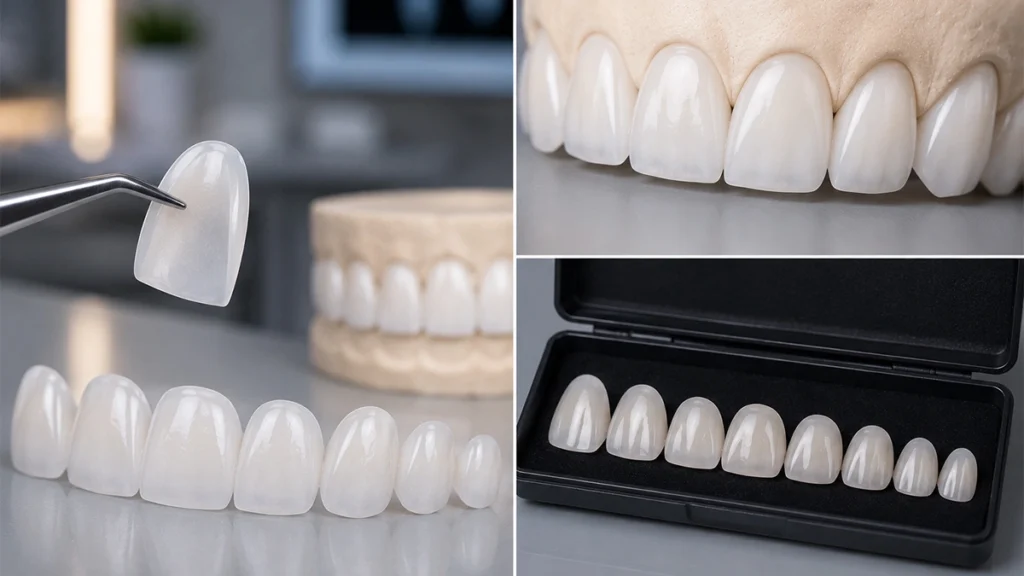
Dentists often recommend laminate veneers when patients need more control over tooth color, shape, and overall smile design.
Discolored Teeth
Laminate veneers may be recommended for moderate to severe discoloration, especially when whitening alone is not enough. They can help mask deeper stains.
Uneven Tooth Shapes
For uneven shapes, irregular edges, or unbalanced tooth proportions, laminate veneers may allow more precise correction and a smoother smile line.
Smile Makeover Cases
Patients seeking a fuller smile transformation may benefit from laminate veneers, especially when improving brightness, symmetry, contours, and smile arc together.
Larger Cosmetic Corrections
Laminate veneers are often useful when several concerns appear at once, such as wear, staining, asymmetry, or shape irregularities.
Upload your photos and receive a free AI-powered preliminary analysis in minutes. No commitment required.
When Dentists Recommend Lumineers
Dentists may recommend Lumineers for patients who want subtle cosmetic improvement with minimal tooth reduction.
Patients Seeking Conservative Treatment
Some patients prioritize preserving natural tooth structure above all else. In carefully selected cases, Lumineers can support that goal by offering a more conservative cosmetic approach.
Minor Cosmetic Changes
Dentists may consider Lumineers when patients want relatively small improvements, such as mild shape enhancement or a more polished appearance of the front teeth.
Patients Concerned About Tooth Reduction
Patients who worry about shaving their teeth often ask about Lumineers. When the clinical situation allows it, dentists may use this option to support a more minimal-intervention treatment plan.
Cases With Healthy Tooth Structure
Patients with healthy front teeth, good enamel, limited discoloration, and relatively favorable alignment may qualify for ultra-thin veneer systems such as Lumineers.
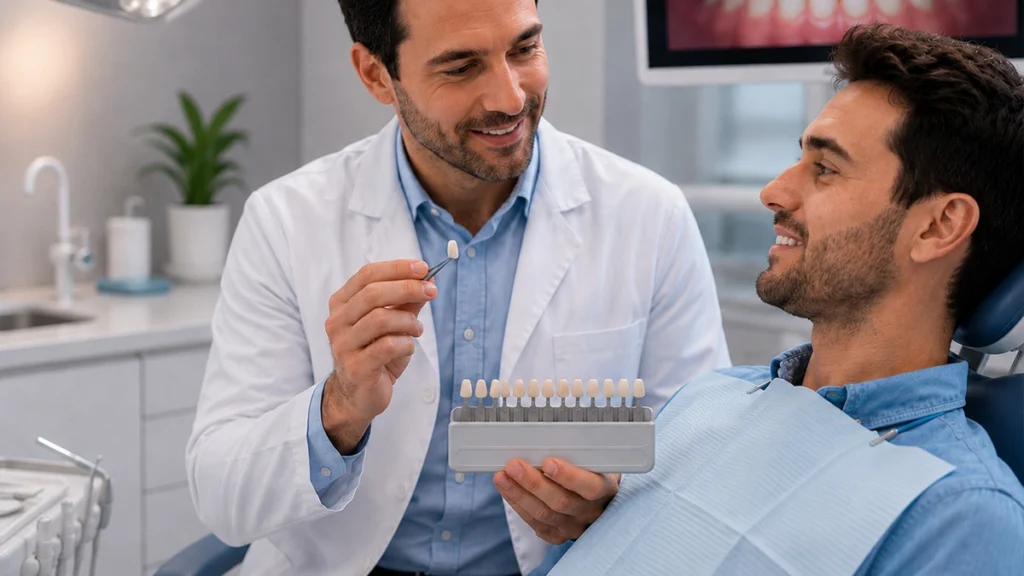
Veneer Materials Used in Modern Cosmetic Dentistry
Different veneer materials can affect the final look, strength, and suitability of treatment for each patient.
E-max Veneers
Dentists make E-max veneers from lithium disilicate ceramic and widely use them in aesthetic dentistry. These veneers combine strength with natural-looking translucency. In many smile makeover cases, dentists select E-max for its aesthetic versatility and durability.
Porcelain Laminate Veneers
Porcelain laminate veneers remain a classic option in cosmetic dentistry. Dentists can customize their shade, shape, and texture, which makes them useful for individualized smile design.
Lumineers Technology
Lumineers use an ultra-thin veneer concept designed to support minimal-prep treatment. Many patients choose Lumineers because they allow conservative placement and less invasive cosmetic improvement in selected cases.
Material Selection and Smile Design
Choosing among different veneers materials is not only about strength. It also affects:
- light reflection
- translucency
- stain resistance
- masking ability
- thickness requirements
- overall smile design
In well-planned cosmetic dentistry, material selection and smile design should always be evaluated together.
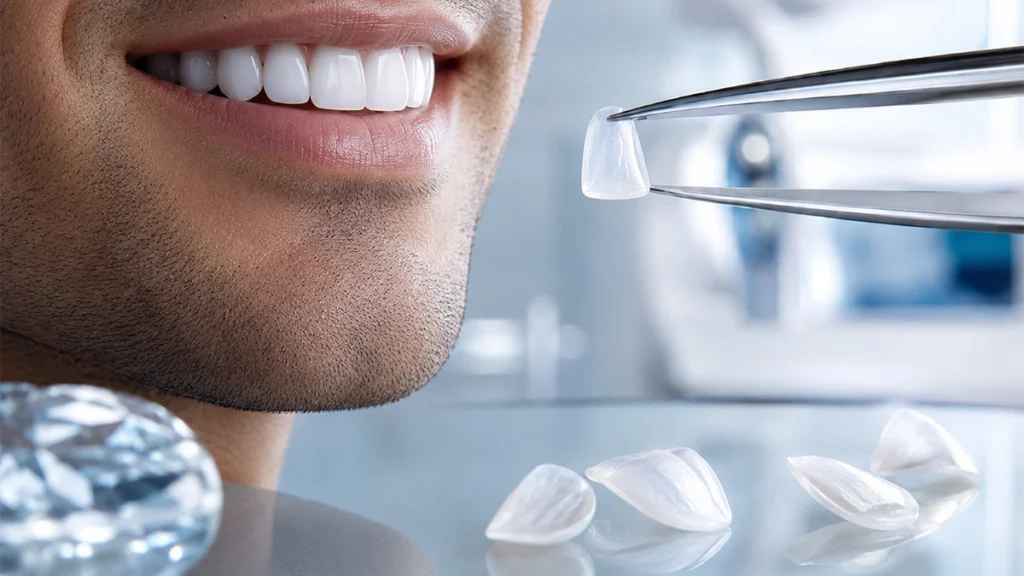
Which Option Looks More Natural?
A natural-looking result depends on veneer design, material choice, and how well the treatment matches the patient’s smile.
Smile Design Considerations
Both Lumineers and laminate veneers can look natural when properly planned. The result depends on tooth proportions, material thickness, smile design, and the patient’s starting point.
Tooth Shape and Proportion
If veneers add too much bulk or do not match nearby teeth, the result may look less natural. Slight preparation with laminate veneers can sometimes create better proportions and smoother transitions.
Light Reflection and Translucency
A natural smile depends on how light interacts with the ceramic. Shade, translucency, veneer thickness, and the tooth color underneath all affect the final look.
Why Case Selection Matters
Lumineers may look natural in mild enhancement cases, while laminate veneers may be better when more reshaping, masking, or smile redesign is needed.
Read more: How to Avoid the “Piano Key Teeth” Veneer Look and Get Natural-Looking Results
Which Option Lasts Longer?
The longevity of Lumineers and laminate veneers depends on the material, bite forces, and how well patients maintain them.
Durability of Laminate Veneers
Laminate veneers can provide durable results when dentists design and bond them properly and patients care for them well. Material selection, bite strength, oral hygiene, and habits such as teeth grinding may influence their lifespan.
Durability of Lumineers
Lumineers can also last for years in suitable cases. Their long-term success depends heavily on good case selection and proper bonding. Ultra-thin veneers may offer less predictability for patients with unfavorable bite patterns or stronger functional demands.
Daily Habits That Affect Longevity
Several daily habits can affect the longevity of any veneer, including:
- teeth grinding
- nail biting
- chewing hard objects
- poor oral hygiene
- untreated gum problems
- using the teeth as tools
Maintenance Requirements
Routine dental checkups, professional cleaning, good home care, and bite protection when needed all support long-term veneer success. Longevity varies from one patient to another, so patients should discuss treatment expectations with their dentist before treatment.
Read more: How Long Does a Hollywood Smile Last in Turkey 2026? Veneers, Crowns & Implants Explained
Upload your photos and receive a free AI-powered preliminary analysis in minutes. No commitment required.
Lumineers vs E-max Veneers
Patients comparing Lumineers vs E-max veneers should know that they differ in both material and treatment approach.
Material Differences
Lumineers refer to a branded ultra-thin veneer concept, while E-max refers to a lithium disilicate ceramic material commonly used for veneers and other restorations.
Aesthetic Differences
Dentists often choose E-max veneers for their translucency, strength, and smile design flexibility. Lumineers offer a thinner, more conservative option, but they may limit treatment possibilities in some cases.
Strength and Longevity
E-max veneers provide strong durability, cosmetic versatility, and reliable aesthetics, especially when patients need both beauty and function.
Candidate Selection
Patients with complex smile design needs, stronger masking requirements, or greater structural demands may benefit more from E-max veneers. Patients with minor concerns who prefer minimal intervention may qualify for Lumineers after a dentist evaluates their case.
Read more: Hollywood Smile vs Veneers: Clinical Differences, Results, and Limitations
Are Lumineers Better Than Laminate Veneers?
There is no single best veneer for everyone because the right choice depends on the patient’s teeth, needs, and smile goals.
There Is No Universal “Best” Option
Lumineers are not automatically better than laminate veneers. The better option depends on the patient’s anatomy, expectations, and treatment goals.
Treatment Depends on Patient Goals
Patients seeking minimal tooth reduction may prefer Lumineers, while those needing stronger color correction, reshaping, or a fuller smile makeover may benefit more from laminate veneers.
Importance of Clinical Evaluation
A professional evaluation may include photos, smile analysis, tooth color assessment, bite evaluation, and a discussion of expectations to choose the most suitable veneer option.
Why Smile Design Is Individualized
Every smile is different, so the best treatment is the one carefully planned around the patient’s existing teeth and desired result.
Read more: E-max Veneers Cost in Turkey – Full Price Breakdown 2026
Request pricing
By sending, you agree we may contact you on WhatsApp with pricing.
Got it! We’ll WhatsApp you the pricing shortly.
Who Is a Good Candidate for Lumineers?
Lumineers may be suitable for patients with healthy teeth and relatively minor cosmetic concerns.
Patients With Minor Cosmetic Concerns
Patients with mild chips, slight gaps, subtle shape concerns, or modest smile imperfections may be good candidates for Lumineers if the teeth are otherwise healthy and well-positioned.
Healthy Front Teeth
Lumineers are often considered when the front teeth have healthy enamel, limited existing restorations, and no major structural problems.
Patients Looking for Minimal Intervention
Patients who value conservative dentistry and want a less invasive cosmetic treatment often ask whether Lumineers may be suitable for their smile.
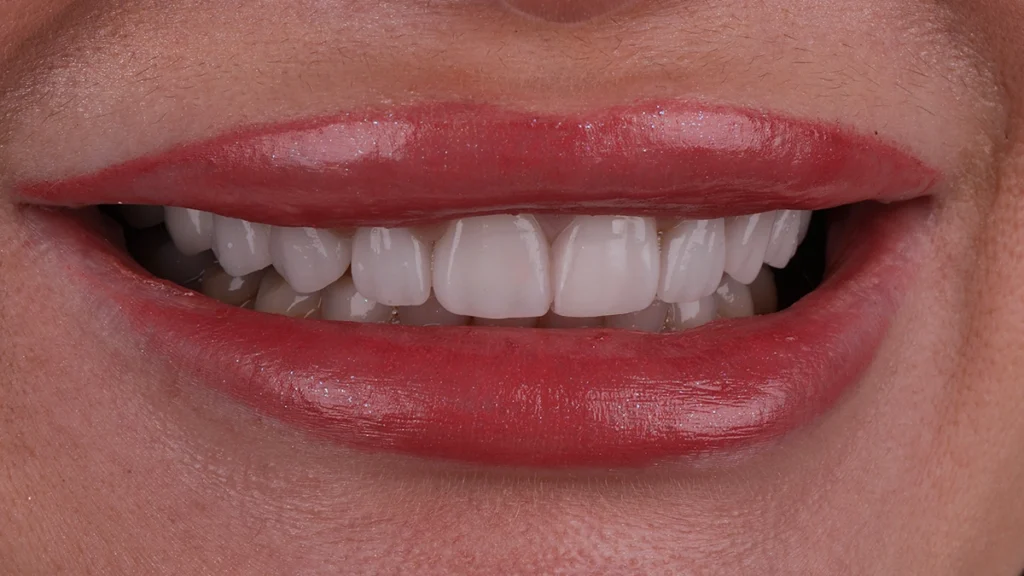
Who Is a Good Candidate for Laminate Veneers?
Laminate veneers are often better suited for patients who want more noticeable smile correction or broader aesthetic changes.
Multiple Aesthetic Concerns
Patients with several concerns at once, such as discoloration, wear, irregular shape, and asymmetry, may benefit more from laminate veneers because they allow broader cosmetic correction.
Smile Transformation Cases
When a patient wants a fuller smile transformation rather than a small cosmetic refinement, laminate veneers are often the more flexible option.
Color and Shape Corrections
Laminate veneers may be better suited for cases requiring stronger shade control, contour refinement, tooth length adjustment, or more visible smile redesign.
People Also Ask About Lumineers and Laminate Veneers
- Are Lumineers the Same as Veneers?
- Do Lumineers Damage Teeth?
- Which Is Better: Lumineers or Laminate Veneers?
- Do Laminate Veneers Require Shaving Teeth?
- Are Lumineers Permanent?
Final Perspective — The Best Veneer Is the One That Fits Your Smile
Choosing between Lumineers and laminate veneers should always be based on the patient’s teeth, goals, and long-term treatment plan.
Smile Goals Matter
Some patients want subtle improvement, while others want a major change. The right veneer option depends on how much transformation the patient is actually seeking.
Tooth Condition Matters
Healthy enamel, tooth alignment, existing discoloration, and bite all affect whether Lumineers or laminate veneers may be more suitable.
Material Selection Matters
Different veneers materials perform differently in terms of translucency, thickness, masking ability, and smile design flexibility. Material selection should support both aesthetics and long-term function.
Professional Evaluation Matters
Lumineers vs laminate veneers is never a one-size-fits-all decision. A detailed cosmetic dental consultation helps determine what may look natural, function well, and align with the patient’s smile goals. In many cases, the best veneer is simply the one that truly fits the smile.
Which treatment are you interested in?
FAQ
No. Lumineers are a specific type of ultra-thin veneer, while laminate veneers represent a broader category of cosmetic veneers.
Some cases may require little or no preparation, but treatment depends on the patient’s teeth and smile design goals.
Both can look natural when properly planned, although the best option depends on tooth shape, color, and treatment objectives.
They may be suitable for patients seeking minimal intervention and conservative cosmetic improvements.
In some cases, laminate veneers may provide better masking for significant discoloration.
E-max veneers are generally known for their strength and aesthetic versatility.
Longevity varies depending on oral hygiene, bite forces, material selection, and maintenance habits.
Because they are often minimally invasive, some cases may offer more conservative future treatment options, but evaluation is required.