
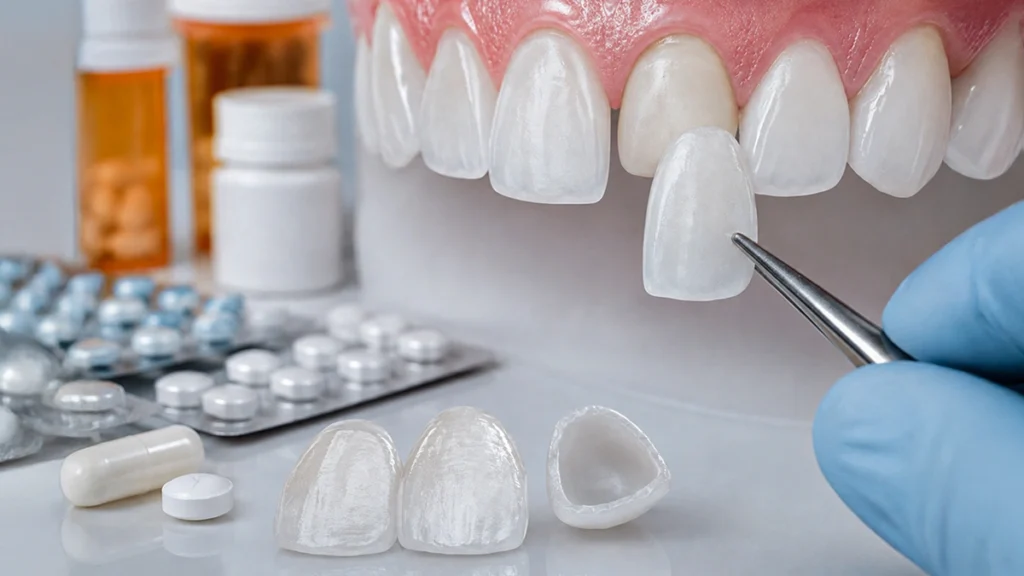
Some medications can affect veneer treatment indirectly. They may influence gum health, bleeding, inflammation, dry mouth, healing, or the body’s response to infection. However, this does not automatically make veneers unsuitable. In many cases, treatment can continue normally after the dentist reviews your medication and overall health. The dentist will also consider the dose, treatment duration, oral condition, and any additional procedures you may need.
Can Medications Affect Veneer Treatment?
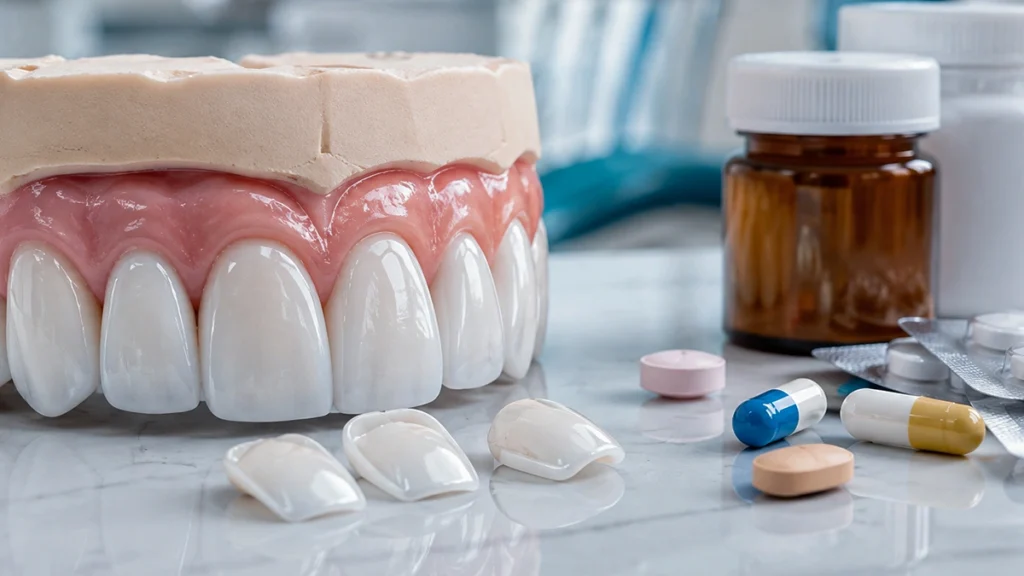
Yes, some medications can affect how dentists plan veneer treatment. However, they usually do not interact directly with porcelain or ceramic veneers. Dentists bond veneers to the tooth surface, so the main concern involves your gums, oral tissues, and general health. These factors can influence how your mouth responds to treatment and any additional dental procedures.
Which Parts of Veneer Treatment Can Medications Influence?
Certain medications can affect gum bleeding, inflammation, tissue recovery, saliva production, and immune response. Standard veneer placement usually requires little soft-tissue healing. However, a smile makeover may also include gum contouring, periodontal treatment, extractions, temporary veneers, or restorative procedures. In these cases, your medication history becomes more important because the treatment affects more than the tooth surface.
Does Taking Medication Mean You Cannot Get Veneers?
No, not necessarily. Medication use represents only one part of the suitability assessment. Your dentist also examines healthy enamel, existing restorations, gum health, oral hygiene, and your bite. Many people who take long-term medication can still receive veneers. Good oral health and an appropriate treatment plan often matter more than the medication name alone.
Start a Conversation
Contact us through the communication method that suits you





Why Your Dentist Needs to Know Which Medications You Take
A medication list provides much more than routine information for a medical form. It helps your dentist understand factors that could influence treatment. Your dentist can then decide whether to proceed normally or adjust the timing, preparation, or associated procedures.
Medications Can Change How Oral Tissues Respond
Different medications affect oral tissues in different ways. Many have little or no meaningful effect on veneer treatment. Others can contribute to dry mouth, gum bleeding, tissue irritation, gum enlargement, or changes in inflammatory response. These effects matter more when treatment involves the gumline. Your dentist therefore considers both your medications and the actual condition of your mouth.
Medication History May Change the Treatment Plan
Inflamed gums or periodontal problems may require treatment before veneer preparation begins. Your dentist might also divide the treatment into stages or change the timing of a procedure. In some cases, avoiding unnecessary elective gum surgery may reduce additional concerns. For more complex medical situations, your dentist may also consult the clinician who manages your medication.

Can Immunosuppressive Medications Affect Veneer Treatment?
Immunosuppressive medications do not automatically prevent veneer treatment. However, they can influence planning because they modify the body’s immune response. Their importance depends on the medication, dose, underlying condition, and your current health. Your dentist will consider both your oral health and general medical stability.
Why Immunosuppression Matters in Dental Treatment
Reduced immune activity can affect how some patients respond to infection or inflammation. Existing tooth decay, gum disease, or another oral infection can increase the importance of this issue. Surgical procedures also require more healing than standard veneer placement. Dentists therefore prefer to control active oral disease before starting elective cosmetic treatment when significant immunosuppression exists.
Can Someone With an Autoimmune Disease Have Veneers?
Many people with autoimmune diseases can still receive veneers. However, the dentist needs to evaluate each case individually. The assessment includes disease stability, oral symptoms, saliva levels, gum health, and healthy enamel. Additional procedures also influence the decision. Placing veneers on healthy teeth differs from managing a case that also requires extraction, surgery, or extensive restorative treatment.
Does Autoimmune Disease Cause an “Allergic Reaction” to Veneers?
An autoimmune disease does not mean your body will automatically reject porcelain veneers. A true sensitivity to dental materials involves a separate issue and requires specific clinical investigation. Persistent gum inflammation usually has other causes. Common examples include plaque, excess bonding material, poor restoration contours, difficult-to-clean margins, and periodontal disease. Your dentist should investigate the actual cause rather than assume an autoimmune reaction.

Can Long-Term Steroid Therapy Affect Veneer Healing?
Long-term systemic steroid therapy can influence dental treatment planning. The dose, treatment duration, medical condition, and individual tissue response all matter. However, taking steroids does not create the same level of concern for every patient. Your dentist needs more information than the medication name before deciding how it affects treatment.
Why Steroid Dose and Duration Matter
A short steroid course differs significantly from prolonged systemic treatment. The dose and reason for treatment also affect the clinical situation. Your dentist should also know whether you take other immunosuppressive medications. A detailed medication history therefore provides much more useful information than simply saying, “I take steroids.”
Steroids and Gum or Soft-Tissue Healing
Long-term systemic steroid use can influence inflammation, immune response, and soft-tissue healing in some people. Standard veneer preparation usually creates little tissue trauma. As a result, healthy gums may require no special changes when the treatment involves veneers alone. The issue becomes more important with gum contouring, periodontal surgery, extractions, implants, or other invasive procedures.
Request pricing
By sending, you agree we may contact you on WhatsApp with pricing.
Got it! We’ll WhatsApp you the pricing shortly.
How Do Medications Affect Gum Healing After Veneers?
Several local and general factors affect gum healing after veneer treatment. Medication represents only one part of the picture. Gum health before treatment, veneer margins, oral hygiene, saliva, and general health can all influence recovery.
What Is Normal Gum Healing After Veneers?
Mild gum tenderness, redness, or sensitivity can occur after veneer preparation, temporary veneers, impressions, or bonding close to the gumline. These symptoms are usually temporary and should gradually improve as the gums settle around the veneers. Normal healing means that discomfort, redness, and swelling become less noticeable over time rather than persist or worsen. If bleeding, swelling, or pain continues or becomes more pronounced, the gums may need to be checked for irritation, inflammation, or an issue around the veneer margin.
What Can Delay Gum Healing?
Existing gingivitis or periodontal disease can make gums more sensitive to irritation and bleeding. Plaque, smoking, dry mouth, residual bonding material, and difficult-to-clean margins can also prolong inflammation. Certain medical conditions may contribute as well. Medications can play a role when they affect saliva or immune function. However, your dentist should check for local causes before blaming persistent symptoms on medication.
When Is Gum Irritation No Longer Considered Routine?
Contact your dentist when symptoms persist, worsen, or become noticeably different. Pay particular attention to:
- persistent or increasing swelling;
- repeated bleeding or significant pain around the veneers;
- pus, discharge, or an unpleasant taste or odor from one area;
- visible gum recession or a noticeable change in the gumline;
- ongoing difficulty cleaning around the veneer margins.
These symptoms do not necessarily indicate a serious complication. However, a dentist should examine the area and identify the cause before you try home treatment.
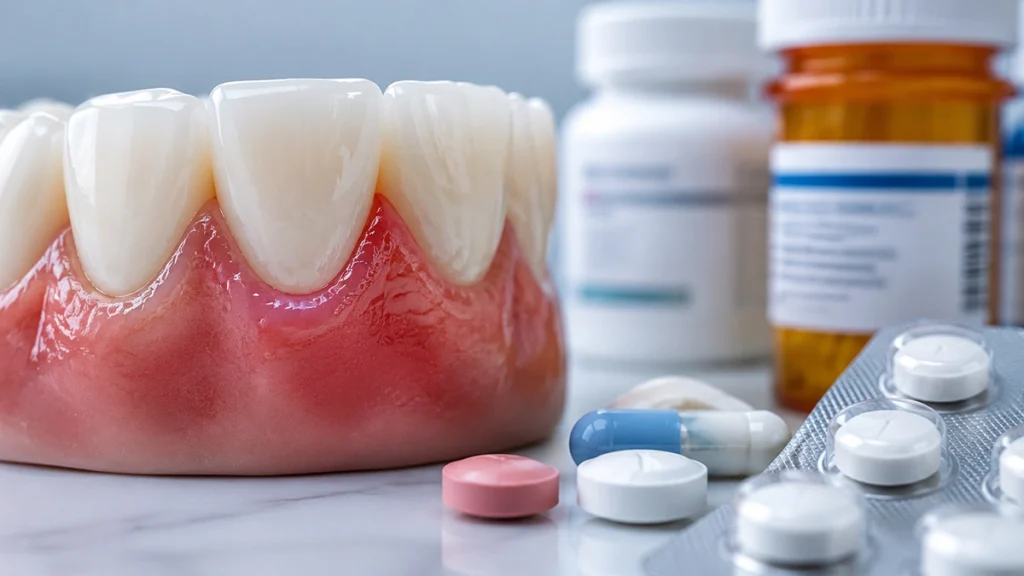
Can Medications Increase the Risk of Infection After Veneers?
Veneers themselves do not normally cause infection. Problems usually develop because of existing dental disease, plaque accumulation, gum problems, or an issue around the restoration. General health factors can also influence how effectively the body responds to inflammation or infection.
Why Medication Can Matter to Infection Response
Some medications can alter immune function and affect the body’s response to infection. Others contribute indirectly because they reduce saliva and make plaque control more difficult. The underlying medical condition may also influence the situation. Dentists therefore consider medication, oral health, general health, and additional procedures together. A single medication name rarely explains infection risk on its own.
Signs That Need Dental Assessment
Contact your dentist if pain worsens instead of improving. Persistent swelling, pus, discharge, fever, unusual inflammation, or a recurring unpleasant taste also need attention. These symptoms cannot identify the cause by themselves. Your dentist needs to examine the teeth and gums before recommending antibiotics, medication changes, or another treatment.
Read more: Is Gum Disease a Problem Before Veneers? What Dentists Check in Turkey 2026
Upload your photos and receive a free AI-powered preliminary analysis in minutes. No commitment required.
Which Other Medications May Be Relevant Before Veneer Treatment?
Steroids and immunosuppressants are not the only medications that matter before veneers. Other treatments can affect bleeding, saliva production, or gum tissue. Their importance often increases when the veneer plan includes additional procedures.
Blood-Thinning and Antiplatelet Medications
Blood-thinning and antiplatelet medications do not automatically prevent veneer treatment. However, they matter more when the gums bleed easily or the treatment includes gum contouring or periodontal procedures. Never stop or adjust these medications yourself. If an invasive procedure creates a specific bleeding concern, your dentist can coordinate with the clinician who prescribed the medication.
Medications That Can Cause Dry Mouth
Medication-related dry mouth can affect comfort and long-term oral health. Saliva helps control plaque and protects teeth against acids and decay. A significant reduction in saliva can therefore increase the risk of cavities and gum irritation. This matters even with veneers because the natural tooth underneath still needs protection.
Medications That Affect Gum Tissue
Certain medications can cause changes in gum tissue in some patients. These changes may include gum enlargement or greater susceptibility to inflammation. Your dentist may want to improve gum health before choosing the final veneer design. Healthy, stable gums also make it easier to create natural contours and maintain clean veneer margins.
Read more: Can People With High Blood Pressure Get Veneers? Dentist Guidance Before Treatment
What Should You Tell Your Dentist Before Getting Veneers?
Provide a complete medication history during your first consultation. Clear information helps your dentist understand how your medications, medical conditions, and oral health relate to each other. It also reduces the chance of unexpected problems during treatment.
Medication Checklist Before Veneer Treatment
Before starting veneer treatment, tell your dentist about:
- the names, doses, frequency, and duration of your regular medications;
- the medical condition or reason behind each prescription;
- any steroids, immunosuppressants, anticoagulants, or antiplatelet medications;
- recent medication changes or previous problems with bleeding, healing, or infection;
- relevant supplements, over-the-counter medications, and known allergies.
This information gives your dentist useful clinical context. You do not need to interpret the medications or decide whether they create a risk yourself.
Tell Your Dentist About More Than the Medication Name
A medication name alone may not provide enough information. Two patients can take the same drug at very different doses and for completely different conditions. For example, 5 mg and 40 mg may represent very different clinical situations. Your dentist needs to understand the dose, duration, reason for use, and current medical status.
Read more: Veneers and Medical Conditions in Turkey 2026: Safety, Risks & Dentist Guide
Should You Stop Medication Before Veneer Treatment?
Do not stop, reduce, or change prescribed medication unless your prescribing clinician recommends it. Many patients can receive veneers while continuing their normal medication. Continuing essential medical treatment usually makes more sense than changing it solely for an elective cosmetic procedure.
Why Stopping Medication Yourself Can Be Unsafe
Suddenly stopping certain medications can cause significant problems. The underlying condition may return, disease control may worsen, or withdrawal effects may occur. This concern particularly applies to long-term steroids, immunosuppressants, anticoagulants, and other systemic treatments. If your dentist has concerns, they can discuss them with the clinician managing your medication.
Can Veneers Be Planned Around Existing Medication?
Yes, dentists can often plan veneers without changing existing medication. Healthy teeth and gums may allow treatment to continue normally. Other patients may need treatment for gum inflammation first or a change in procedure timing. Your dentist might also avoid unnecessary surgery or monitor healing more closely. These adjustments often provide a safer option than altering essential medication.
When Might Your Dentist Ask for Medical Clearance?
Most people taking medication do not need medical clearance before receiving veneers. However, some medical situations require closer coordination. This becomes more important when a complex condition or medication could influence a specific dental procedure.
Situations Where Medical Coordination May Be Appropriate
Your dentist may contact your physician when you have a complex autoimmune condition or significant immunosuppression. Long-term systemic steroid therapy can also justify additional discussion in some cases. Other reasons include unstable medical conditions, previous healing problems, or recurrent infections. Coordination also becomes more relevant when treatment includes extractions, surgery, or another invasive procedure.
What Does Medical Clearance Actually Mean?
Medical clearance does not allow a physician to decide whether veneers suit your smile. Your dentist still makes that dental decision. Instead, the dentist may ask about disease stability, medication, relevant precautions, or treatment timing. They may also discuss whether an additional surgical procedure needs modification. This communication provides medical information that supports safer dental planning.
Upload your photos and receive a free AI-powered preliminary analysis in minutes. No commitment required.
Can You Still Get Veneers If You Take Immunosuppressants or Steroids?
Yes, veneers may still be possible. The medication name alone should not determine your suitability. Your dentist needs to evaluate your teeth, gums, bite, medical condition, and medication history together. This assessment helps determine whether treatment can start now or whether you need additional preparation first.
What the Dentist Evaluates Before Saying Yes
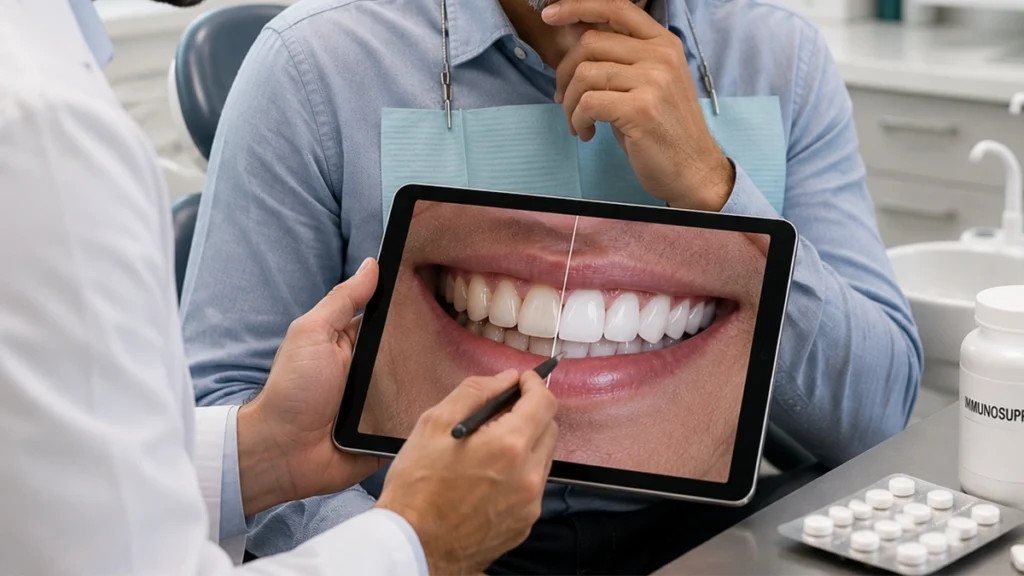
Your dentist first checks whether your teeth have enough healthy enamel for reliable bonding. They also look for decay, failing restorations, and uncontrolled gum inflammation. Bite forces, clenching, and grinding matter because they increase stress on veneers. The dentist then considers these findings alongside your medical condition and medication history.
When Veneer Treatment May Need to Be Delayed
Your dentist may postpone veneers if you have uncontrolled gum disease or an active dental infection. An unstable general health condition can also make elective treatment inappropriate for the moment. Your physician may sometimes recommend avoiding elective procedures temporarily. A delay does not mean veneers will never suit you. It usually gives you time to resolve the current problem before cosmetic treatment begins.
How Dentists Plan Veneer Treatment for Patients Taking Long-Term Medication
Good veneer planning does not require a long list of theoretical medication risks. Instead, the dentist should focus on your actual oral and medical condition. Healthy teeth and stable gums provide the best starting point before the cosmetic design begins.
Stabilize Oral Health Before Cosmetic Treatment
Dentists first address problems that could compromise the teeth or veneers. These may include decay, periodontal disease, gum inflammation, plaque accumulation, or failing restorations. Significant dry mouth may also require additional attention. Managing these problems first creates a healthier foundation for cosmetic treatment.
Plan the Veneer Margins Around Healthy Gum Tissue
Healthy gums help dentists determine veneer shape, length, and margins more accurately. Well-designed margins also make daily cleaning easier and reduce areas where plaque can accumulate. Inflamed or enlarged gums can make the final gumline less predictable. Treating these problems first gives the dentist a more stable foundation for the final smile.
Monitor the Gums After Placement
Veneer care continues after the dentist bonds the restorations. Follow-up visits allow the dentist to check gum response, cleaning access, and veneer margins. They can also identify persistent bleeding, inflammation, or discomfort early. Regular monitoring becomes especially useful when medications or medical conditions affect long-term oral health. The goal involves both an attractive smile and healthy supporting tissues.
Which treatment are you interested in?
FAQ
Yes, veneers may still suit you when your condition remains stable and your teeth and gums stay healthy. Your dentist will also review medications and oral symptoms.
Potentially, yes. Your dentist will consider the medication, dose, medical condition, oral health, and whether your treatment includes any invasive procedures.
Steroids do not normally affect the veneer material itself. However, long-term systemic treatment can influence immune response, tissue healing, and procedures involving the gums.
Persistent swelling or bleeding can result from inflammation, plaque, veneer margins, excess bonding material, or periodontal disease. Contact your dentist if symptoms continue or worsen.