
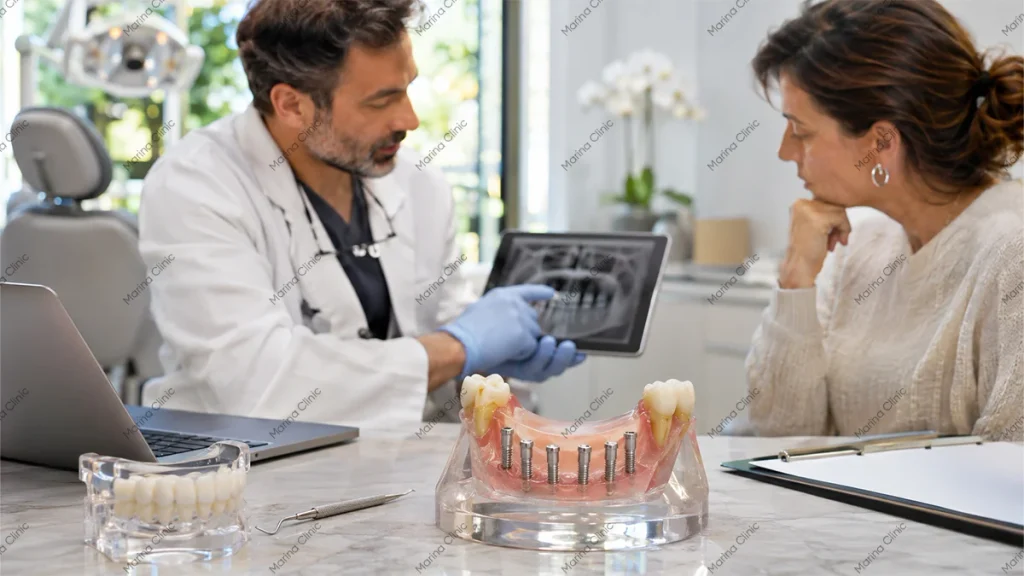
Yes, you can get All-on-6 dental implants if you still have natural teeth, but the treatment generally involves replacing all teeth in the treated jaw with a fixed implant-supported bridge. Any remaining teeth must be carefully assessed before extraction is considered. Healthy, functional teeth should not be removed simply to qualify for All-on-6. Treatment suitability depends on tooth condition, gum health, jawbone density, bite alignment and whether preserving the remaining teeth offers a better long-term solution.
Can You Get All-on-6 Dental Implants With Healthy Teeth Remaining?
on-6 dental implants can be an option for patients who still have natural teeth, particularly when most teeth are missing or the remaining ones have a poor long-term prognosis. However, having only a few teeth left does not automatically make full-arch replacement necessary.
When determining whether All-on-6 is appropriate, dentists consider several factors:
- The number and location of remaining natural teeth.
- The health, stability and restorability of existing teeth.
- Gum health and periodontal condition.
- Jawbone density and available bone support.
- Bite alignment and chewing function.
- The long-term benefits of preserving natural teeth.
If the remaining teeth are healthy, stable and restorable, individual dental implants or dental bridges may provide a more conservative solution. Healthy natural teeth should not be extracted solely to accommodate All-on-6 treatment.
Start a Conversation
Contact us through the communication method that suits you





What Happens to Your Remaining Teeth Before All-on-6 Treatment?
Before All-on-6 implant surgery, dentists examine the remaining natural teeth to determine whether they can be preserved or whether extraction is clinically justified. This assessment helps establish an appropriate treatment plan while avoiding unnecessary tooth loss.
Assessing Tooth Health, Gum Support and Restorability
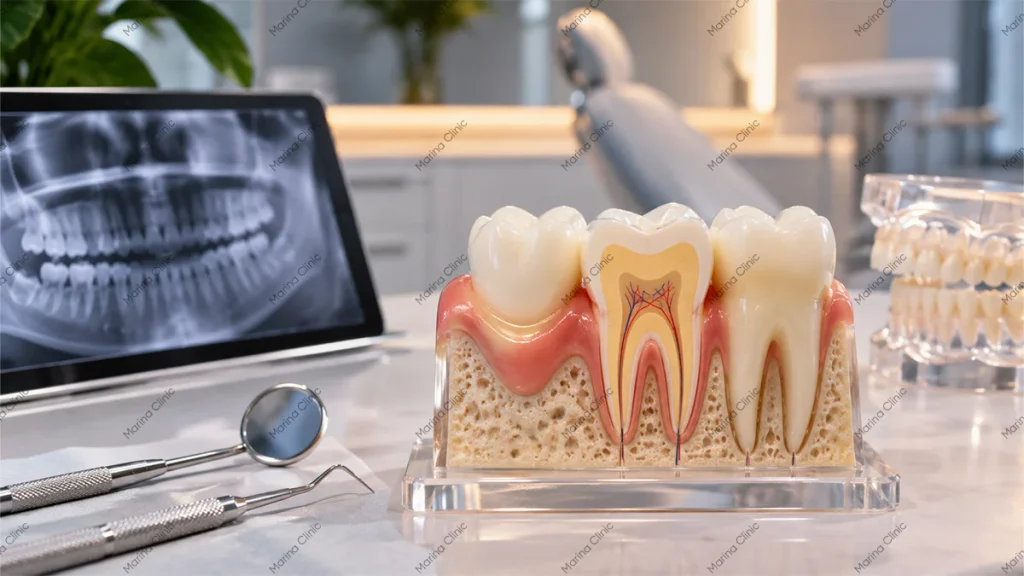
Dentists examine each remaining tooth for decay, mobility, root damage, infection and surrounding bone support. Gum health and the condition of existing crowns, fillings or root canal treatments are also considered. Teeth that can be successfully restored and maintained may be worth preserving instead of proceeding directly with full-arch replacement.
When Tooth Extraction May Be Recommended
Tooth extraction may be recommended when the remaining teeth cannot be predictably restored or maintained over the long term. Common clinical reasons include:
- Advanced gum disease with severe bone loss.
- Significant tooth mobility caused by inadequate support.
- Extensive, non-restorable tooth decay.
- Severe tooth or root fractures.
- Persistent infections that cannot be successfully treated.
- Failed dental restorations with a poor long-term prognosis.
Extraction is an irreversible procedure and should only be performed following a comprehensive clinical assessment.
Can Some Teeth Be Preserved in the Opposite Jaw?
Yes. Patients can receive All-on-6 dental implants in their upper jaw while keeping their natural lower teeth, or vice versa. There is no requirement to replace both arches simultaneously. However, the condition and alignment of the opposing teeth must be assessed to ensure a balanced bite and appropriate distribution of chewing forces.
How All-on-6 Dental Implants Replace a Full Arch of Teeth
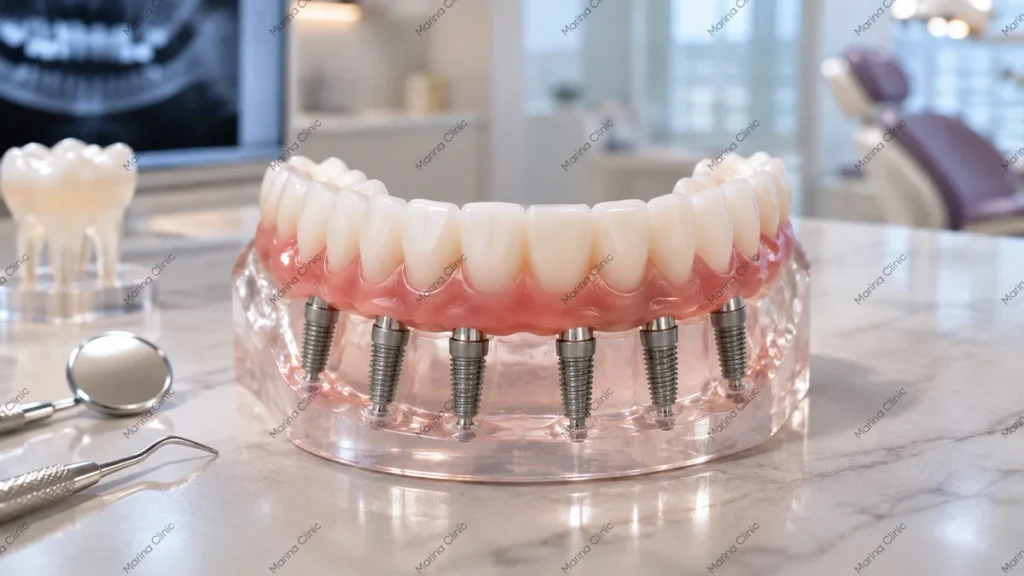
All-on-6 is a full-arch dental implant technique that uses six implants to support a fixed prosthetic bridge in the upper or lower jaw. The implants are strategically positioned according to the available bone, anatomical structures and planned restoration to distribute chewing forces across the arch.
The treatment typically involves the following steps:
- Treatment planning: Evaluating jawbone density, oral health and suitable implant positions.
- Tooth extraction: Removing remaining teeth in the treated arch when clinically justified.
- Implant placement: Inserting six dental implants into the jawbone to support a full-arch prosthesis.
- Temporary prosthesis: Fitting temporary teeth when adequate implant stability allows.
- Healing and osseointegration: Allowing the implants to integrate with the surrounding jawbone.
- Final bridge placement: Securing the definitive fixed prosthetic bridge after sufficient healing.
Unlike individual dental implants, All-on-6 is designed to replace an entire dental arch rather than a small number of missing teeth.
Request pricing
By sending, you agree we may contact you on WhatsApp with pricing.
Got it! We’ll WhatsApp you the pricing shortly.
When Is All-on-6 Better Than Preserving the Remaining Teeth?
All-on-6 may be a more appropriate treatment option when preserving the remaining teeth is unlikely to provide reliable long-term function. This decision should consider the expected lifespan of natural teeth, restorative requirements, surgical risks and the patient’s overall oral health.
Advanced Periodontal Disease and Severe Bone Support Loss
Advanced periodontal disease can damage the tissues and bone that support natural teeth, resulting in mobility, discomfort and eventual tooth loss. When the remaining teeth no longer have sufficient support and cannot be predictably maintained through periodontal treatment, full-arch implant rehabilitation may be considered. Existing gum disease must be addressed, and implant suitability must be evaluated before surgery.
Extensive Tooth Decay, Fractures and Failed Restorations
Patients with multiple severely damaged teeth, extensive decay, root fractures or repeatedly failed dental restorations may require complex treatment to preserve their natural dentition. When these teeth are no longer restorable or have an unfavorable prognosis, All-on-6 may offer an alternative approach to restoring dental function and appearance.
Poor Long-Term Prognosis Across the Remaining Teeth
Even when some natural teeth remain functional, their long-term prognosis may be affected by underlying disease, structural damage or insufficient bone support. If maintaining several compromised teeth is unlikely to provide a stable and functional dental arch, dentists may recommend full-arch rehabilitation after evaluating available tooth-preserving alternatives.
Read more: Can You Get Dental Implants with Gum Disease? What to Know Before Treatment
Upload your photos and receive a free AI-powered preliminary analysis in minutes. No commitment required.
Alternatives to All-on-6 When Some Natural Teeth Are Still Healthy
Patients with healthy or restorable natural teeth may benefit from treatments that replace missing teeth without requiring complete extraction. The most suitable alternative depends on the number, location and condition of the remaining teeth.
Preserving Natural Teeth With Crowns or Restorative Treatment
Dental crowns, fillings, root canal treatments and periodontal therapy can help preserve damaged but restorable natural teeth. When adequate tooth structure and bone support remain, these treatments may restore function and appearance without the need for extraction or full-arch implant surgery.
Replacing Missing Teeth With Individual Implants or Bridges
Individual dental implants can replace missing teeth independently, while implant-supported bridges can replace several consecutive missing teeth. These options allow patients to retain suitable natural teeth while restoring gaps in their smile, improving chewing function and maintaining a functional bite.
Combining Natural Tooth Preservation With Partial Implant Rehabilitation
Partial implant rehabilitation combines the preservation of natural teeth with implant-supported restorations in areas where teeth are missing. This approach can provide a more conservative solution for patients who do not require complete dental arch replacement. Natural teeth and implant-supported restorations can often function alongside one another without being connected.
All-on-6 vs. Tooth-Preserving Treatment Options
| Treatment | Preserves natural teeth? | Most suitable for |
| All-on-6 dental implants | No, within the treated arch | Complete or extensively compromised dental arches |
| Individual dental implants | Yes | One or several missing teeth |
| Implant-supported bridges | Yes | Multiple consecutive missing teeth |
| Dental crowns | Yes | Damaged but restorable teeth |
| Traditional dental bridges | Yes, with possible tooth preparation | Missing teeth with suitable neighboring teeth |
| Partial dentures | Yes | Partial tooth loss |
Read more: Dental Implants vs Bridge for 6 Missing Teeth: Which Is the Better Option?
All-on-6 Dental Implant Cost When Tooth Extractions Are Required
The cost of All-on-6 dental implants may increase when patients require additional procedures before or during implant placement. The final price depends on the complexity of the extractions, bone condition, implant system, prosthetic materials and services included in the treatment package.
Tooth Extractions, Implant Surgery and Temporary Teeth
Patients with remaining natural teeth may require simple or surgical extractions before implant placement. Depending on the clinic’s pricing structure, these procedures may be included in the All-on-6 package or charged separately. Implant surgery, anesthesia and temporary teeth can also influence the overall treatment cost.
Bone Grafting, Implant Brands and Final Bridge Materials
Additional procedures such as bone grafting or sinus lifting may increase treatment costs when insufficient bone is available for implant placement. The selected dental implant brand and final prosthetic material, such as zirconia or acrylic-based restorations, also affect the overall price, maintenance requirements and aesthetic outcome.
What Should Be Included in an All-on-6 Treatment Quote?
Before starting treatment, patients should request a detailed All-on-6 dental implant quote covering the following:
- Initial dental consultation and diagnostic examinations.
- Panoramic X-rays and CBCT scans, when required.
- Necessary tooth extractions.
- Six dental implants per treated arch.
- Implant abutments and prosthetic components.
- Implant surgery and anesthesia.
- Bone grafting or sinus lifting, if necessary.
- Temporary dental prosthesis.
- Final fixed dental bridge and its material.
- Follow-up appointments and postoperative care.
- Warranty terms and potential additional charges.
A transparent treatment quote helps patients understand the total financial commitment and compare treatment options accurately.
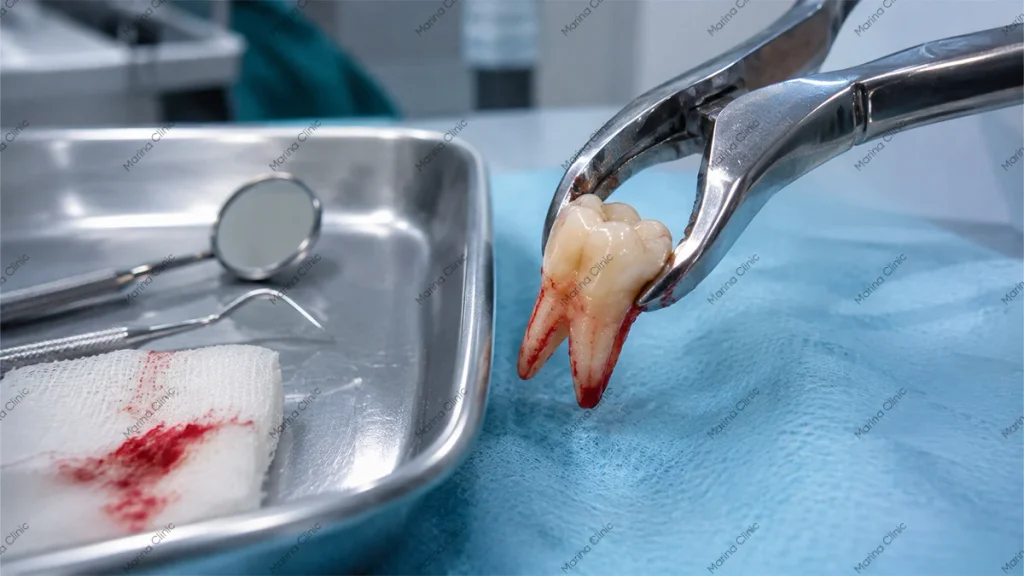
СAll-on-6 Treatment Timeline: Extractions, Healing and Final Teeth
The All-on-6 treatment timeline depends on the condition of the remaining teeth, jawbone availability, implant stability and individual healing response. Some patients may undergo extractions and implant placement during the same appointment, while others require a staged treatment approach.
Can Extractions and All-on-6 Surgery Be Done Together?
Yes, tooth extractions and All-on-6 implant placement can sometimes be performed during the same surgical appointment. Immediate implant placement requires suitable bone availability, adequate initial implant stability and appropriate management of infection. When these conditions are not met, additional healing or bone augmentation may be necessary before implant surgery.
Temporary Fixed Teeth and Healing After Surgery
Patients with sufficient implant stability may receive a temporary fixed bridge on the day of surgery or within the following days. During the healing period, the implants gradually integrate with the surrounding jawbone through a process called osseointegration. The final fixed bridge is typically fitted after several months, once the dentist confirms adequate healing and implant stability.
When Can You Eat Solid Food After All-on-6?
Patients generally need to follow a soft-food diet during the initial healing period to avoid placing excessive pressure on the implants and temporary bridge. Foods can gradually be reintroduced according to healing progress and the dentist’s recommendations.
| Recovery stage | Recommended foods |
| First 24–48 hours | Cool or lukewarm soups, yogurt and smooth purées |
| First 1–2 weeks | Mashed potatoes, scrambled eggs and other soft foods |
| Following weeks | Soft pasta, cooked vegetables and tender fish, as approved |
| After sufficient healing | Gradual return to firmer foods with dental approval |
Hard, crunchy, sticky and excessively chewy foods should be avoided until the dentist confirms that the implants and restoration can safely tolerate increased chewing forces.
Read more: Dental Implants Before and After: Real Patient Cases and Treatment Plans
Upload your photos and receive a free AI-powered preliminary analysis in minutes. No commitment required.
How Dentists Decide Whether to Preserve Teeth or Recommend All-on-6
Choosing between natural tooth preservation and All-on-6 dental implants requires a comprehensive examination of the patient’s oral health, restorative needs and long-term treatment objectives. The aim is to identify a predictable treatment that restores function without unnecessary extraction.
CBCT, Gum Health, Bone Volume and Bite Assessment
Dentists use clinical examinations and diagnostic imaging, including cone beam computed tomography (CBCT) when indicated, to evaluate the following factors:
- Remaining tooth structure and restorability.
- Gum health and periodontal pocket depths.
- Tooth mobility and surrounding bone support.
- Jawbone height, width and available implant sites.
- Existing dental infections and inflammation.
- Bite alignment and chewing force distribution.
- The position of nerves and sinus cavities.
- Medical history, smoking habits and healing ability.
These findings help determine whether natural tooth preservation, partial implant rehabilitation or full-arch replacement is the most appropriate option.
Comparing Tooth Preservation With Full-Arch Implant Treatment
Preserving natural teeth may reduce the need for surgery and maintain natural dental structures, while All-on-6 may provide a fixed restorative solution for patients with extensively compromised dentition. Dentists compare the expected longevity, treatment complexity, costs, risks and maintenance requirements of each approach. Both natural teeth and dental implants require good oral hygiene and regular professional monitoring to support long-term health.
All-on-6 Treatment Planning at Marina Clinic in Istanbul
At Marina Clinic in Istanbul, patients considering All-on-6 dental implants can discuss their remaining natural teeth, oral health concerns and treatment expectations during a dental consultation. Depending on the clinical findings, treatment options may include preserving healthy teeth, replacing individual missing teeth or restoring an entire dental arch with an implant-supported bridge. Patients should receive a clear explanation of any proposed extractions, available alternatives, treatment costs and expected recovery before making a decision.
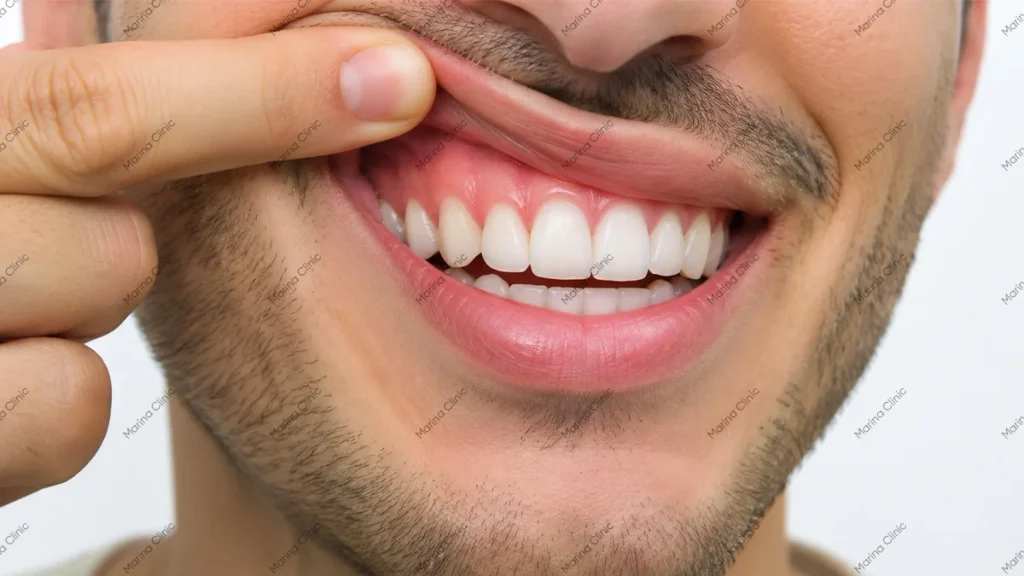
Final Verdict: Should You Remove Your Remaining Teeth for All-on-6?
Having only a few natural teeth left does not automatically mean that All-on-6 dental implants are the best treatment option. Patients with severely damaged, unstable or non-restorable teeth may benefit from full-arch implant rehabilitation, while those with healthy and functional teeth may achieve better outcomes through more conservative treatments. At Marina Clinic in Istanbul, patients can explore suitable restorative options based on their individual dental condition before deciding whether full-arch replacement is necessary. The right treatment is not determined by how many teeth you have left, but by whether those teeth can remain healthy and functional over the long term.
Which treatment are you interested in?
FAQs
Yes, All-on-6 may be possible if you have four natural teeth remaining. However, their health, stability, location and long-term prognosis must be evaluated before determining whether extraction and full-arch replacement are appropriate.
Conventional All-on-6 treatment replaces all natural teeth within the treated arch with a fixed implant-supported bridge. However, remaining teeth should only be extracted when there is a clinically justified reason for proceeding with full-arch rehabilitation.
Yes. Individual dental implants and implant-supported bridges can replace missing teeth while preserving healthy natural teeth. This is often a more conservative alternative when complete dental arch replacement is unnecessary.
Not necessarily. The number of remaining teeth alone does not determine treatment suitability. Dentists also evaluate gum health, bone support, tooth restorability, bite alignment and alternative treatment possibilities.
Yes, immediate implant placement may be possible when sufficient bone is available, infection is appropriately managed and adequate implant stability can be achieved. Some patients may require additional healing before implant placement.
All-on-6 treatment may cost more when additional tooth extractions, bone grafting or other preparatory procedures are necessary. Patients should request a comprehensive treatment quote to understand which procedures are included and whether additional charges apply.
Patients usually follow a soft-food diet during the initial healing period. A gradual return to normal eating depends on implant stability, bone healing and the type of restoration fitted. Your dentist will determine when firmer foods can safely be introduced.
Yes. All-on-6 dental implants can replace the entire upper or lower dental arch while suitable natural teeth remain in the opposite jaw. The dentist will assess both arches to establish a functional and balanced bite.